Allan and I took the hotel-provided water taxi to the collection of small islands of Murano in the Venetian Lagoon on this beautiful clear morning. After an already long and interesting history, in 1291 Murano became the center for glass making in Venice when all of the glass makers in Venice were forced to move to Murano. This move was because of the abundance of wood powered furnaces in use and the consequent risk of fire in Venice proper.
When we exited the taxi, we were ushered into a factory for a demonstration and given a tour of the showroom. When it became clear that we did not intend to purchase, we were ushered out of the door! As we proceeded down the main street of town we came upon a family-owned operation, Schiavon, where we again saw stunning chandeliers, vases, jewelry and other small items, large abstract figures. After purchasing a lavender-colored gondola, we were invited to see the glass factory at work and given an “upstairs” tour of the showroom. Ultimately we bought a set of glasses and matching pitcher inspired by Miro and designed by our new best friend.


We continued to window shop up and down the main street, venturing down a tree lined boulevard for lunch and on to the vaparetto for the short ride back to the mainland of Venice.


Connie and Clay met us for our afternoon visit to the Peggy Gugenheim Museum. After finding the vaparetto stop we worked hard to get a ticket from the machine, but were thwarted at every try. SO we hopped on the next boat that came along anyway. Just as we were getting off of the boat, three people in uniform asked for our tickets. No explaining would sway their statement that we each needed to pay a heft fine in addition to our 7.5 euro vaparetto ticket. After missing our stop and ending up on the wrong side of the canal arguing with them, we finally paid the fine and walked back to the museum. I suspect that this will be our last trip on the vaparetto! The museum was great. It is housed in what was her residence and at the entrance to each room are photos of the art and furniture as it was when she lived in the home, right on the Grand Canal. The collection included paintings by Picasso, Klee, Miro, Dali, Chagall, Magritte, and many other artists I did not recognize. Some of our favorites…


We had a 26 minute walk back to the hotel, but that was preferable to the vaparetto. It was actually a pleasant walk since the later afternoon brought a nice breeze and somewhat cooler temperatures. Just before the hotel, we stopped for a spritz (or 2) and visited with a family from Southern California. Our tour of the Grand Canal (postponed from last night) left at 8 and it was glorious! We went up the canal, past the train station, several small islands, the cruise ship port, out to St. Mark’s Square where we had good sightings of the Bridge of Sighs and big hotels along the lagoon, back into the Grand Canal and back to the hotel. What a beautiful way to see the city–by water at sunset.


Since there was no time for dinner before the tour, we found Trattoria de Pepi near the hotel and each had a small dish to fuel our famished bodies so we could sleep. Allan and his cuttlefish ink pasta created an abstract painting on the tablecloth. We thought it as good or better than many we’ve seen. 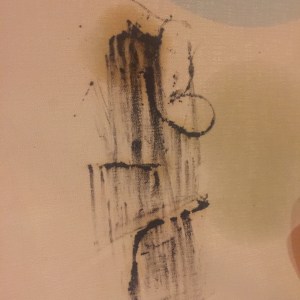 It was a busy, but very fun day!


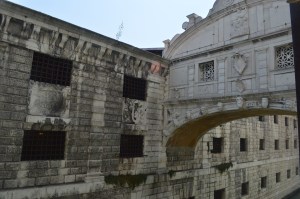 Political prisoners were tried and convicted in the palace and taken immediately to the connected prison across the covered Prisons’ Bridge where they spent the rest of their lives chained by their legs to the wall of the prison, 4 to a room, with only bread and water as sustenance. When Lord Byron was here in the 19th century he renamed the bridge, the Bridge of Sighs.
 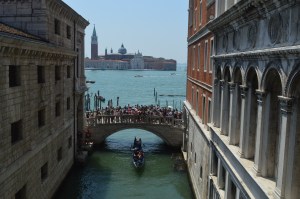 It was from this bridge that prisoners got their last views of the bright and sunny outside and they sighed. The Bridge of Sighs was immortalized in Canto IV of Byron’s lengthy narrative poem, “Childe Harold’s Pilgrimage.”
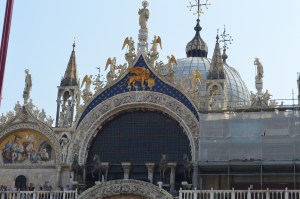 The church’s exterior is adorned by a collection of war trophies from conquests throughout Europe, like these horses from Constantinople. Our tour progressed back to the Rialto Bridge where we said, “arrivederci” to Guido and began our search for an air conditioned place for lunch. We settled on Ristorante Malibran (not very air conditioned) and had a good Ventian lunch before winding our way back to the Foscari Palace for a nice long and cool nap. Dinner was on the roof of the hotel with the expectation of a tour of the Grand Canal. After lightning and a few sprinkles, we finished dinner inside the hotel and the tour was postponed until tomorrow night. We had a great view of the city rooftops and enjoyed a serenade of laughter from the laughing gulls on our rooftop.


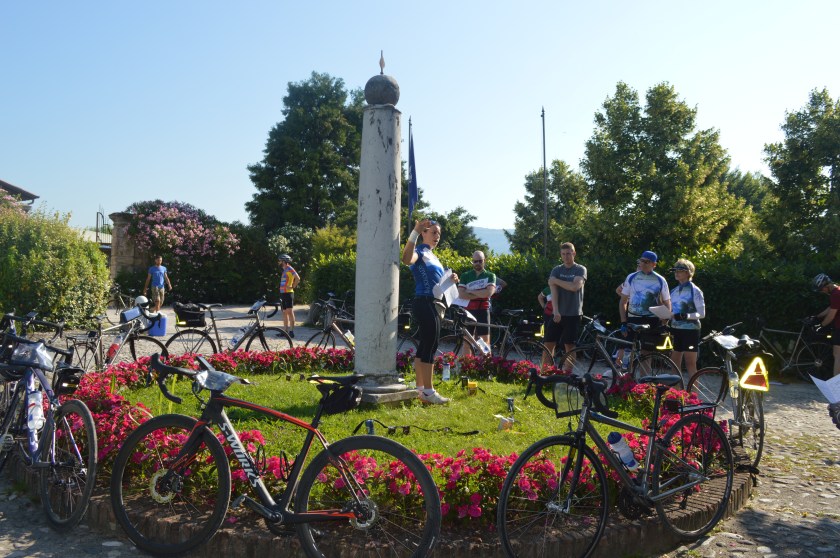
 Our final bike ride of the trip began at 8 and we were glad for the early start since it was already 90 outside! Today’s ride was a 20km out and back loop around the hotel. It was mostly flat with a few hills where we had lovely views of the vineyards.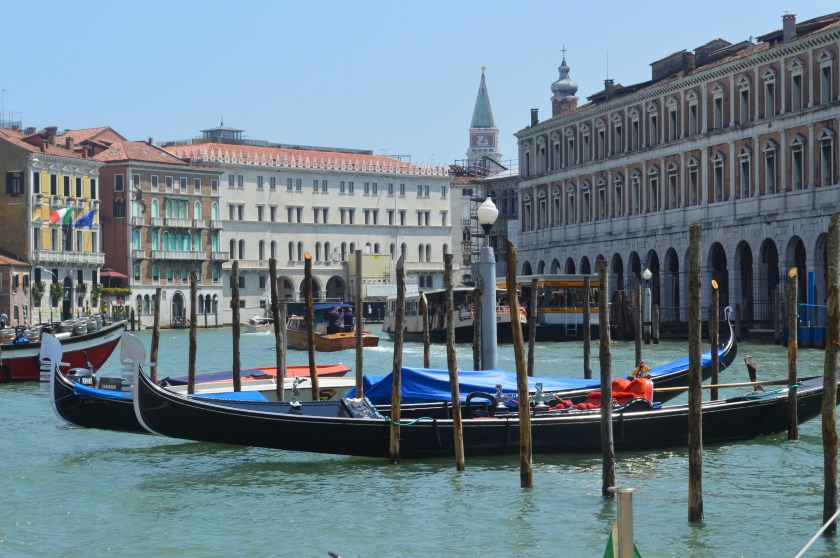




 As is typical in a Backroads trip, we came over a hill and had our first view of Lake Garda below us in the distance. We continued a few more kilometers before arriving in the town of Bardolino and further to the Casetto Winery. The white wine was quite tasty (and I don’t usually like white wine), I didn’t care for the rose and didn’t taste the red. Lunch was a buffet of salads, vegetables, fruit and chicken.


 Leaving Mantua from the Casa Poli Hotel was an easy flat ride along Lago Inferiori where swans were resting on the calm lake,
 to a bike path between canals and cornfields, along the Mincio River to Peschiera on Lake Garda. The river is tightly controlled all along is 75 km using the water flow to generate electricity as well as for irrigation. It was very hot again, but a beautiful ride. The wild flowers along the side of the road and amid the grains in the fields are beautiful–lots of Queen Anne’s lace and poppies.


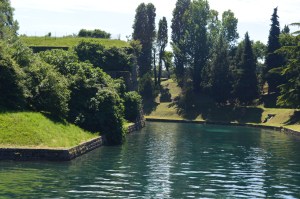 Following a large group of kids on bikes out of Borghetto, we continued on this well-marked and well-travelled trail most all of the way to Peschiera. We crossed the river on a wooden bridge with flower boxes along the rails and entered the walled city of Peschiera an area which has been inhabited since the Neolithic Age and our stopping point for lunch. We ate along a clear canal at Rocca’s.
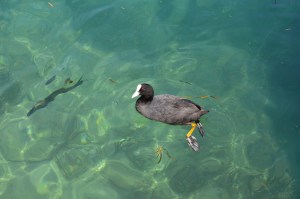 During lunch, we enjoyed watching this coot, mallards, a great crested grebe and some good sized fish beg for food below us.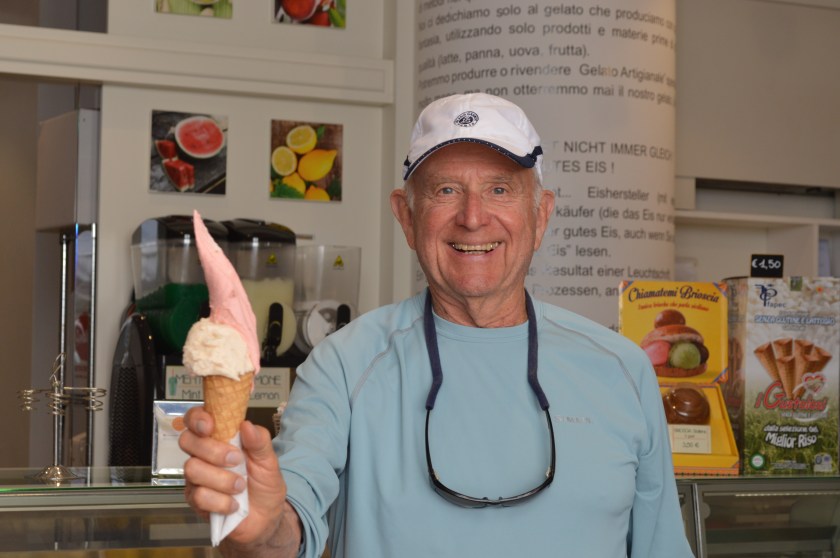


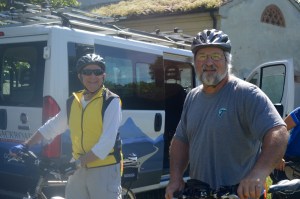 We’re moving today, so we had a short bus ride to the walled hamlet of Sabbioneta, leaving Emiliana-Romagna and beginning our ride to Lombardia. Since we are on the Pianura Padana, the flood plain of the Po River (the biggest river in Italy), our entire ride was flat…it was quite hot though! Our first stop was


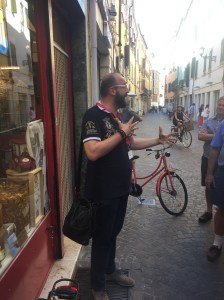 After resting a few minutes, we walked down the street to the bike shop, looking for a local bike shirt, but were not successful. Lorenzo, our guide for the old town of Mantua met us in the hotel lobby and we set out to tour the town. We saw the old Pescherie (fish market) designed by Guilio Romano. It is not far from the meat market and the vegetable market. We stopped at a Salumeria (salami store) along the way and tasted a local delicacy called mostarda…from Wikipedia…Mostarda di frutta (sometime also called only mostarda) is a Northern Italian condiment made of candied fruit and a mustard-flavoured syrup. Commercially the essential oil of mustard is employed, which has the advantage of transparency; in home
 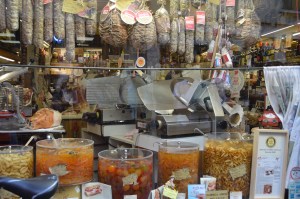 cooking, mustard powder heated in white wine may be used. Traditionally mostarda was served with boiled meats, the bollito misto which is a speciality of northern Italian cooking. More recently it has become a popular accompaniment to cheeses. Our taste was plain and it was quite spicy–tasted as though it had horseradish in it. I suspect it would be good on goat cheese. We continued toward one of the three lakes surrounding Mantua. The lakes are man made and acted as a protective moat during ancient times. There were many interesting buildings and stories throughout the town. We saw the Piazza Della Erbe and the Rutunda of St. Lorenzo (the oldest church in town), St. Andrea’s Basilica (a renaissance masterpiece by Leon Battista Alberti), the Cathedral of Mantua (the duomo, where Romanesque, Gothic and Baroque architectures are all mixed together), the Ducal Palace (headquarters of the powerful Gonzaga family) and the Castle of San Giorgio.
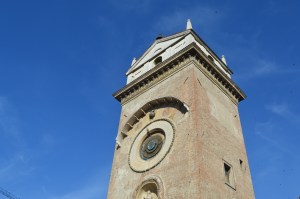 This astronomical clock was commissioned by Gonzaga and built in 1473 because many of the merchants would not make decisions unless the stars were in the right astrological position. The clock still works but needs adjustment every six months.
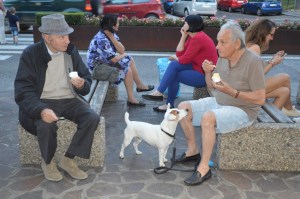 The gelato was good as it has been everywhere and while we ate ours, we particularly enjoyed watching these two Italian men eat their gelato. They both did share with the cute dog.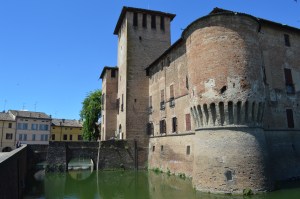


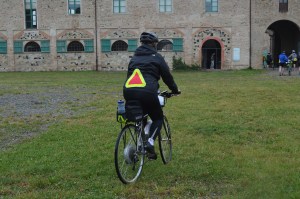 We arrived at a public park (Corte do Giarola) on the Taro River in Parma which most recently had been an agricultural center and prior to that a nunnery and even further back in time, a medieval fort. Licia prepared a picnic lunch for us which was excellent and fueled us for our ride. The rain began to fall as we ate and before lunch was over, it was hailing!! We stretched lunch until there were only puddles remaining and set out…




 Latest Travels