Slow to get started today, we had gotten used to the relaxing pace of the last few days. Of course, once we got moving there was much to see! Last year we happened upon a fun restaurant called Aux Ateliers when on a quest for a tourable olive processing farm. We headed there for lunch but arrived a bit early so we made a reservation and walked toward the small village of Maussane. 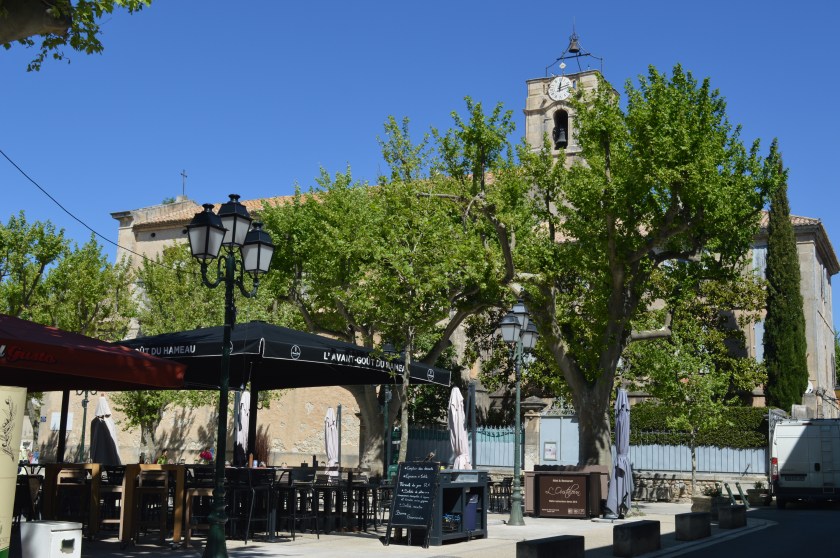
The requisite bell tower and town square were present and soon filled with people having lunch or cafe. We strolled along the tree-lined main street past restaurants, shops, a fish market, wine stores.


In an alley I couldn’t resist photographing the beautiful irises. We found an interesting structure which we surmised was a spring fed bath that Connie described as an “infinity pool” since the overflow went to a drain that we assume was recirculated. It looked to be ancient. And lo and behold, not too far long we came across another market–much like the other markets, but the venue beneath the towering trees was glorious.


On the return walk back up the main street toward the restaurant we found Le Jardin dus Alpilles, a market full of beautiful fresh vegetables and fruit, with wine organized by AOC, canned goods, a cheese and olive counter–everything you’d find in a big supermarket. I found the courgette ronde particularly interesting–round zucchini…great for stuffing!
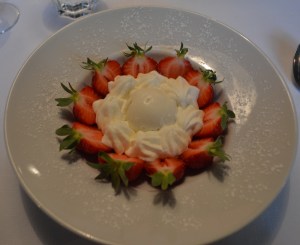 We returned to Aux Anteliers for an enjoyable lunch, complete with a bottle of local rosé wine and a delicious dessert of fresh strawberries with verbena glacé (ice cream) and chantilly
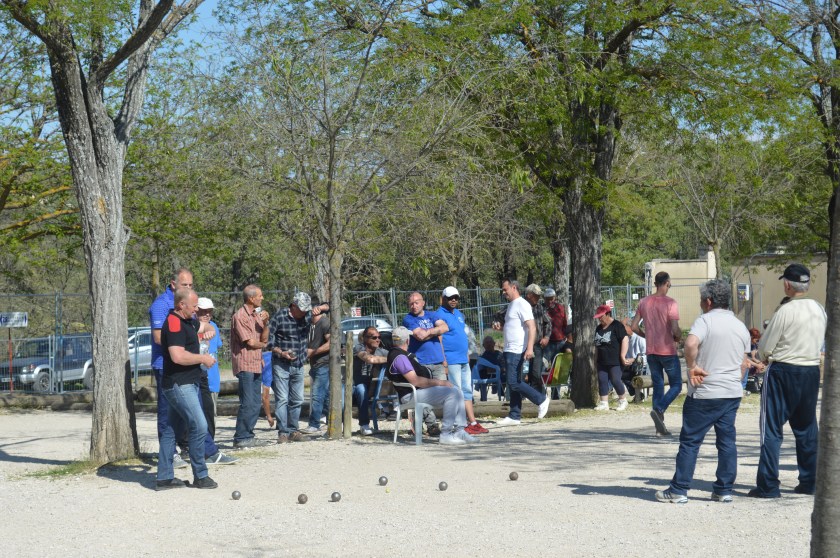
 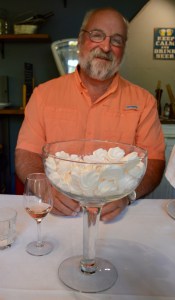 cream. After dessert we were presented with a giant glass dish of meringues. The grounds of the restaurant are loaded with fun yard art but we didn’t think we could get any of it home, so we left empty-handed. The pétanque court was empty too. Driving home we were near Les Baux so we explored the area and found perfect spots for photographs. I can’t imagine what it must have been like to live in the days when Les Baux was thriving.


Dinner was designed to clean the refrigerator, but we didn’t succeed. It is still quite full of all of the produce we’ve purchased at the markets and we likely won’t eat at home for the remainder of the trip.
Nancy
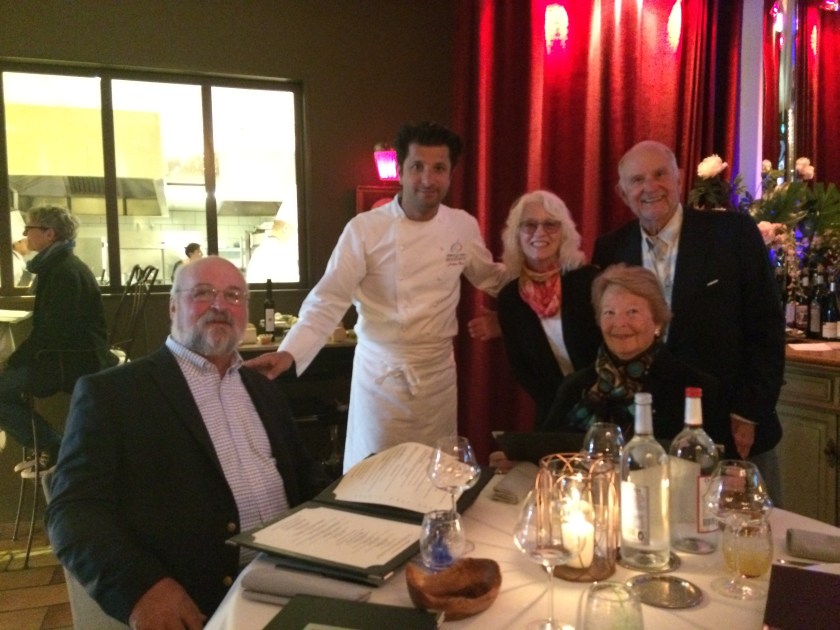 Dinner was in a Michelin starred restaurant in St. Remy–
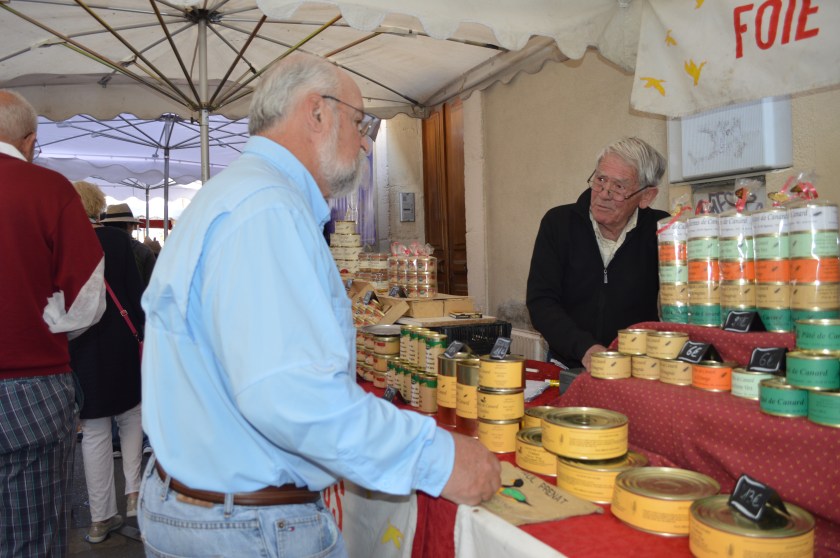 Today was a little more lively…Wednesday is market day in St. Remy so we went to town. Allan wanted to bring home canned duck confit, but Paul was out of the 4-piece cans by the time he tried to purchase so we moved on.
 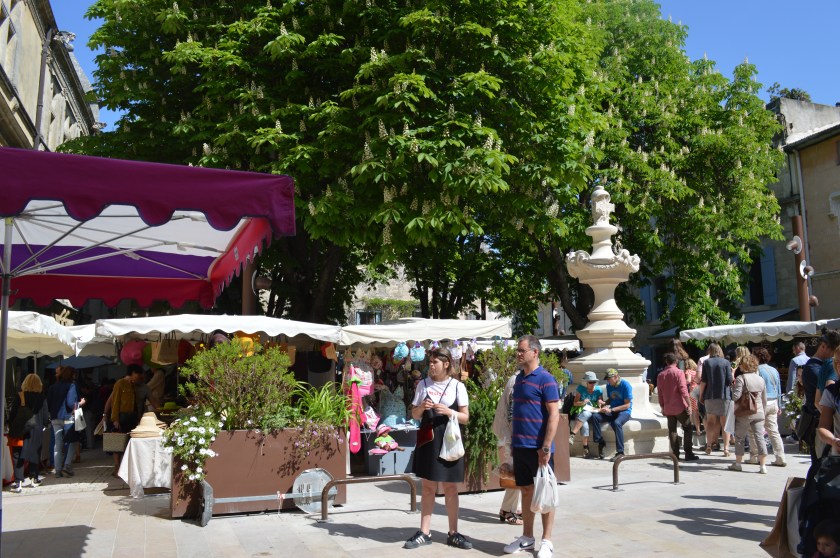 Clay and Connie purchased everything we needed for our dinner of oyster stew and salad. We bought jambon (ham), croissants and a baggette to make a tasty lunch. This small park in the center of St. Remy with its spreading (and blooming) chestnut tree is a lovely spot to sit quietly on non-market days.
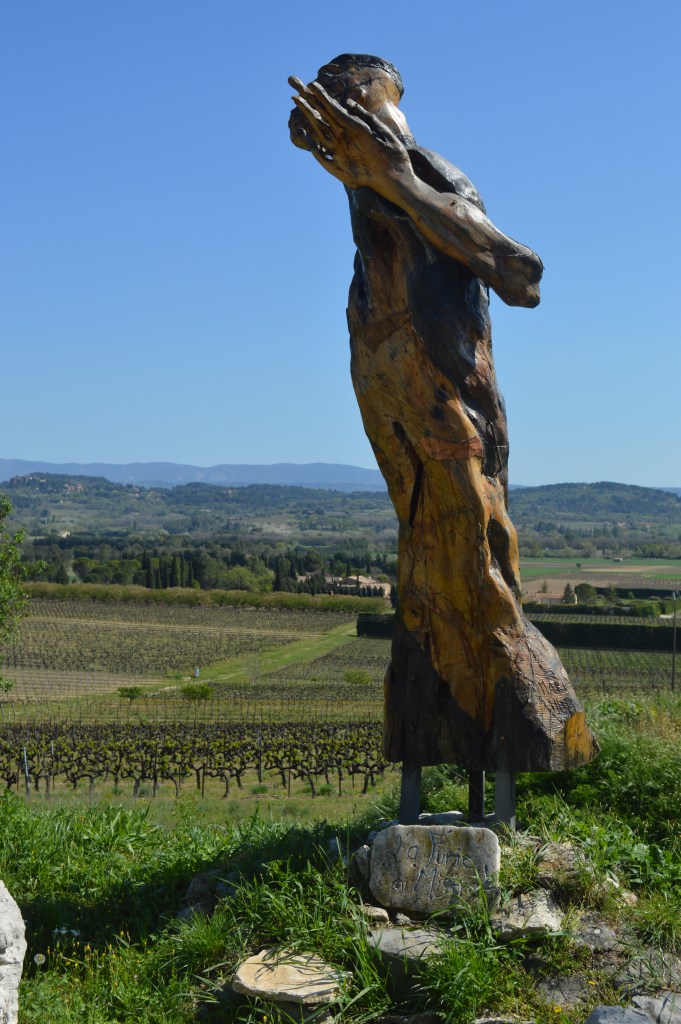
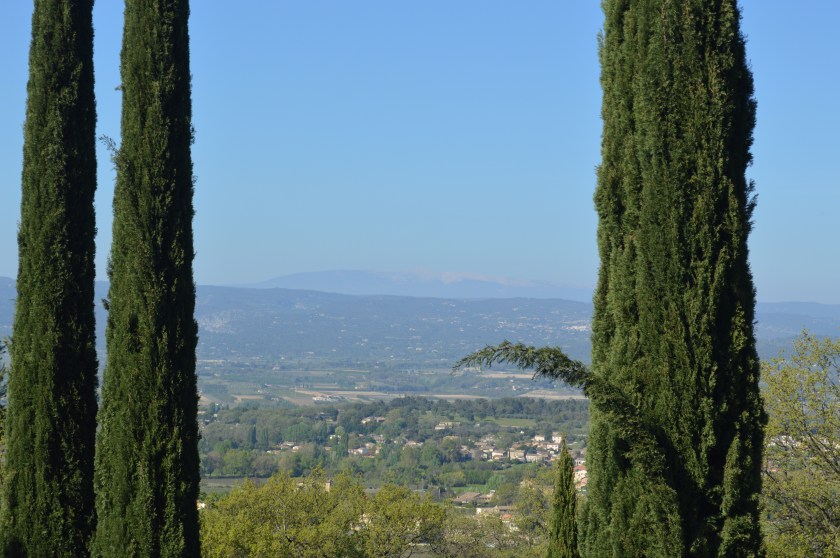
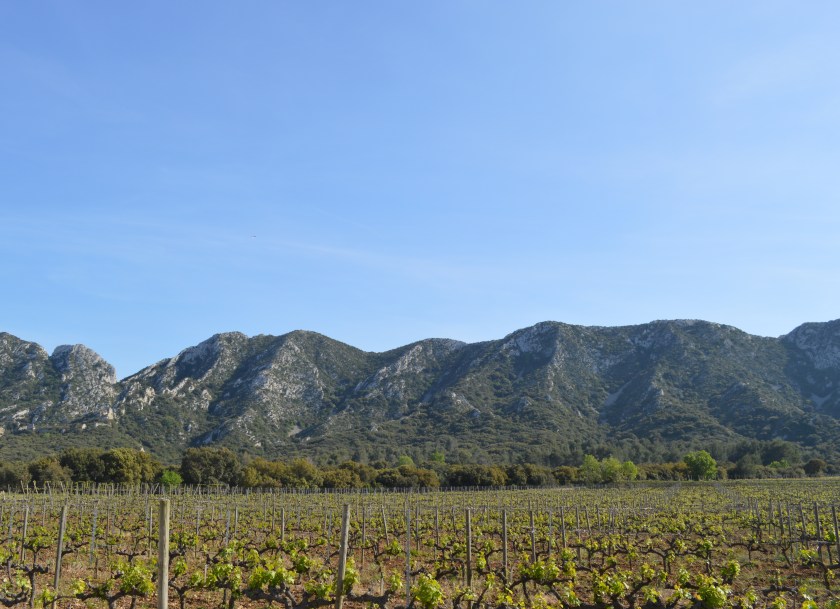 After lunch, we all napped before returning to some of our favorite local places–the olive mill/grove/processor, Calanquet and Domaine Romanin. We all purchased a few souvenirs and of course, more wine. While at Domaine Romanin, we saw a glider, pulled by a small plane, take off and soar over the mountains. Another very peaceful site to behold. This mountain with the vineyard in the foreground is one of my favorites.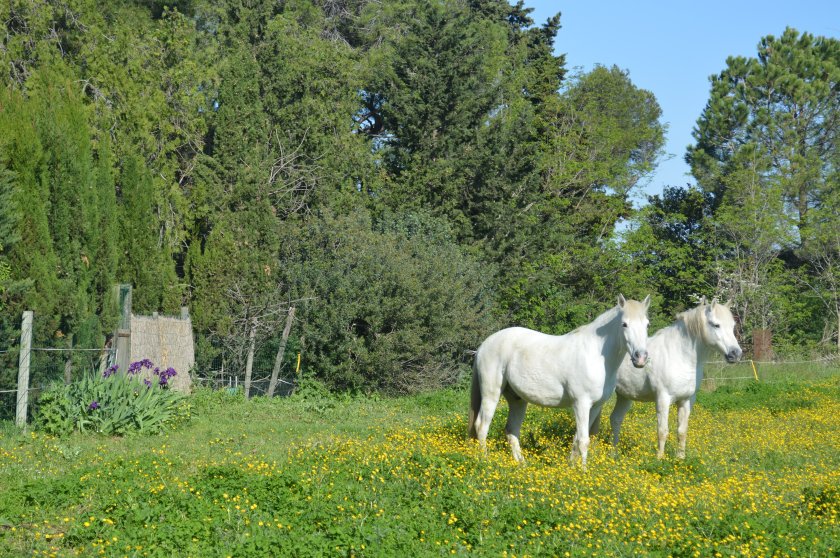


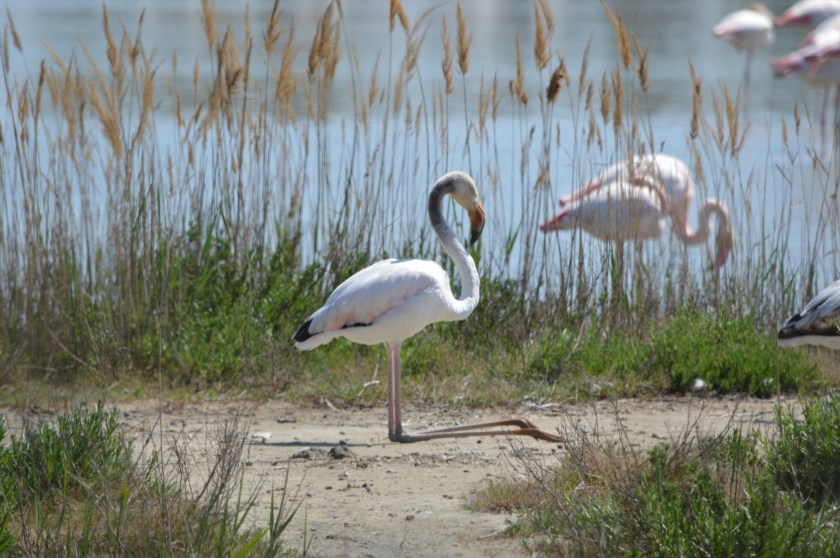
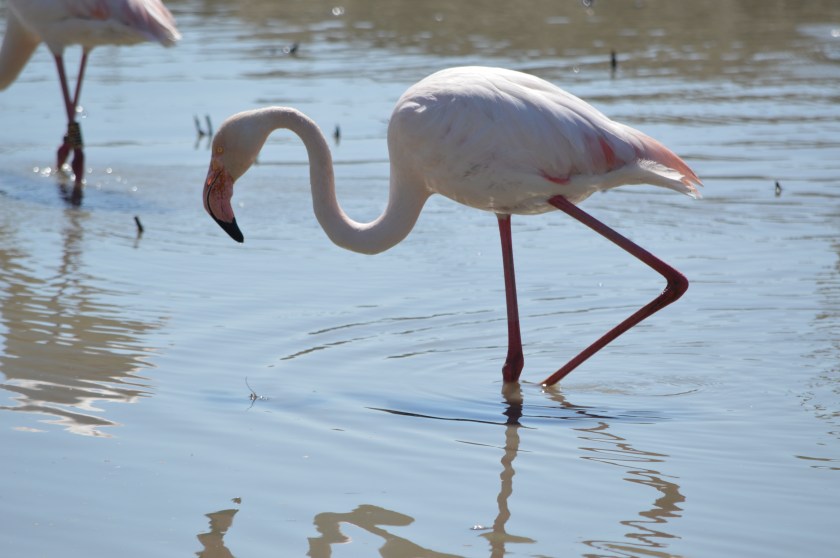
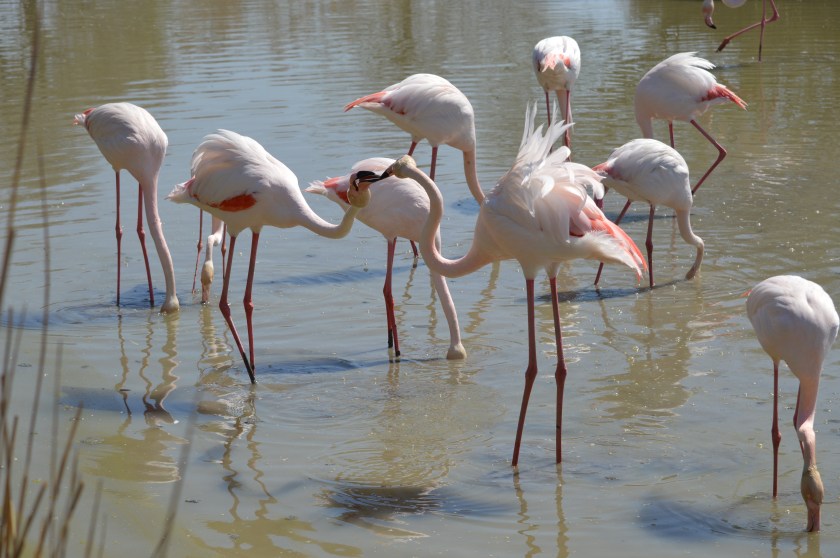


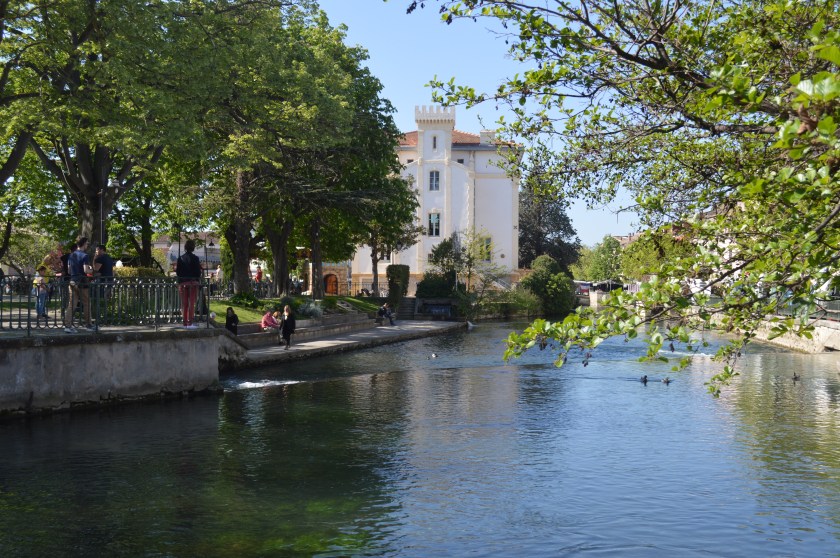 Another beautiful day in St. Remy…temperature starts in the high 40s, reaches the low 70s in mid afternoon and is back down to mid 60s before sunset. We haven’t even had many French clouds to admire! This morning we drove to


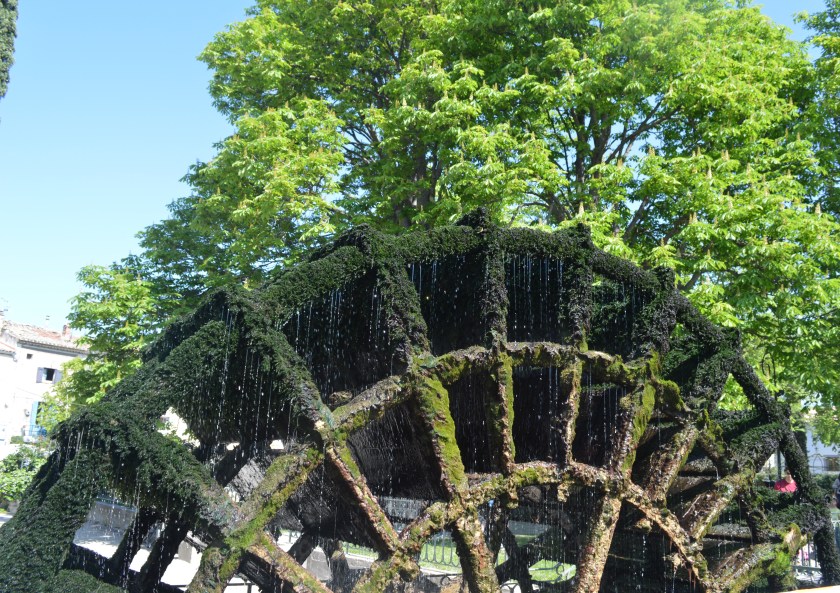 We had lunch here at Le petit frere; walked around the old town one more time and moved on to our next destination, Fontaine, only 7 km from L’Isle sur la Sorgue. There is not much to see in Fontaine except for the spring from which the River Sorgue emanates and the rocky outcropping surrounding the village. We found so many cars in the small village that we decided to only drive through and see what we could see from the car. We missed the spring, but the cliffs and the castle ruins were spectacular.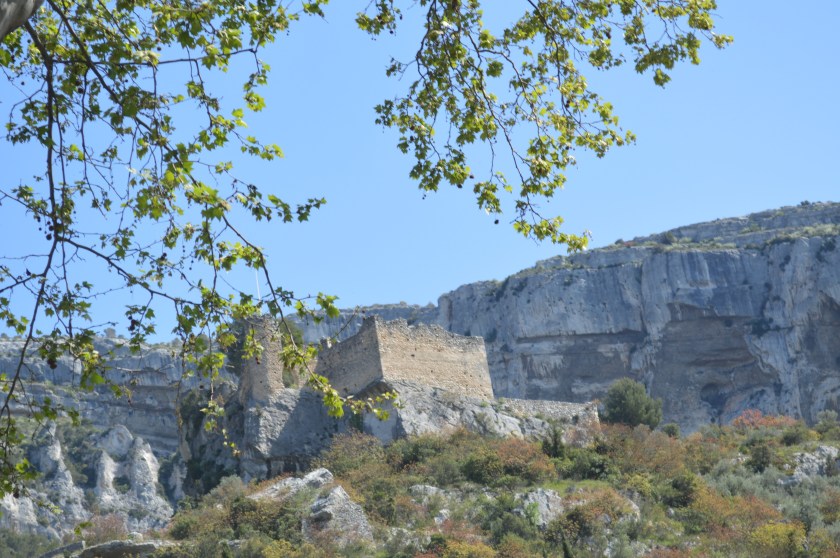
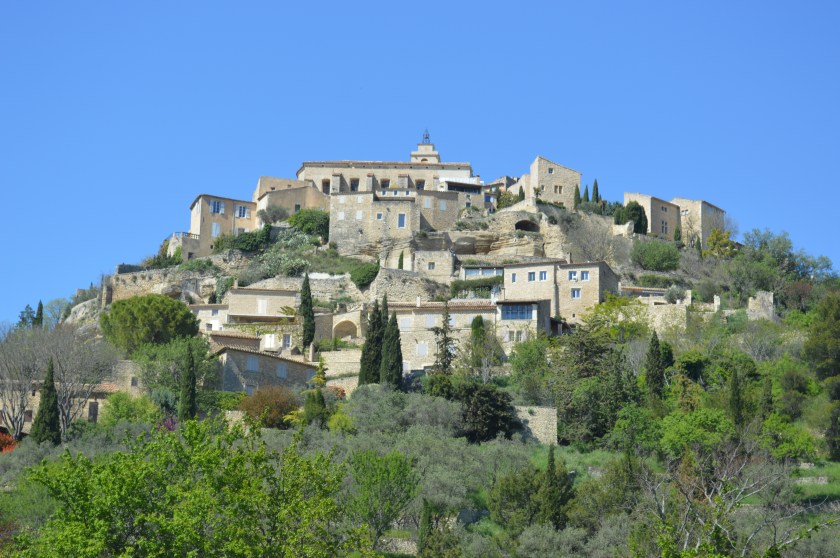
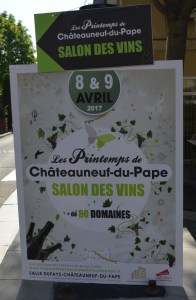 Our goal today was the
 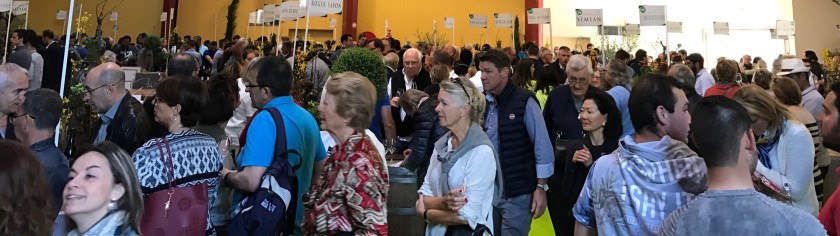 The festival was in a school gymnasium and filled with people, vintners, wine, and one very beautiful Rhodesian Ridgeback.
  About 80 domaines from the Chateauneuf-du-Pape AOC were represented. According to Wikipedia…An appellation d’origine contrôlée (AOC) or “controlled designation of origin” is the French certification granted to certain French geographical indications for wines, cheeses, butters, and other agricultural products, all under the auspices of the government bureau Institut national des appellations d’origine, now called Institut national de l’origine et de la qualité (INAO). It is based on the concept of terroir.” And terroir is, very simply, the site-specific natural climate and soils.
 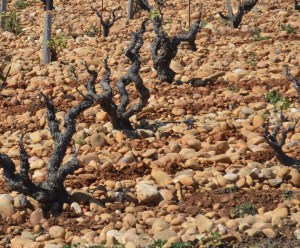 For instance, stress is good for the wine and in Chateauneuf-du-Pape the soil is very rocky causing deep roots that absorb minerals and other nutrients. The rocks also control the amount of water the plant receives and heat the roots when the sun beats down on them. It is against the rules of the bureau to alter the terroir of an AOC which typically means that herbicidal and insecticidal chemicals are forbidden.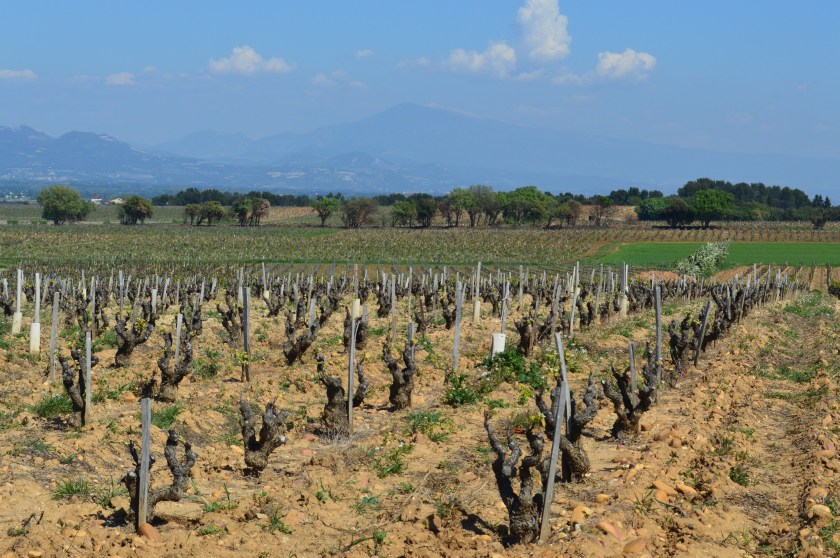


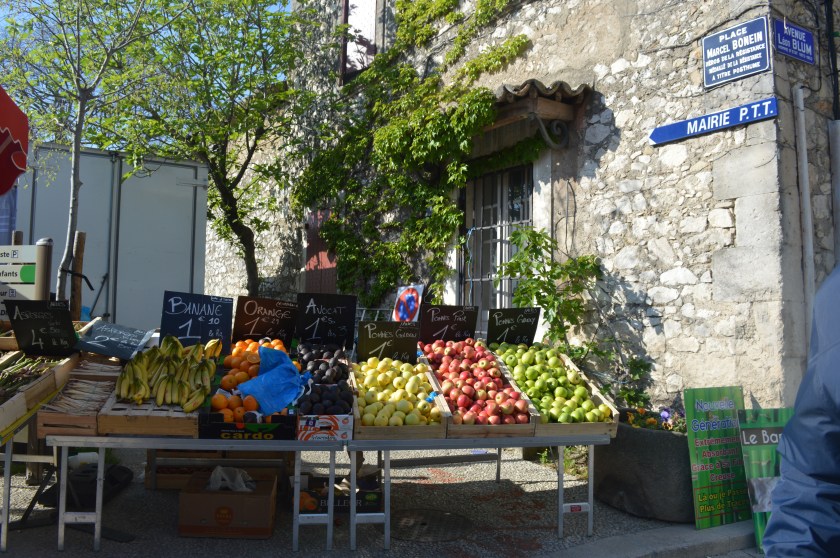 Another adventure filled day in Provence! The morning started off cool (high 40s) and calm, but warmed up as the day progressed (low 70s); sort of like Camelot. Thursday is market day in both Eygalieres and Loumarin.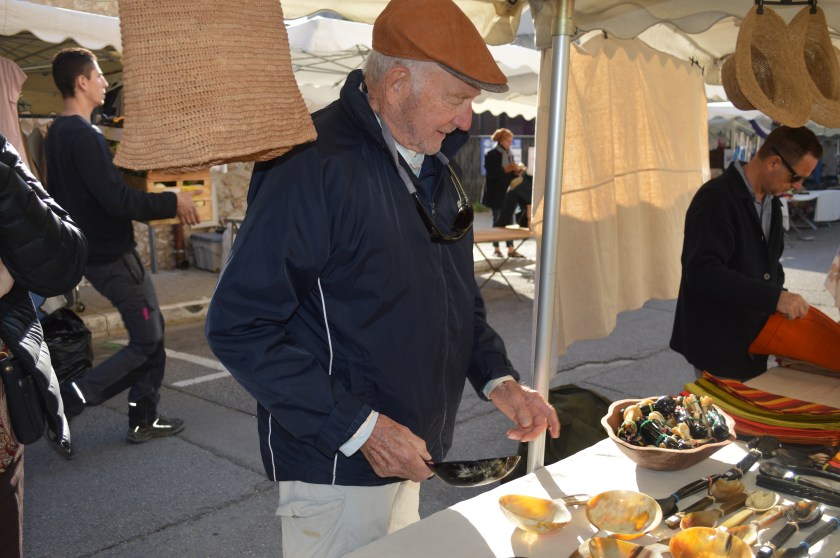
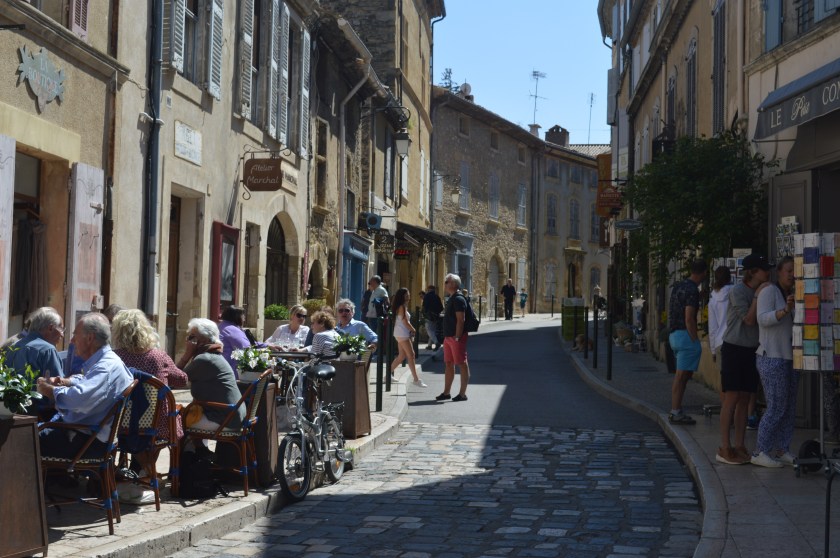 We lunched at L’Orneau after Allan and Clay shared a dozen fresh, salty oysters at the market. One of the highlights of Loumarin is the 15th and 16th century castle. We moseyed though the village back to our car and drove up to the castle.




 Clay and Connie cooked duck confit, baked sweet potatoes, fresh asparagus and salad and after hors d’ oeuvres and wine on our patio in the beautiful evening air with frogs to serenade us, we ate the gourmet meal and retired.
 The first stop on our full day tour with Marlene was at the Moulin du Calanquet. A calanquet is a small protective hill like the huge ones we saw in Cassis. Behind the olive mill is a small outcropping that protects the olive trees from strong winds. There has been farming here for 5 generations and before planting olive trees they grew petunias, silk worms and cauliflower. Following our very informative talk from Helen about the process of growing, pressing and bottling olive oil we had a tasting of the five varieties of olives they grow here, the oil they produce, jams, and other products. Yummy way to start the day! This mill uses every part of the olive; the pit is pressed with the fruit since it contains the antioxidants and helps to preserve the oil. Nothing is wasted—-ground pits are ultimately burned for fuel; hulls, twigs and skins are composted to fertilize olive trees; twigs from trimming are used to make baskets; and bigger limbs and trunks are made into bowls. Clay and Connie sent home a box of oils.
 In Nimes the best preserved Roman era buildings in France are found as you can see by the perfectly preserved ornate columns and cornices of the white limestone Maison Carree. We learned that denim (du Nimes) came from Nimes and that it was a big textile center. The amphitheater here was built by Augustus in the first century A.D.
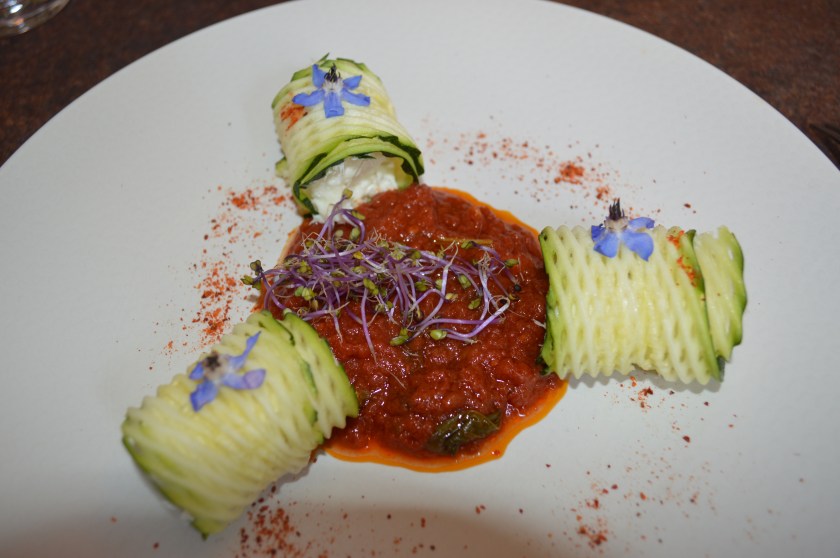 We had a Provence favorite and the house specialty, brandade de morue–an emulsion of salted cod and olive oil for an appetizer at lunch at L’Ancien Teatre. This version was so well prepared it made want more. I’m wondering where we might find salted cod in New Orleans…
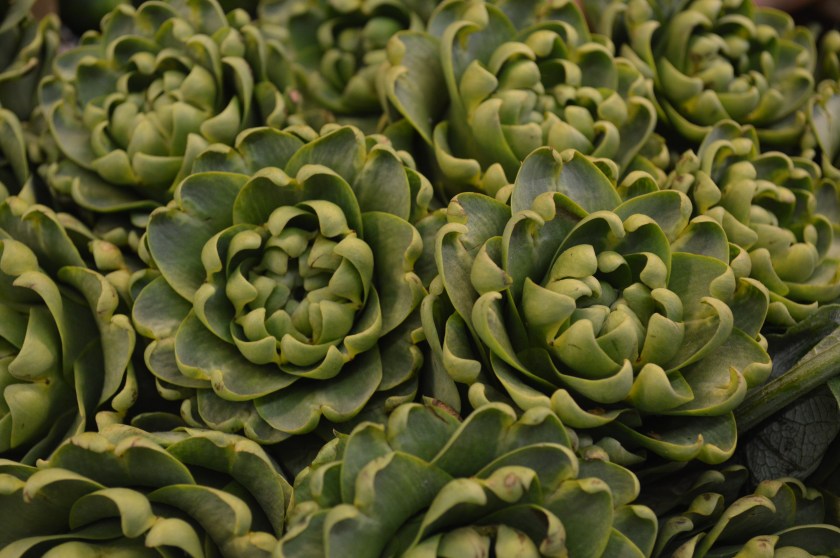 The indoor market reminded me somewhat of the market along the Ramblas in Barcelona. Allan thought it more like a supermarket with each counter managed by a different vendor. I had never seen artichokes that were so pretty–I think they would make an excellent centerpiece!
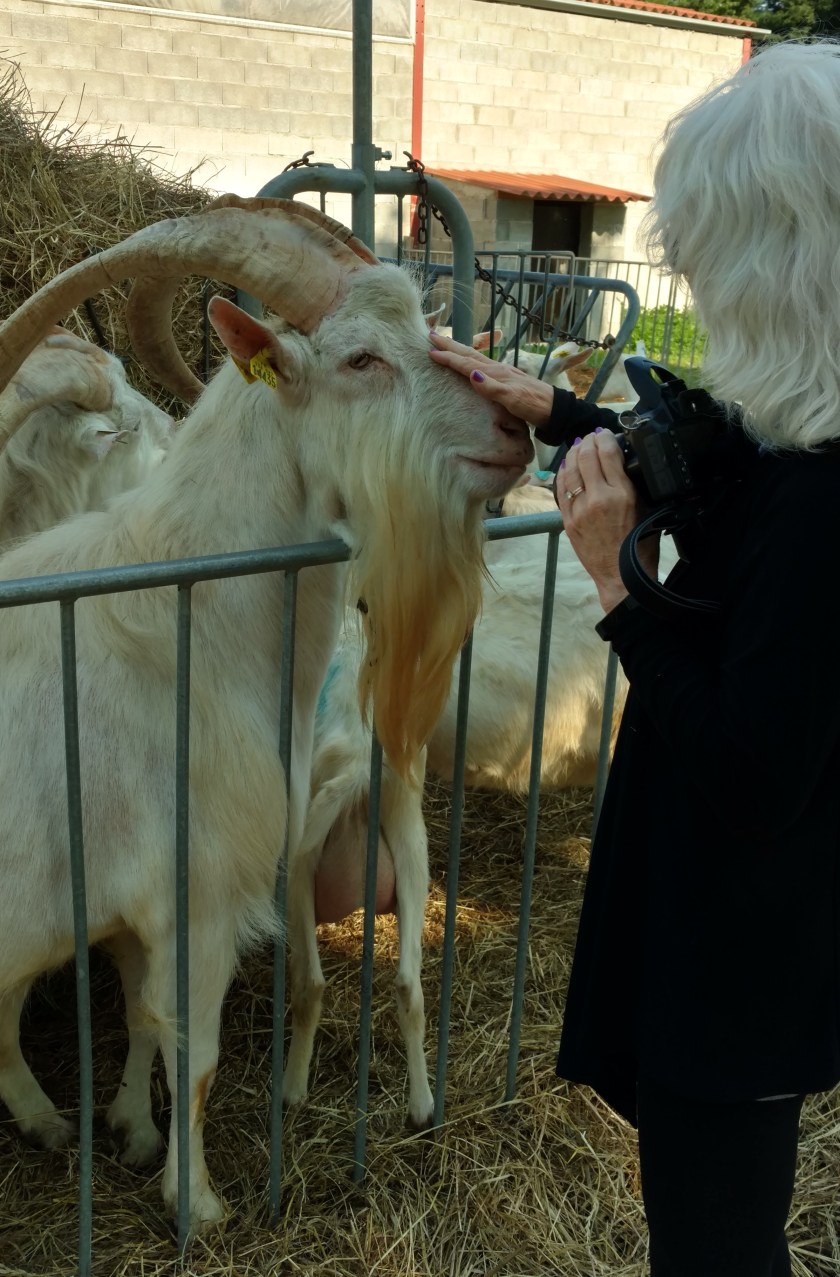 Our final stop was back near St. Remy where we visited a fromagerie complete with goats, a horse and a beautiful rooster. I really enjoyed petting all of the goats–there were a few big sweet billy goats, lots of females for milking and many kids, some only 4 days old. We tasted several cheeses and brought some home with us which Connie sliced and lightly fried to serve on top of salad.
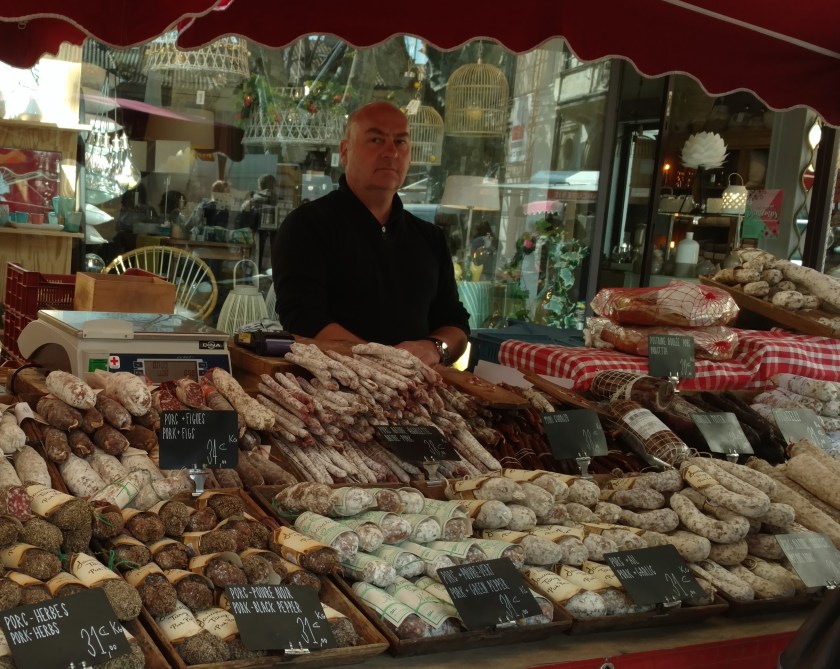 Wednesday is the market day for St. Remy. It is a far cry from the market on Monday in Cavaillon. The wares range from antiques and art to handmade furniture to tablecloths to cheese and sausage to oysters to fruit and vegetables and everything else in between. And, it all appears to be high quality. We wandered through the streets of the center of town stopping to sample before purchasing olives, cheese and sausage. Allan and I are bringing home tablecloths–one for Poplarville and one for New Orleans–and two more cigales for the kitchen in New Orleans. It was cold so we each bought a soft, warm woolen scarf. Connie and Clay bought paella, oysters, artichokes and everything else we might need for lunch and dinner.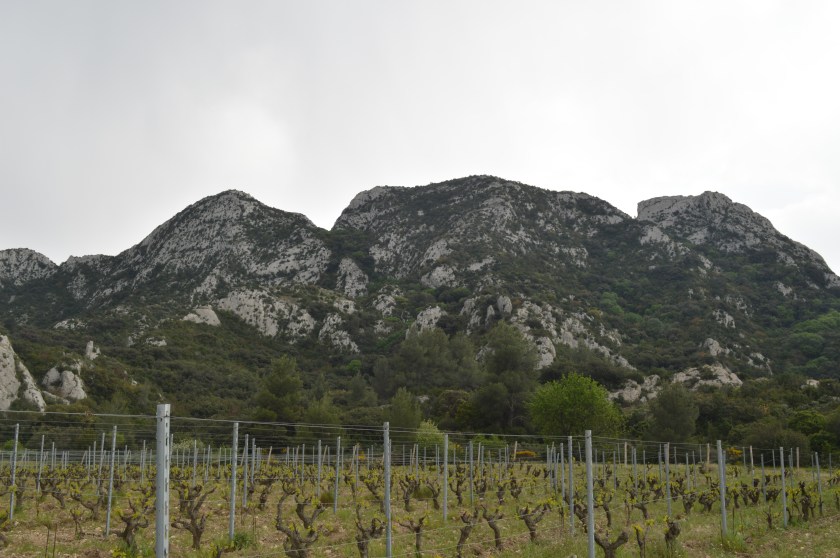
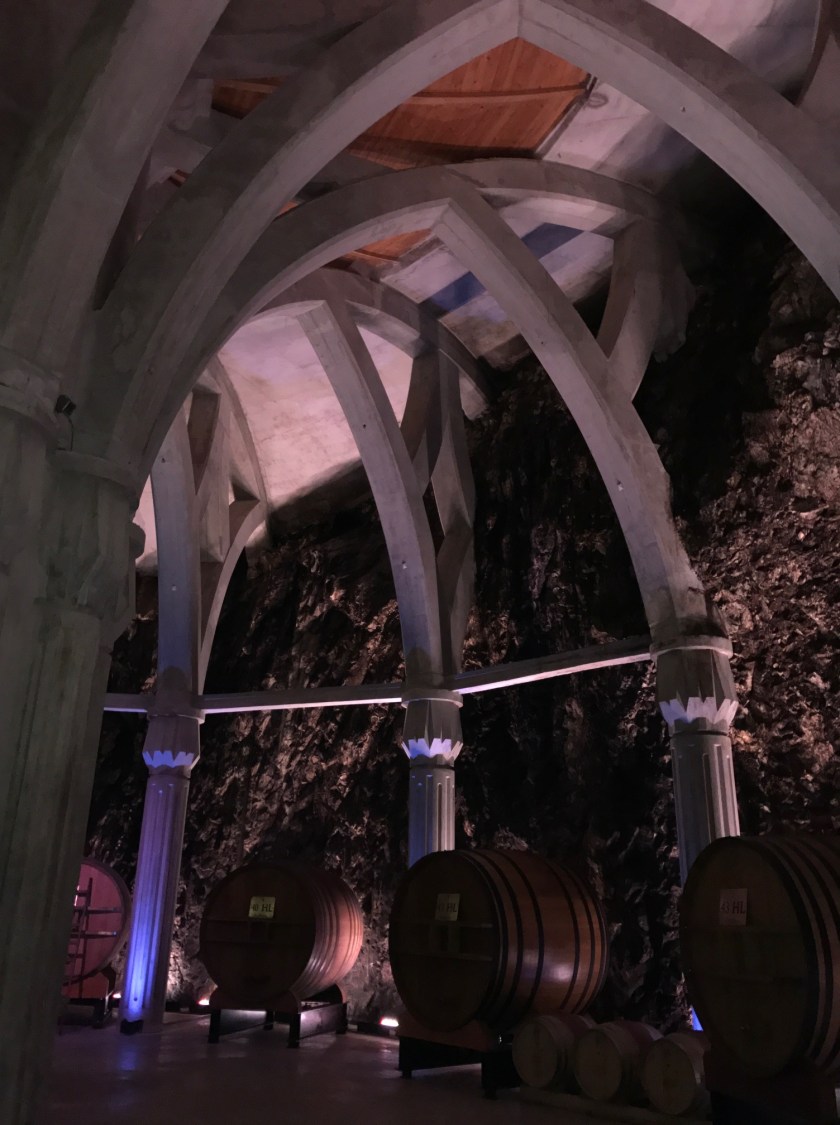
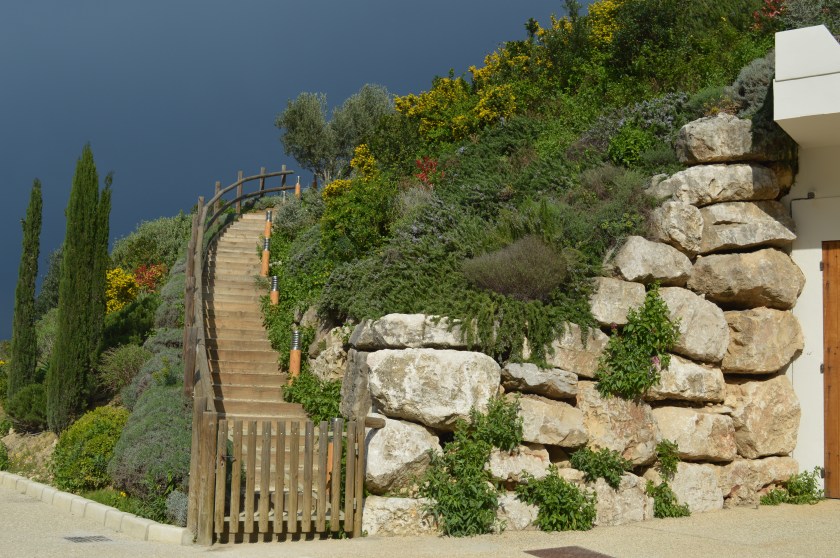 Leaving Arles, we decided to follow Clay’s lead and he took us to a beautiful and relatively new winery just past St. Remy on the way to Cavaillon,

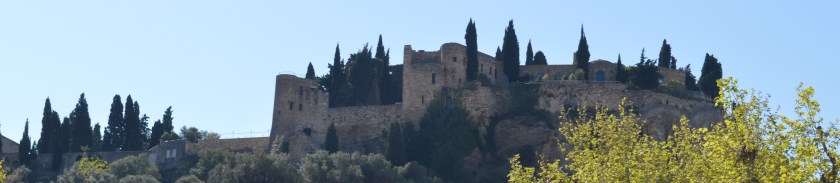 Our guide, Marlene, picked us up at 9 and we headed southeast on the toll highway toward Aix en Provence. She suggested we drive around Aix and see Cassis, returning to Aix after lunch. It was a good decision. Cassis is a small fishing village between Marseilles and Nice on the Mediterranean. It appears to be guarded by a castle begun in the 4th century during Roman times up on the highest hill around. The entire structure was built over time, being mostly finished in the 13th and 14th centuries. The castle is now a pricey B&B.
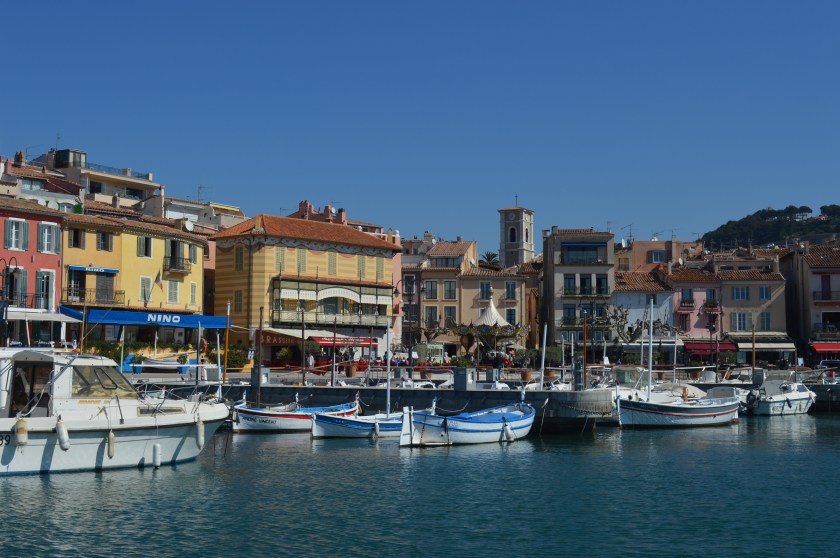 Bouillabaisse is a fish stew that apparently originated in Marseilles and everyone says you should definitely try it in one of the coastal villages. They bring a thick tomato-based broth clearly made with fish stock, flat croutons, a bowl of aioli, and a bowl of grated Parmesan cheese. Step one is to cover the crouton with aioli and cheese, float it in the broth until it is soft, scoop it out and eat it. After eating most of the broth this way, in step two they bring a huge platter of various whole (poached) fish to the table for your approval. The fish is returned in a bowl with potatoes and step three is to eat all 4 or 5 of the fish. It is quite a production and good, but WAY too much food.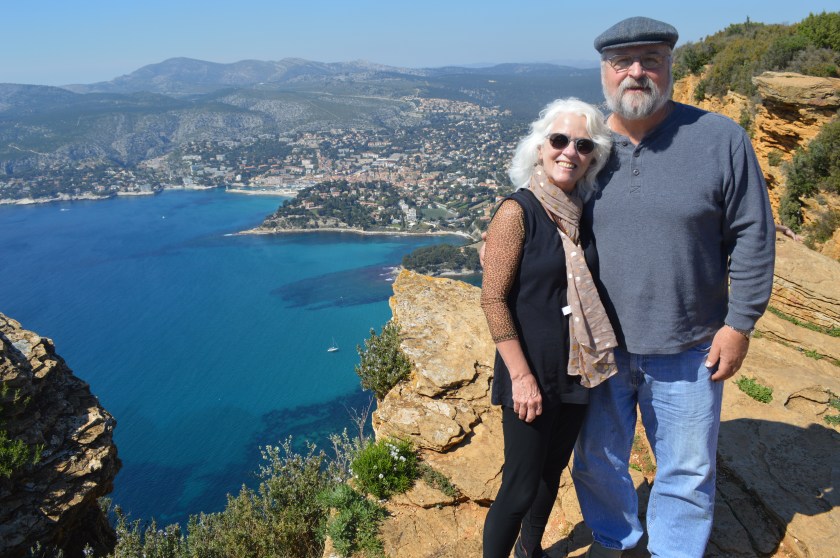
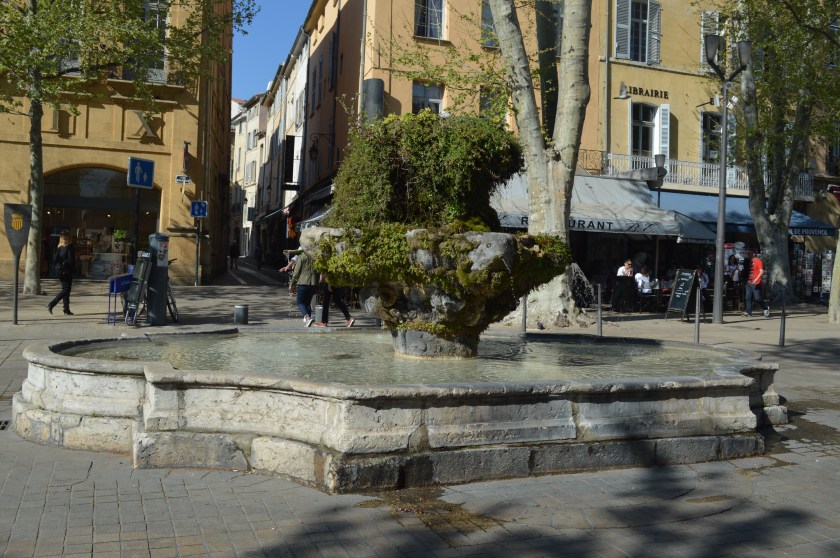 One of the most famous citizens here was Paul Cezanne. His father was a successful hat maker and merchant and lived along Mirabeau, eventually became a successful banker, sold the home on Mirabeau and built an estate a little ways away. He was disappointed that Paul decided to study art and not law. Paul Cezanne painted many of the sites around Provence, one of his favorites being Mont Sainte-Victoire. On our walk down Cours Mirabeau, we stopped at the bakery, Bechard and purchased a tasting of treats called callisons. These candies were made by the ruler of the area as a special gift for his young wife on their wedding night. They are made with candied fruit and ground almonds. These special candies were also thought to ward off the plague, probably because of the protein and vitamin C in their ingredients.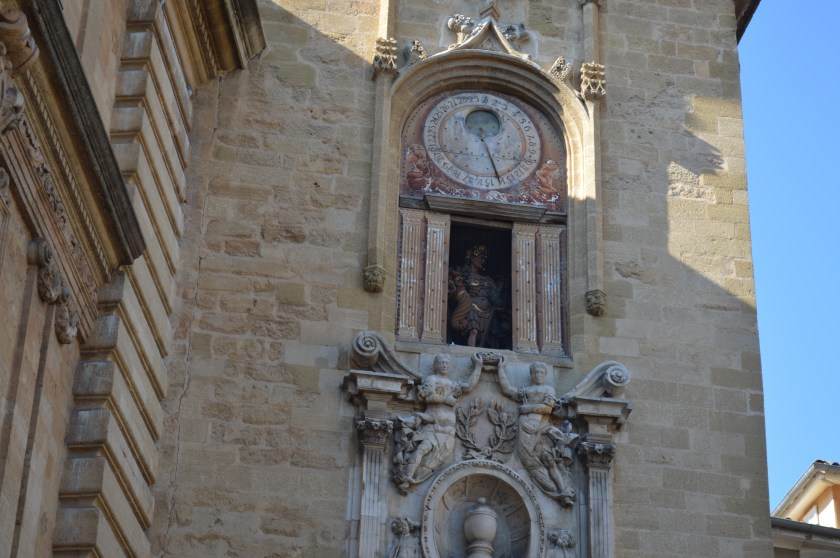
 After our usual breakfast…we struck out for Cavaillon. We had searched nearby villages for Monday markets and found Cavaillon–about 20 km away. The market was a little disappointing–lots of clothes and household item vendors, a small number of vendors selling vegetables, meats and fish and we never did find anyone selling original Provençal craft items. The town, however, has several items of interest: The
 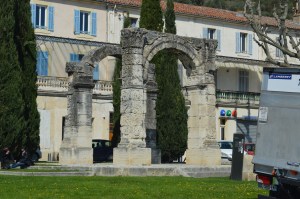 Chapelle St. Jacques is on the top of the mountain and connects to the Roman Arch through stone steps called the Colline St. Jacques. From the chapel the view across the valley is stunning.
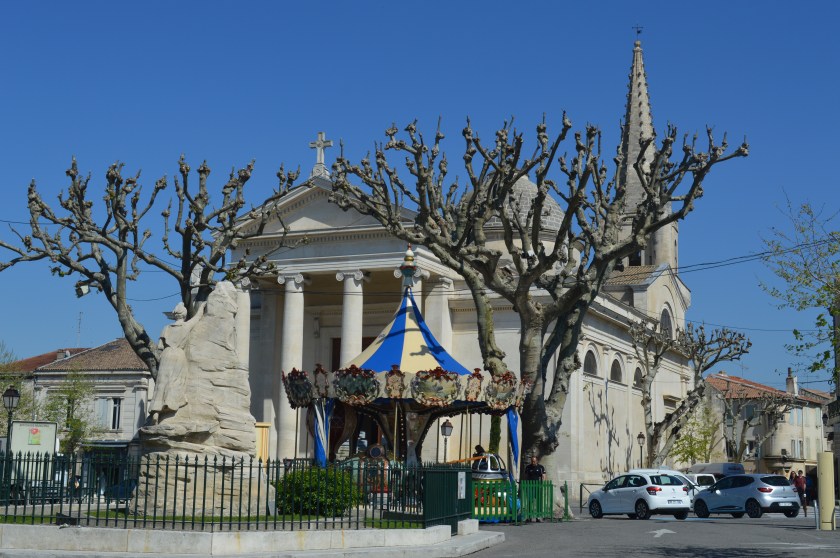 We rested until the shops were open and Connie and I headed to town to find a jacket she had had her eye on for awhile. Most of the shops were closed on Mondays, so we returned to Bleu. Sitting on the patio, listening to a myna bird singing in a nearby tree, drinking wine and enjoying the beautiful clear weather was actually a better way to spend the afternoon. Connie and Clay cooked a wonderful dinner of rotisserie chicken, rabbit, potatoes and homemade asparagus soup (the best part of the meal!).
 Latest Travels