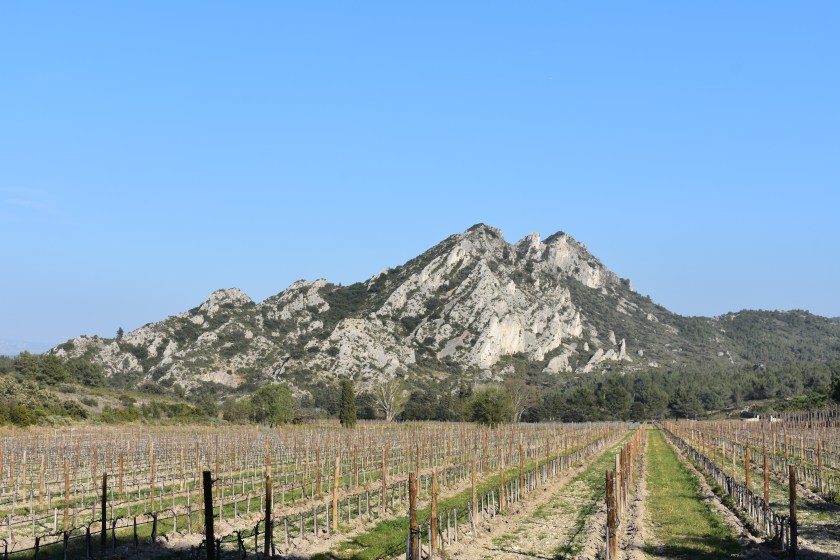
What a perfect day! Clear and cool when we woke and warming when we left the villa for the market at Eygalieres–my second favorite market, right behind St. Remy. 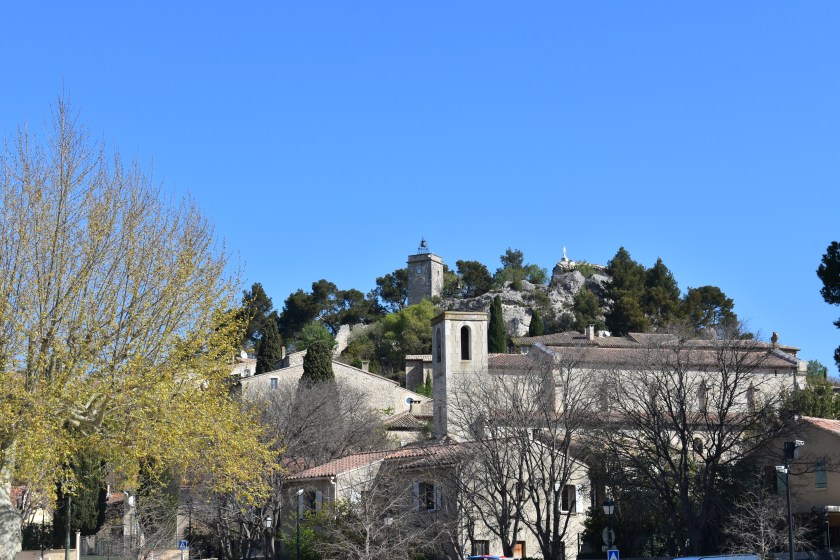 On the way here from St. Remy we had beautiful views of the Alpilles, with olive groves, green valleys and vineyards and occasional restored villas. The town is perched on the summit of a small hill. The market begins as the very base of the hill and and continues through the streets to the right and the left as well as up toward the summit of the hill.

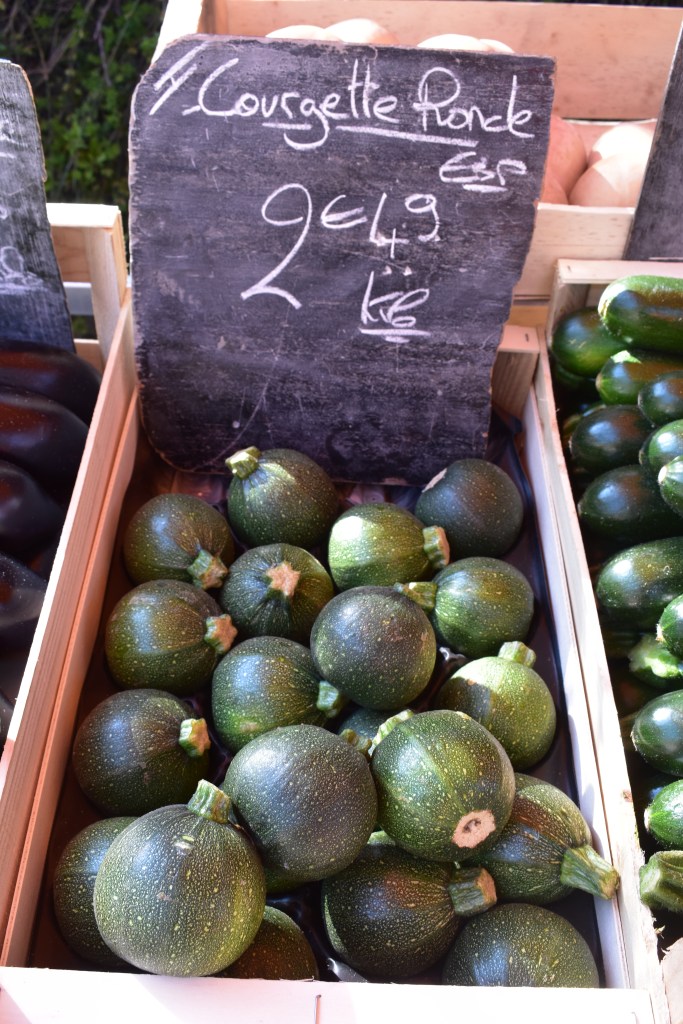
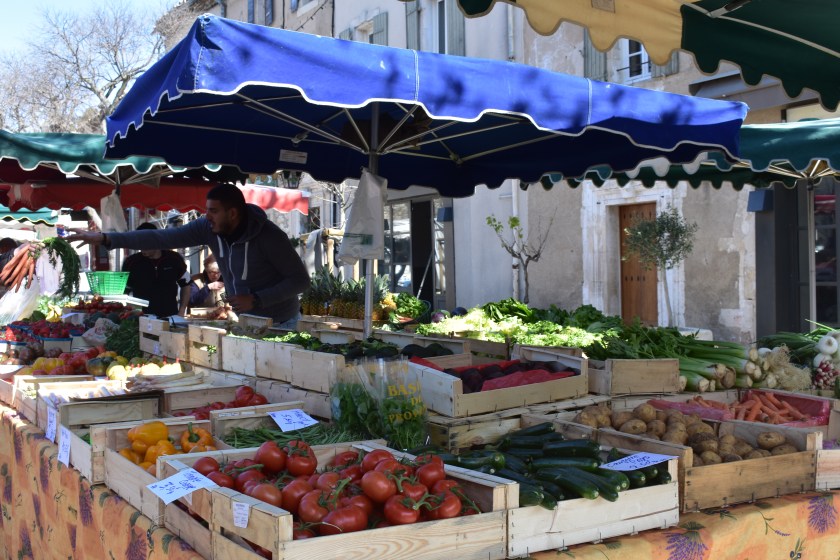
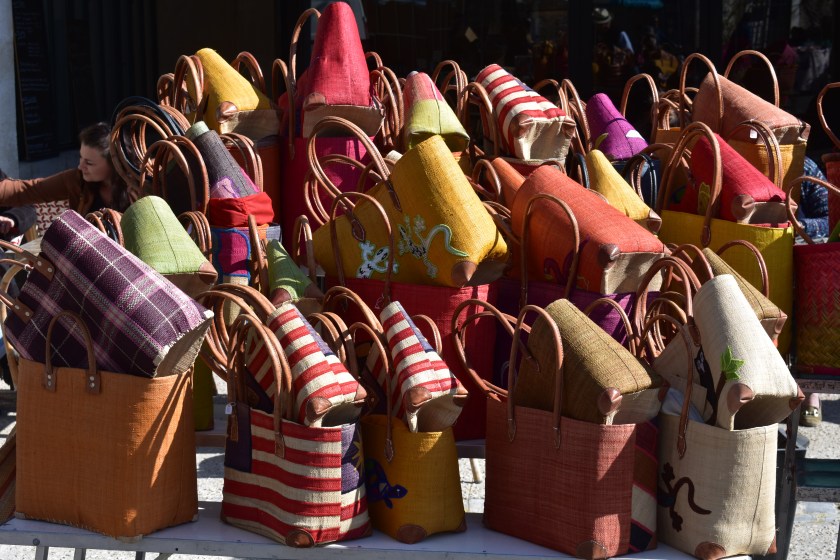
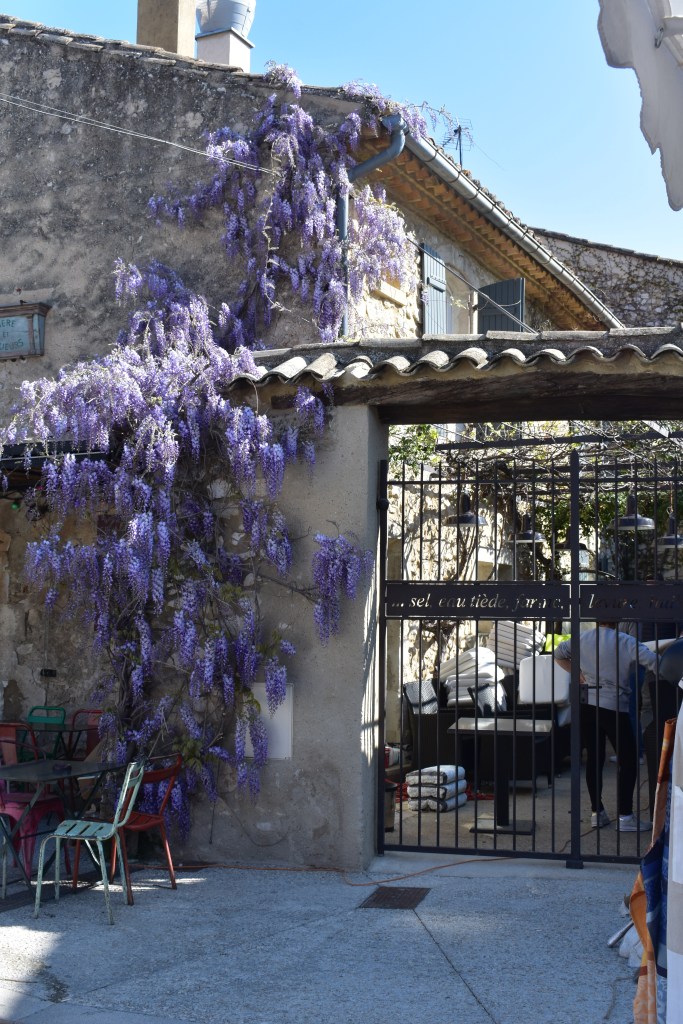
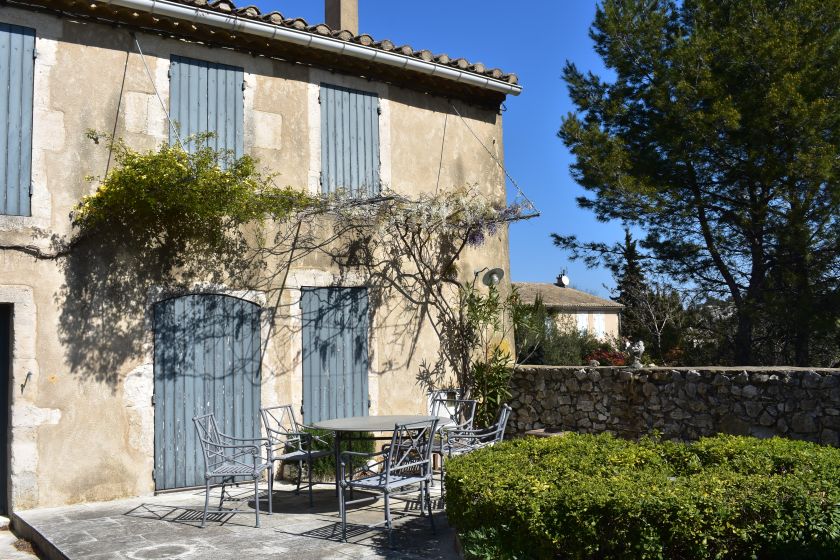
Both the market and the town are colorful, quiet and lovely. Buildings are typically made of stone with flowers softening the facade–wisteria is gorgeous here at this time of year. I have only seen round zucchini (courgettes ronde) here in Provence.
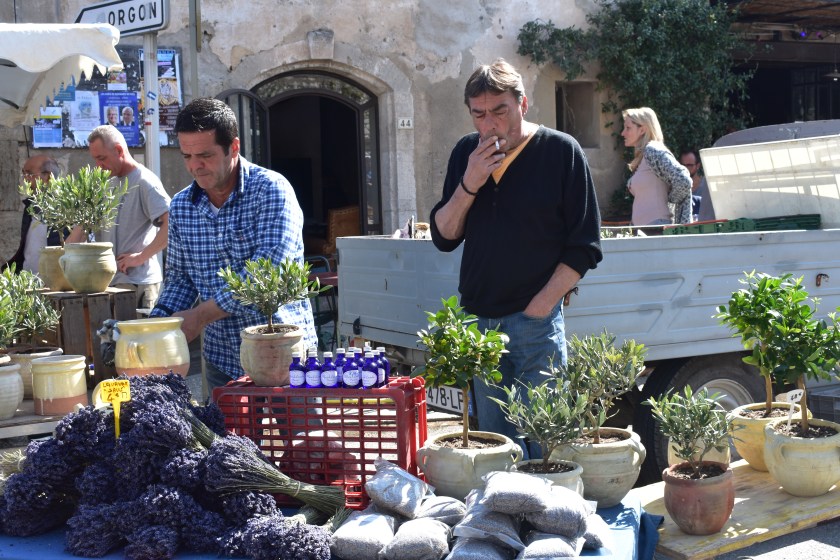
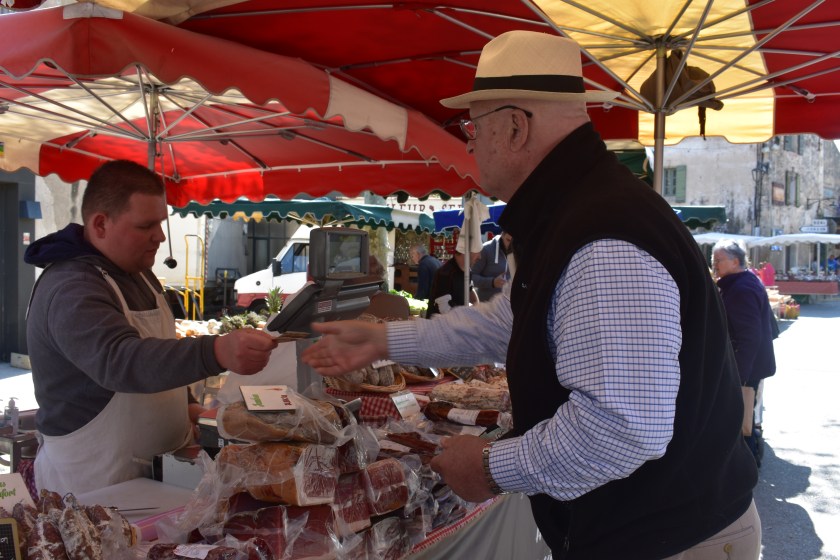
We tasted several sausages and chose the one with fig to bring home. Also purchased beautiful material and a tablecloth to fit our card tables. After we had been through the market we had some time before our lunch reservation so we stopped at one of our favorite wineries.
Chateau Romanin is just outside of San Remy. Its wine cellar is built into a mountain and its back wall is the mountain. Architecturally the cellar resembles a cathedral. In short the winery is quite special. According to perfectlyprovence.com this is a place where wine, religion and mysticism have intersected for centuries. It has a colorful history; the estate has been occupied at any one time by Greeks, Gauls, Romans, Moors and templars. The 13th century ruined castle was last inhabited by templars. The present owners built the current winery in the 1980s and continue many of the practices used in ancient times, in today’s terms biodynamics and agronomy. They pick the grapes by hand use the sun and the moon to guide their viniculture decisions, using only manure and plant/mineral-based preparations–no herbicides or other chemicals. And they use agronomic techniques that allow the wine to express its terroir. It is a modern winery that respects its history, the environment and the wine itself.
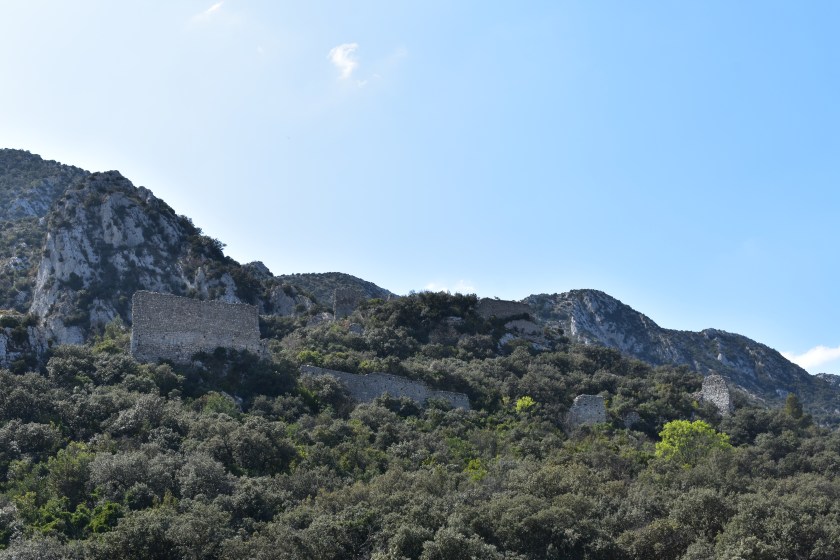
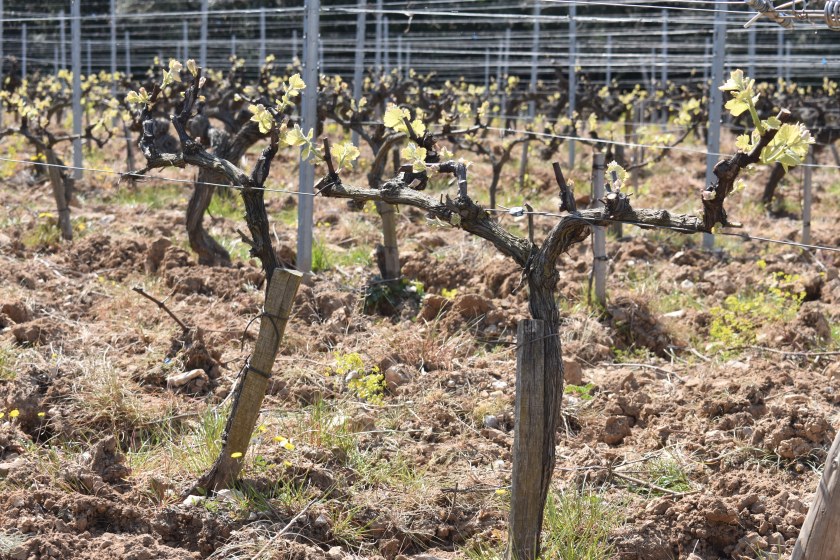 We bought some wine here and headed to our 1PM reservation at Oustau de Baumaniere. Nestled below the rock formations of Les Baux, this Michelin 2 star restaurant is fabulous.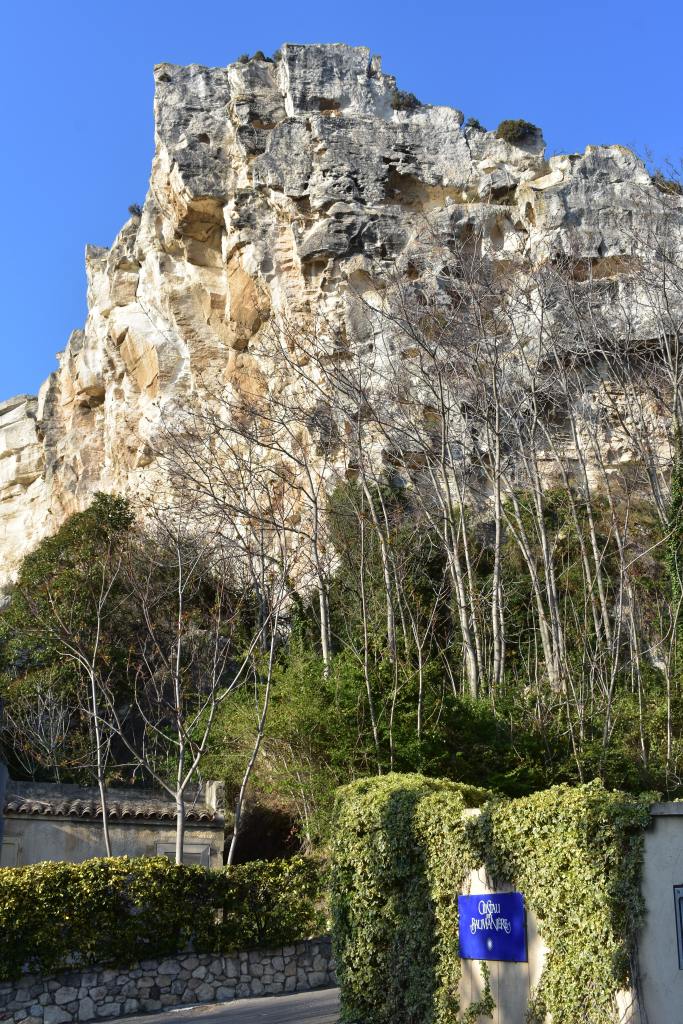
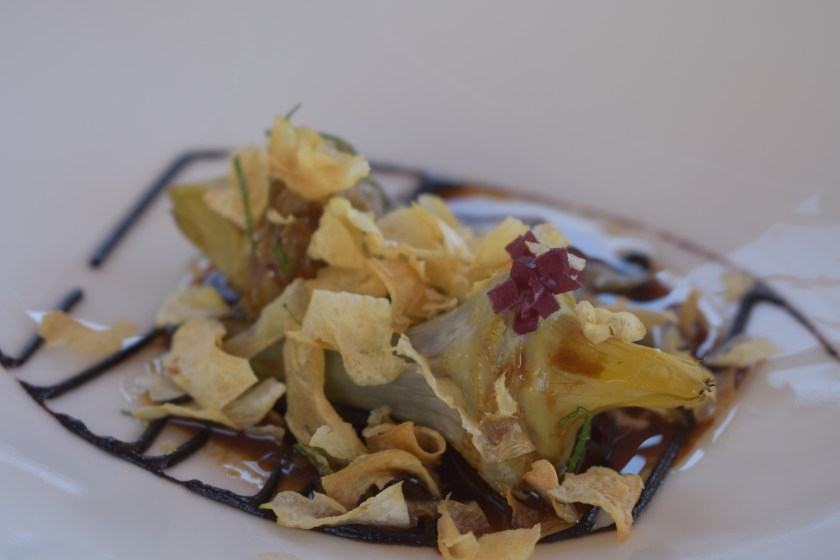
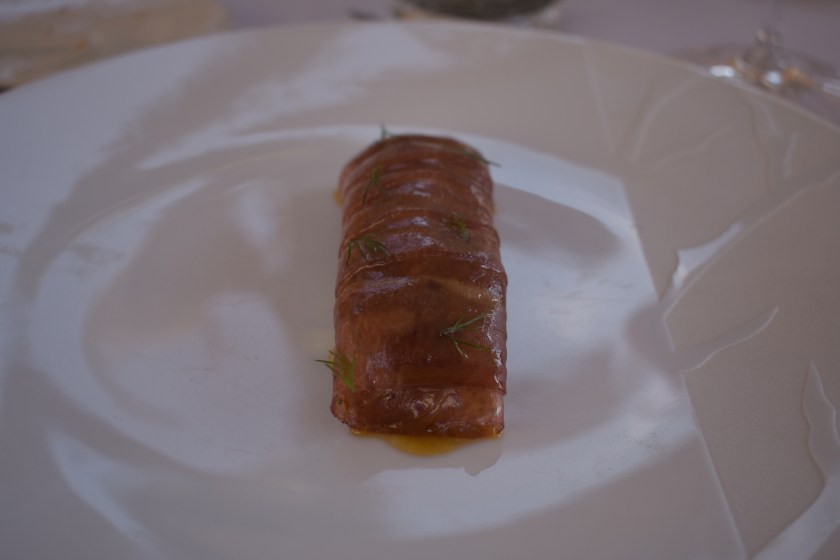
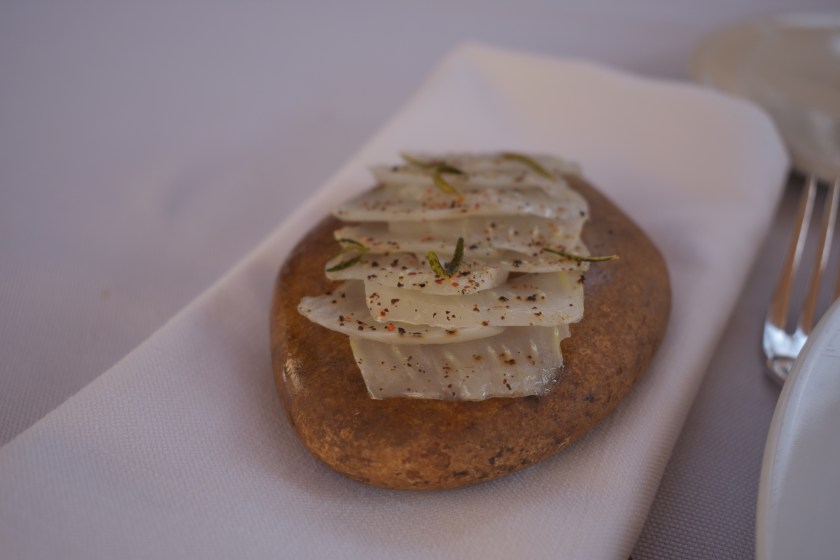


This final photo is of dessert. The presentation of the thinly sliced and candied orange, lemon, and grapefruit slices paired with the dessert with similar flavors was typical of the entire meal. We sat outside on the patio and feasted on at least 7 courses from 1 to 5. It was amazing and we counted it as both lunch and dinner. Filled with people watching, bird watching, great conversation with great friends, it was a gastronomical delight!




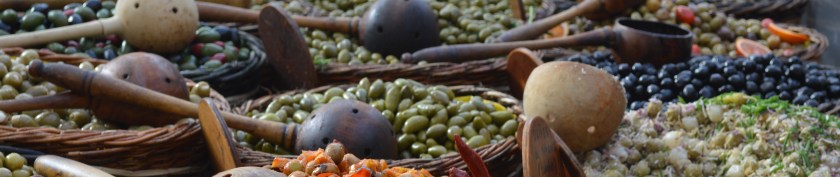 visited with”the duck guy” and bought a can of duck confit for four that “the duck guy” had preserved. I visited with Frank, “the watercolor painter” but will wait to purchase. And, of course, we had a mission. Clay has an excellent recipe for oyster stew and our mission was to secure all of the ingredients. Clay visited “his oyster guy” who shucked him four dozen oysters; Connie found celery and onions; Allan and I found milk and parsley. Clay brought pastis in a small bottle from home and he and Connie went to the InterMarche (big grocery store) for flour.
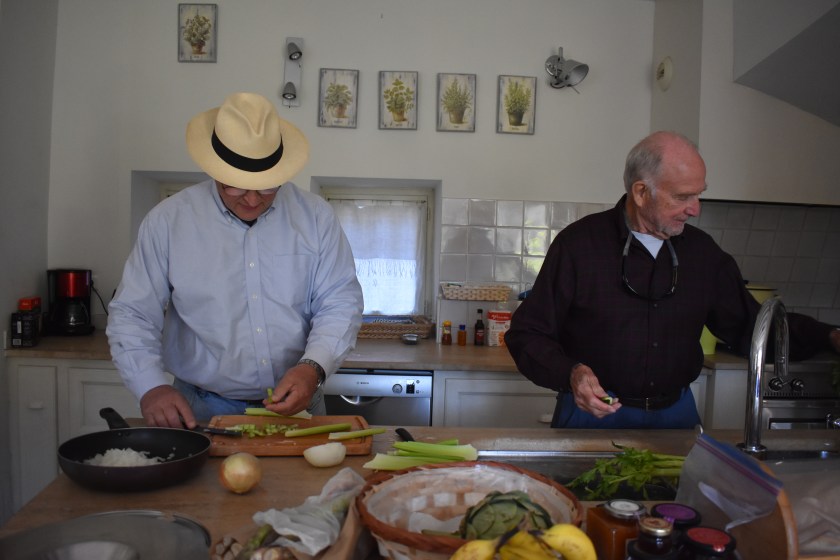 Allan and I had a late lunch across the street at Le Bistro des Alpilles and returned to the villa for Allan to help Clay prepare the Oyster Stew which was delicious! Our feast tonight also included artichokes and a lovely bottle of Clos de Calliou wine.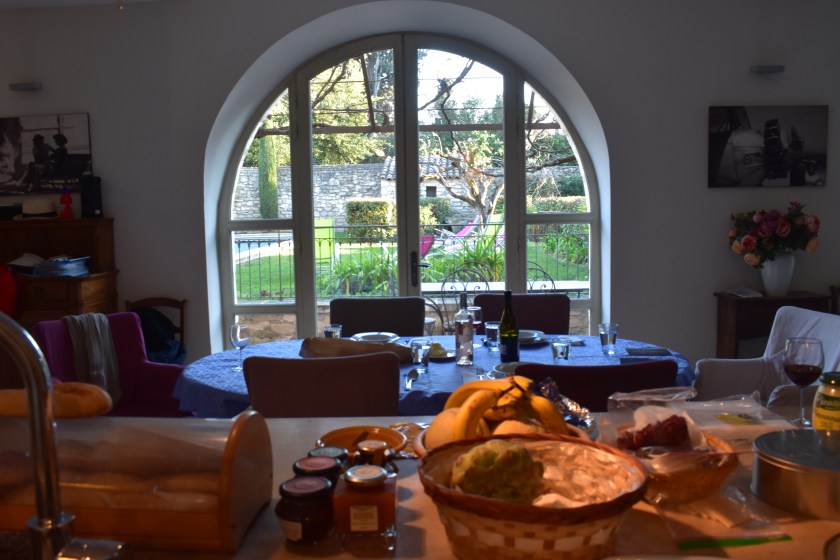
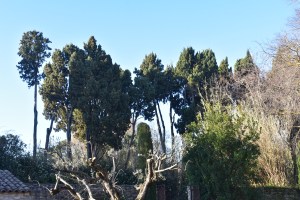 I woke to the mistral roaring again this morning and walked down from the third floor (elevator is still broken) to see our pine trees dancing in the wind. A still photo can’t capture the movement but the winds blow in long and short gusts and cause these big trees to sway and bend like tall, graceful ballerinas.
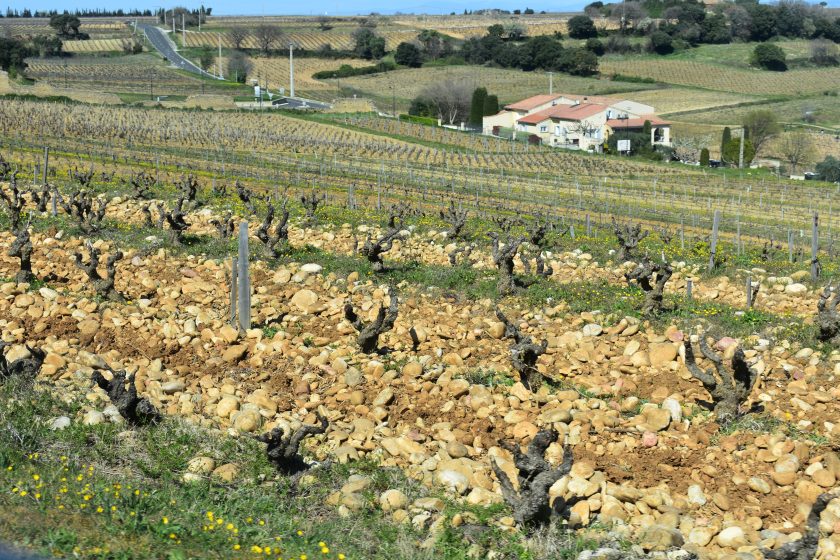 the small town of Châteauneuf-du-Pape–somewhere near the center of the wine region with the same name. This region has some of the highest quality and most expensive wines in Provence, largely due to the favorable terroir. For those of you unfamiliar with this term, terroir encompasses important natural conditions including: the soil, altitude, elevation, exposure to the sun, temperature range, access to water, trees, types of rock on top of the soil as well as in the soil and microclimate for each vineyard. One of the rules of the AOC (see below) is that modification of the natural terroir is very tightly controlled since the quality and appeal of wine is based on the vineyard’s terroir. Rocky soil as a terroir component yields some of the best grapes because the vines roots have to grow strong and deep to survive, the rocky soil provides needed drainage and the rocks on the surface hold the strong sunlight to warm the vines at night.


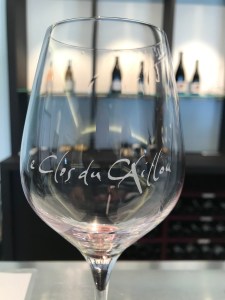 orchards in bloom to his favorite winery in Provence, Le Clos du Calliou. Franciose, who
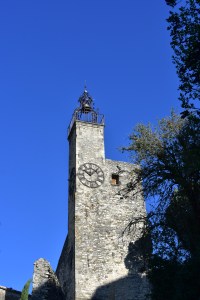 We loaded the wine into the car and because it was relatively early, took off for Vaison-La-Romaine. The medieval city, high on a cliff on the banks of the river Ouvèz, has been inhabited since the Bronze Age in the fourth century BCE. At that time a Celtic tribe, the Vocontii or Voconces called the village home. The city, of course, has been pillaged and plundered by many over time and now is maintained for tourists interested in Roman civilizations. After crossing a bridge from the 1st century AD, we didn’t get too far in our visit since the climb was so steep. The clock tower sits on the old city wall and is a good landmark to identify Vaison. We returned across the bridge to our car and after adjusting the GPS system, Clay drove us home. Dinner was “eat what is here” and we all had different light meals, visited for an hour or so and called it a night. BTW, the mistral blew itself out of St. Remy about 9:00 PM.
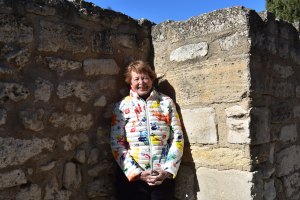 We felt the cold wind whenever we were outside but it was very strong up on the mountain where we walked around Les Baux. It took us about 10 cold minutes with the wind swirling around us to get to the


 We tasted a few of their featured wines and purchased a couple of bottles to share during cocktail hour. Dinner was at home and we enjoyed the quiet company and lively conversation with the mistral roaring in the background.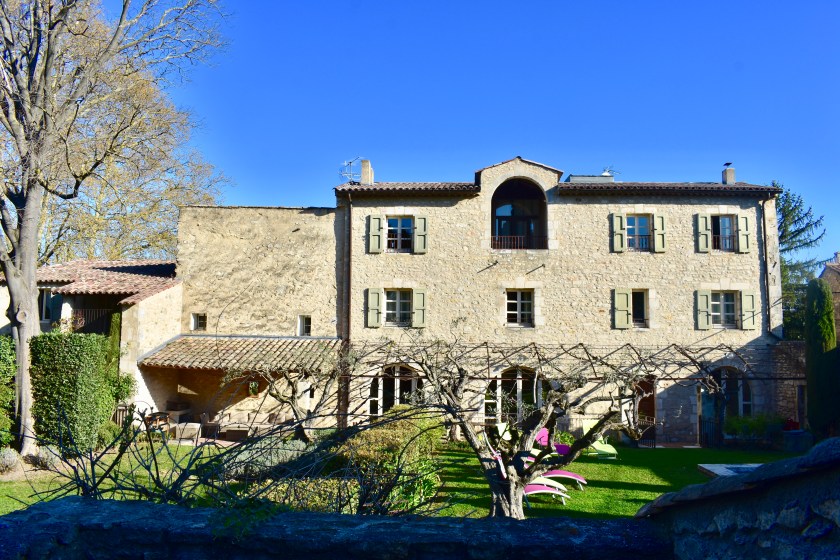


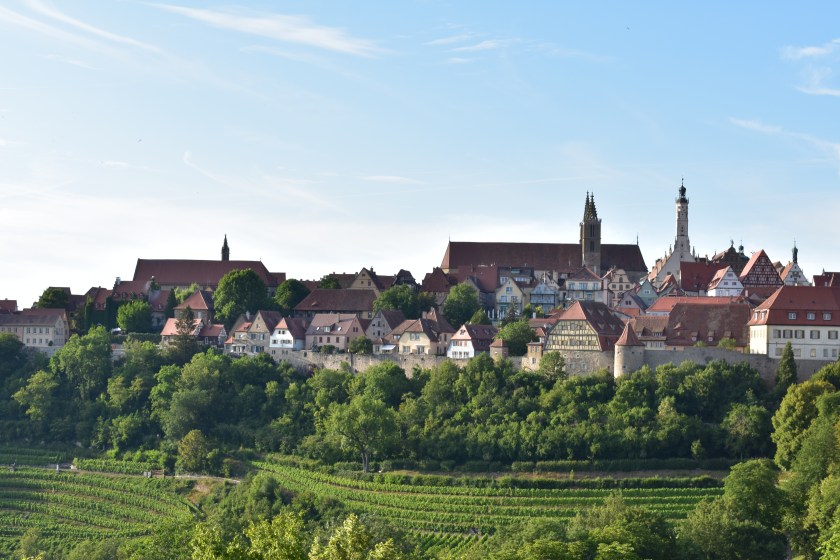
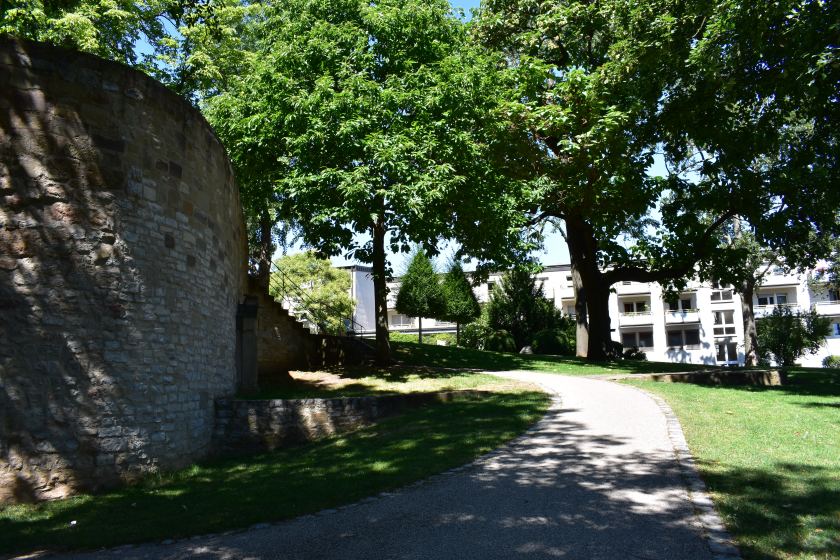
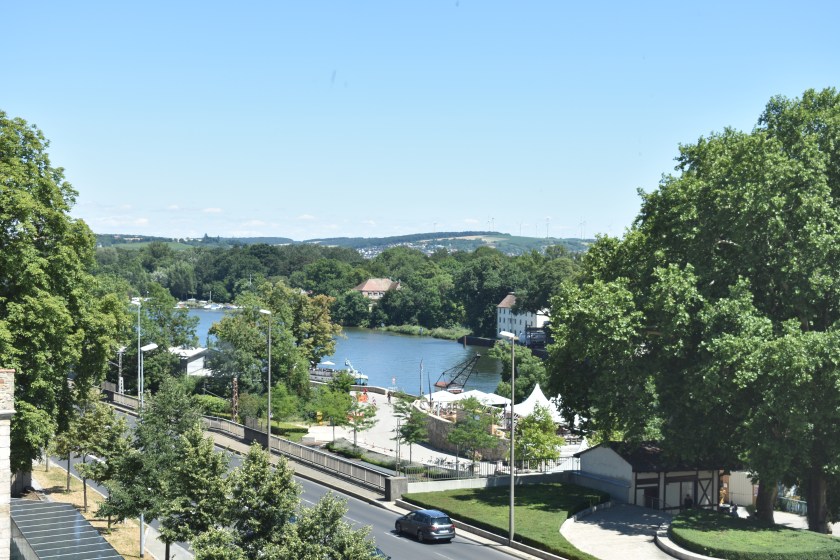


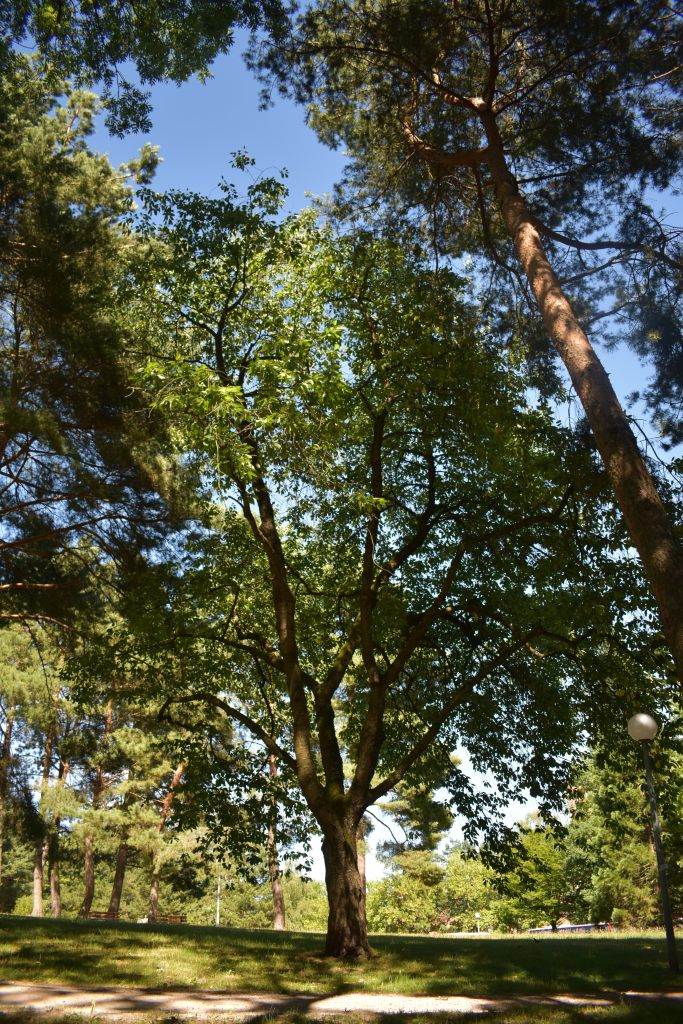 I wish I had brought my big heavy lens. I was in the perfect spot to learn the German birds–woodpeckers, jays, thrushes, warblers, a nuthatch and many others. After several hours in the cool breezy park, I returned to the train station and eventually back to Schweinfurt.
 The train stopped in Winterhausen at what used to be the station and is now a residence. I stepped out of the train onto a platform to find that I had no cell service…so picture this…I’m by myself in my lavender hat with a back pack; a camera, binoculars and my cell phone around my neck; no physical map; and I cannot communicate in German. I began walking toward the church bells that ring every quarter hour until I saw a sign pointing across a highway bridge toward Sommerhausen. I followed the highway across the river and the first street on the other side of the bridge led me to Sommerhausen. Phew!
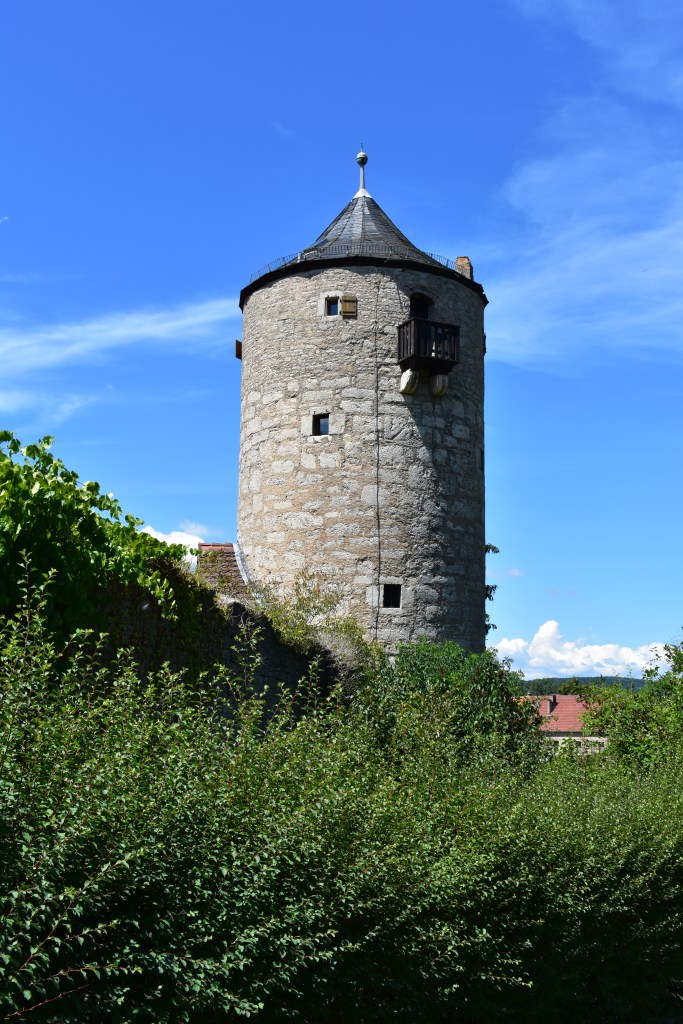


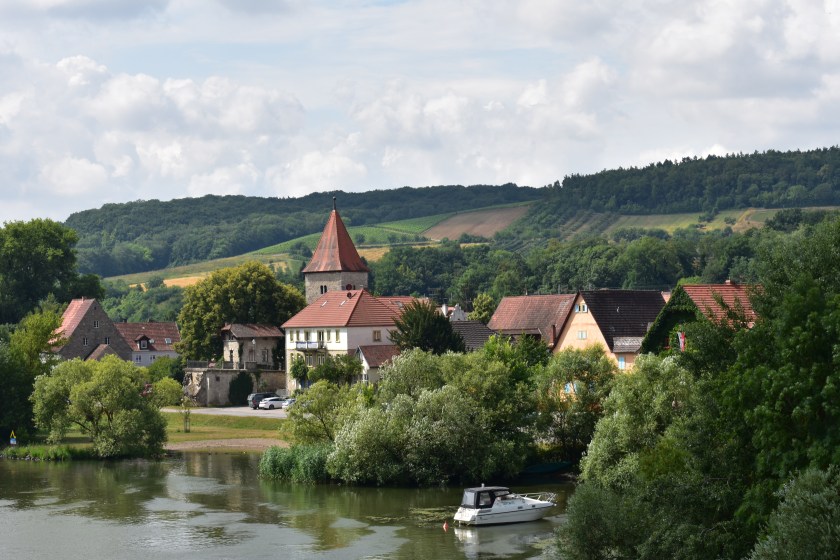 I heard many birds, but could only identify by sight Egyptian geese, magpies and a delicate coal tit (much like our chickadee). As I walked along the path, I thought about birding by ear and realized it is just as difficult to understand the German birds as to understand the German people–takes practice! For most of my walk out from Winterhausen I could not see the river except for where there was a well-worn path which I took down to the water’s edge.
 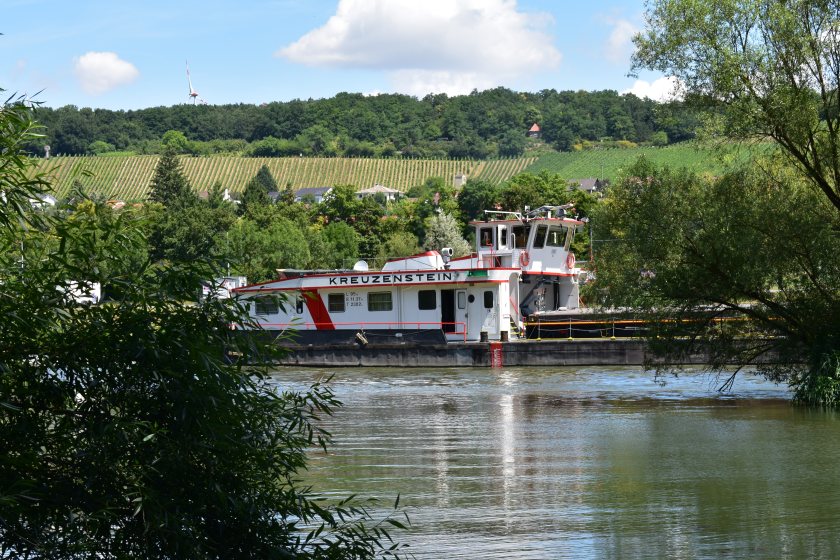 As I walked I enjoyed the sound of the wind rustling the leaves in the old-growth trees along the river. I was at peace. When the path reached the highway, I turned around and followed a different path to Winterhasen, between fields and an old apple orchard with a few young plum trees. I saw a field of Swiss chard, a field of clearly non-GMO wheat (only a foot high), and another field of a different grain that I couldn’t identify.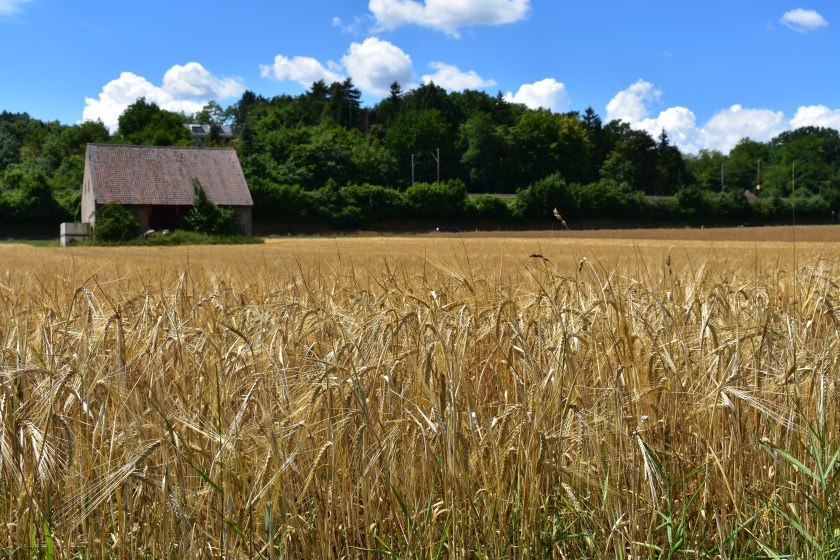
 Latest Travels