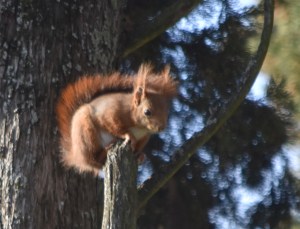
 This red squirrel (look at his tufted ears!) was in our cypress trees this morning. I love his ears. I’ve also heard what I think is a Eurasian Eagle Owl several nights around 9 while I am reading. There are 50 breeding pair of these birds in the St. Remy area–the most anywhere in France.
A bit more than an hour southeast of St. Remy, Marseilles was our destination today. Christophe drove us there and gave us an overview of the sites in his 8 passenger van. On our way we drove through allées of plane trees that are more filled out every day. Near Orgon we saw small fields and orchards separated by tall cypress hedges. The cypress trees are planted in thick hedges to protect them from the mistral winds. Salon de Provence has a military training base and we saw the seven jet team, Patrouille de France, practicing. They are a team like the Blue Angels based in Pensacola. Nostradamus was born in St. Remy but he lived most of his life here. The Marseilles airport is across some small mountains about 25 miles north of Marseilles and its runway juts into a big salt marsh. We watched yellow amphibious water bomber planes practice landing and taking off. The port of Marseilles is the second largest in Europe and could be the largest except that the unions striking (often) discourage ships from stopping here.
In 1660 Louis XIV had Fort Saint-Jean and across the entrance to the harbor Fort Saint-Nicholas built to protect the old port of Marseilles. The tower is part of Fort Saint-Jean and you can see a bit of Fort Saint-Nicholas in the background.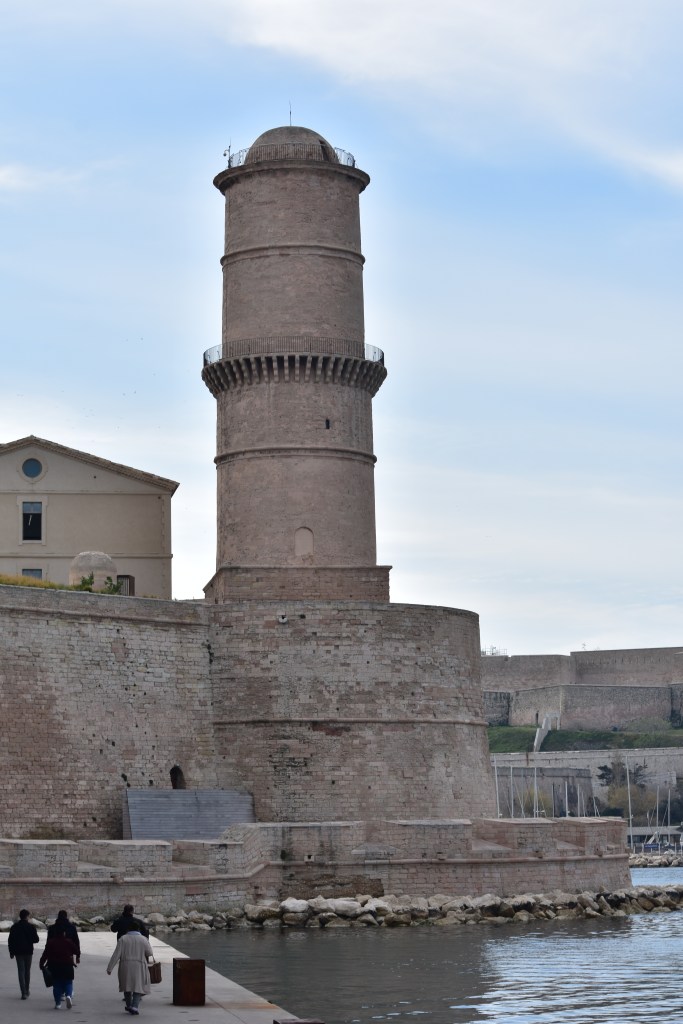 Christophe described Le Panier as the Montmartre of Marseilles–the oldest part of the city but we didn’t venture to that part of Marseilles.
We saw the Cathédrale Sainte-Marie-Majeure de Marseille and a small lighthouse and residences across from the contemporary art museum.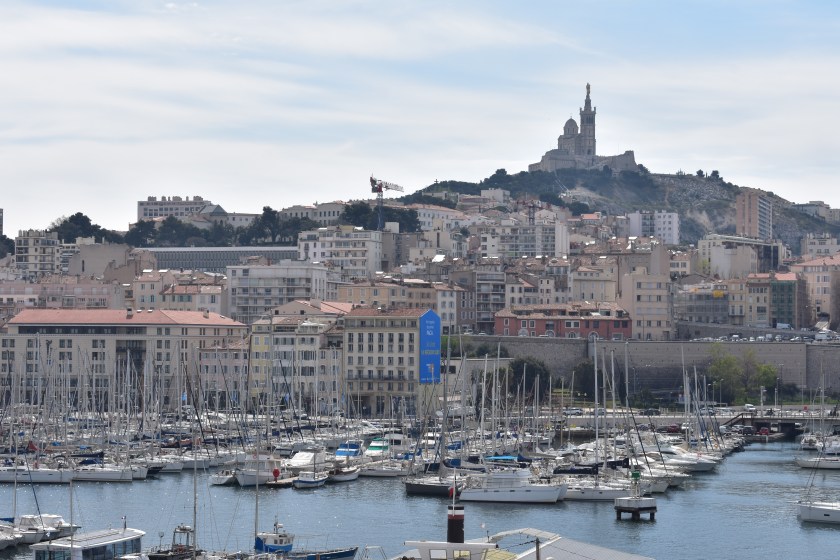 On a big hill overlooking the old port of Marseilles is the Basilica Notre Dame de la Garde. Inside along with the beautiful altar and walls were mobiles of ships. The gold madonna on top of the basilica is thought to watch over both Marseilles and in particular the men of the city while they are at sea.
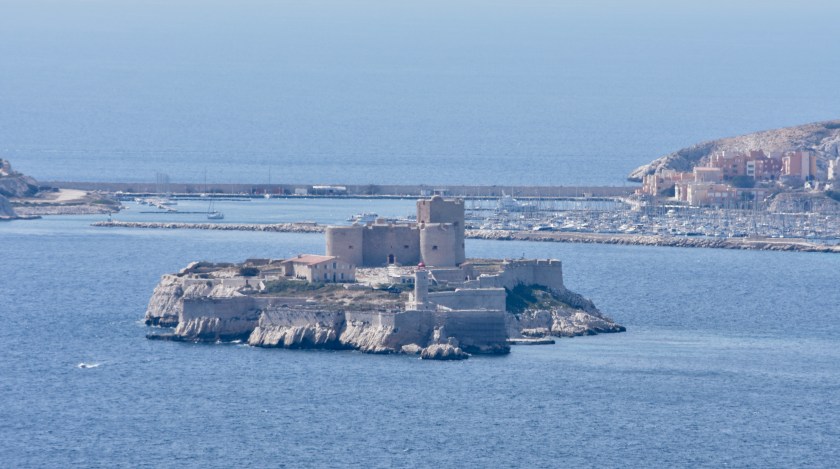
The Château d’If is a fortress (and a prison at one time) located on the island of If, the smallest island in the Frioul archipelago and less than a mile offshore in the Bay of Marseille. It is famous for being one of the settings of Alexandre Dumas’ adventure novel The Count of Monte Cristo, one of my favorite novels. We were disappointed that the season for tours of the prison begins tomorrow.
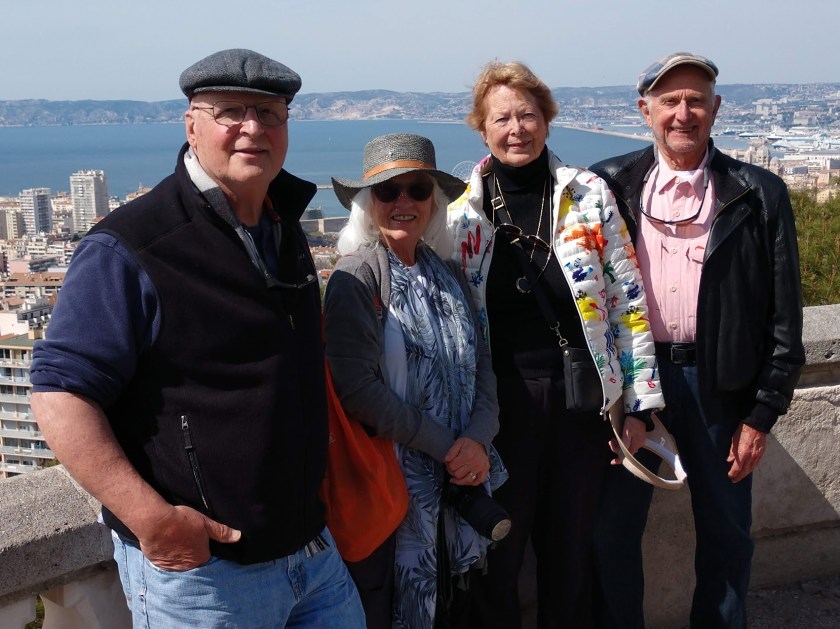 After our 360 view of Marseilles from the basilica, we had lunch at La Nautique–a restaurant for one the yacht clubs in the harbor and enjoyed the beautiful boats.
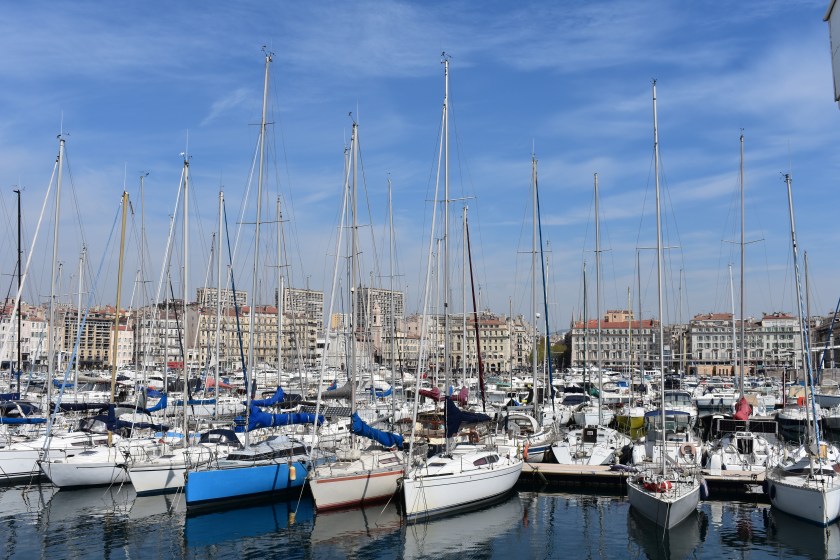 Christophe drove along the water on our way out of Marseilles and headed northwest toward St. Remy. He wanted us to see another beautiful 360 view from the top of a mountain near Orgon. The church on top of the mountain (aren’t they all!), Notre Dame de Beauregard, has been through a lot over many years. We entered the church to peaceful (recorded) organ music and enjoyed its relatively simple beauty.
Isabel de Gea , potter in residence, is the guardian and gardener of this lovely historical place. She is assisted by an organization from Orgon who helps maintain the church and grounds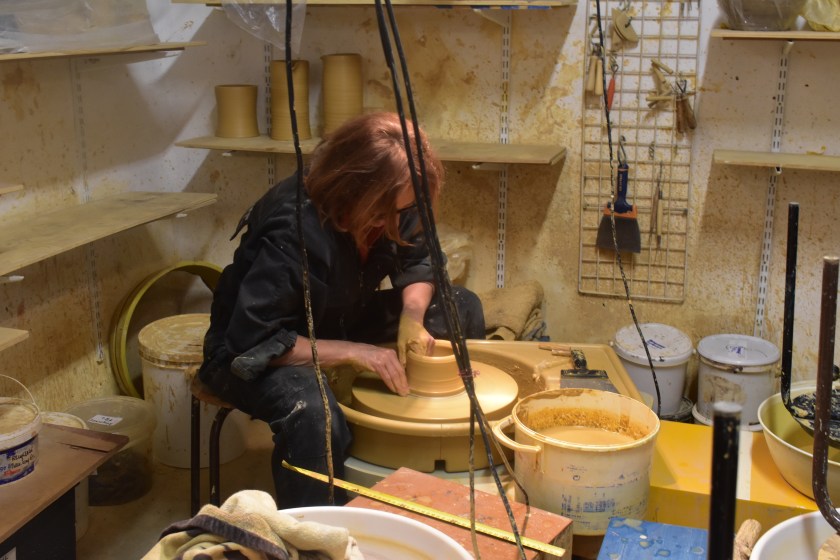
We could smell the wisteria before we could see it.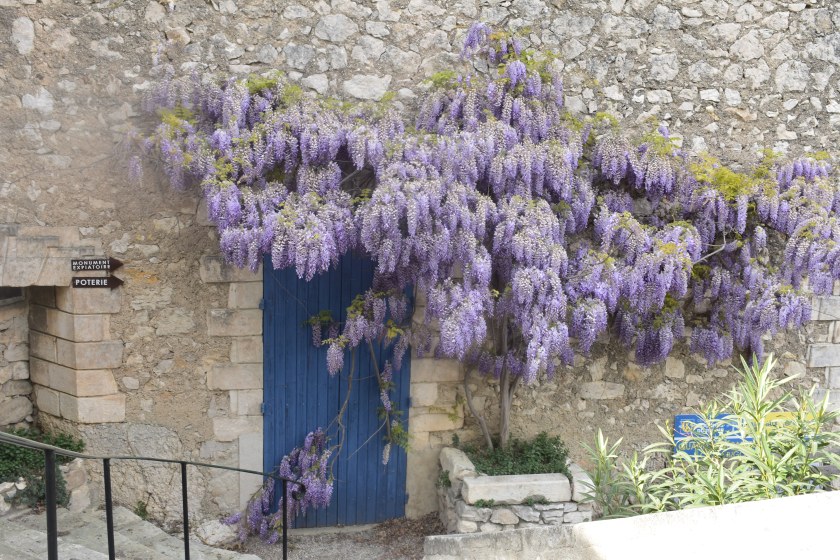
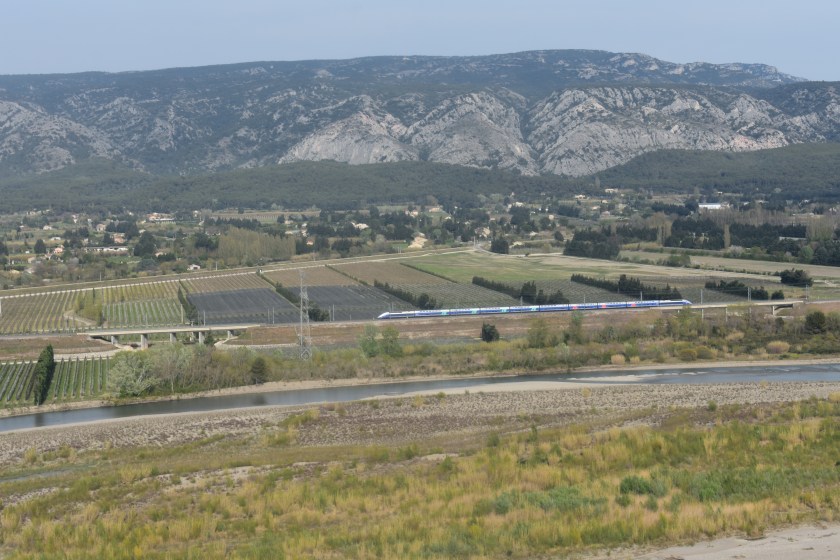
And, the views of the valley from here were breathtaking. The Luberon Mountains are in the distance with the village of Orgon in the valley; the cypress hedges block the Mistral winds; a high speed train whirs along and the Durance River flows in the foreground.
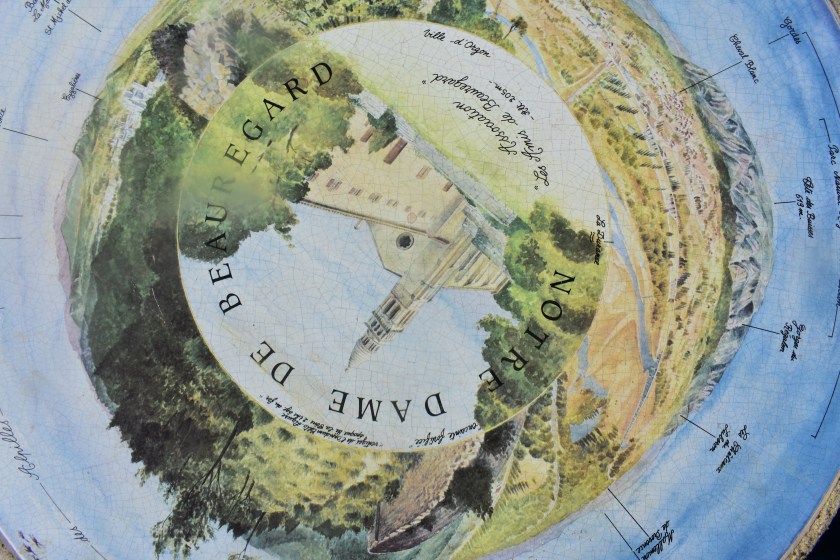
 And, it was a 360 degree view as described by this piece of art.
 It was another beautiful and enjoyable day in Paradise!
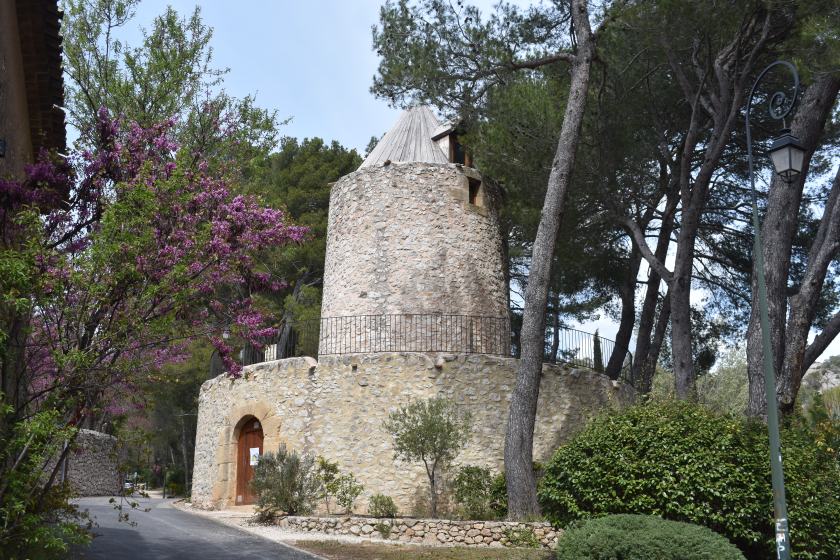

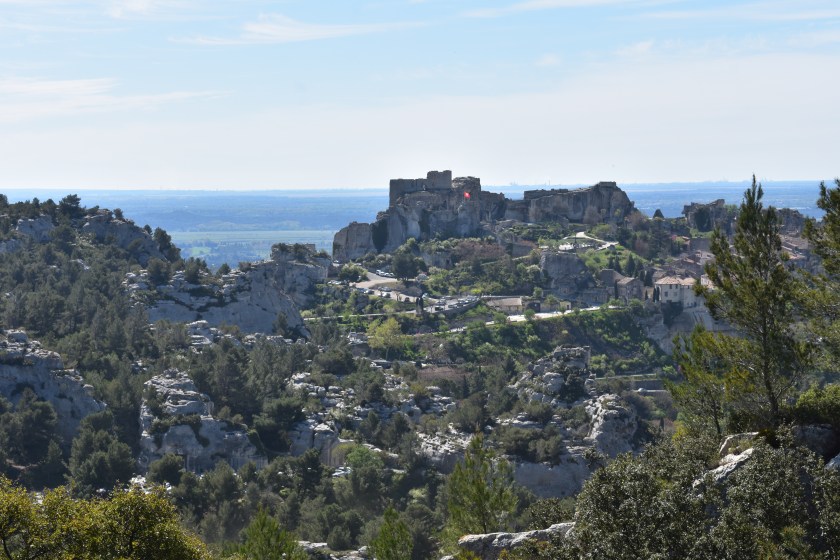 Our drive from St. Remy to Les Baux today brought us to a different side of the village with a different view of Les Baux and the surrounding countryside.
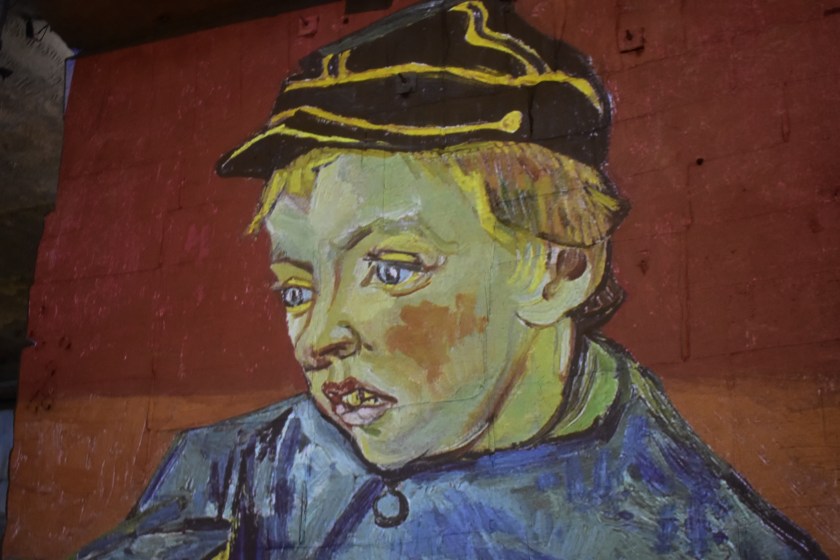 We returned to Carriere de Lumieres and had a festive lunch in Les Baux at Cafe de la Musee afterwards. The Van Gogh show was just as moving today as it was the last time we saw it. Every time we see it, I see new art that I never knew Van Gogh painted. I’ve only seen a few of his portraits.
 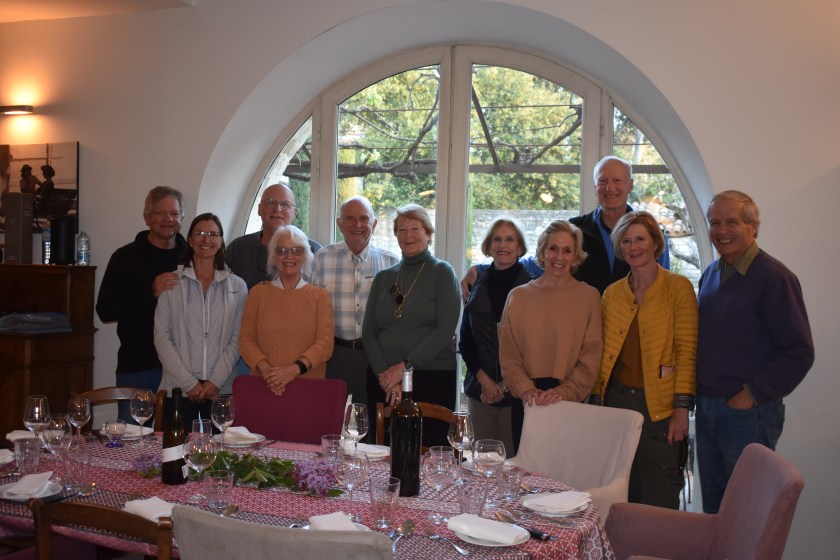 After four days in London and three more in Lyon with old friends, John and Brooke joined our household. Now we are eleven. Tonight we had Anna and Vera cook dinner for us. What a treat! They were lovely and the typical French meal was delicious.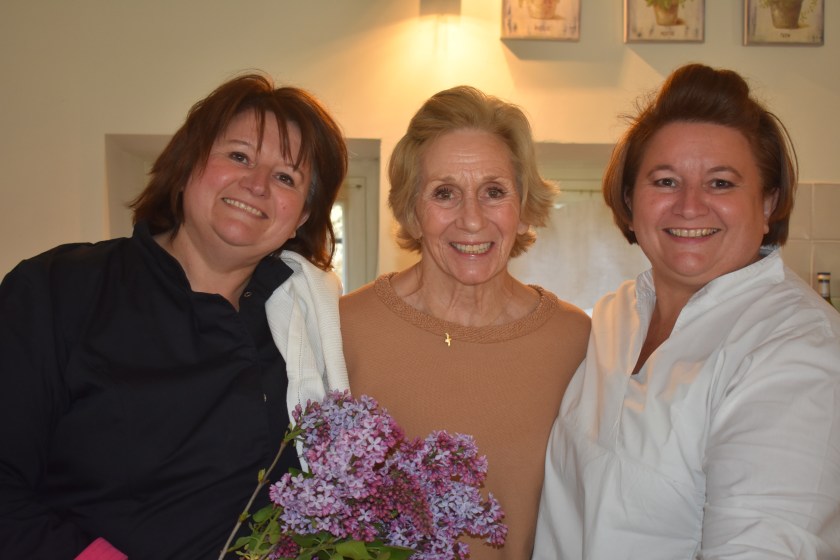
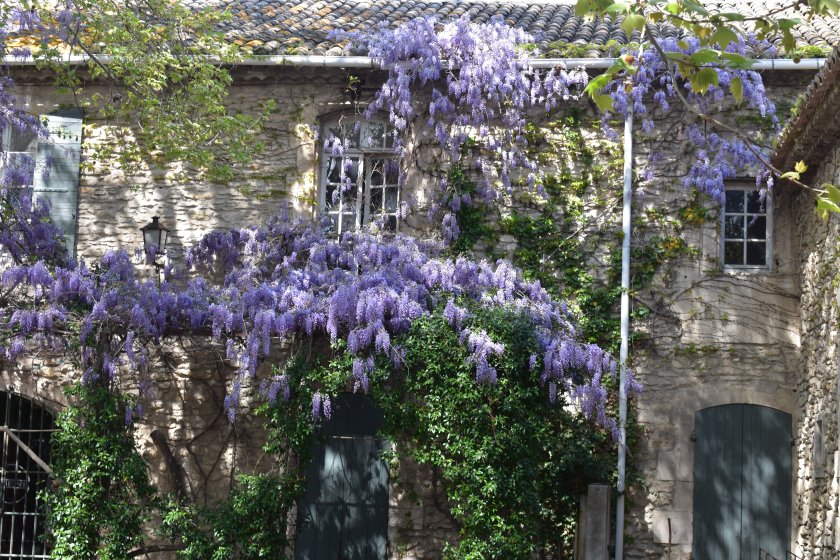 The wisteria we see as we leave each day has become more full and beautiful each day. Clay and Connie’s daughter Lynn became the 9th member of our household today. They picked her up at the TGV station in Avignon just before noon. Allan and I walked through St. Remy, this lovely French village.
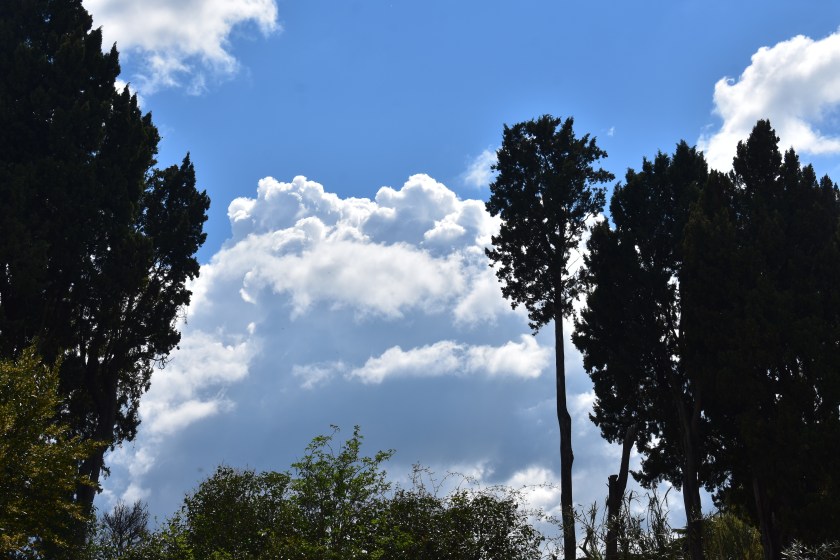
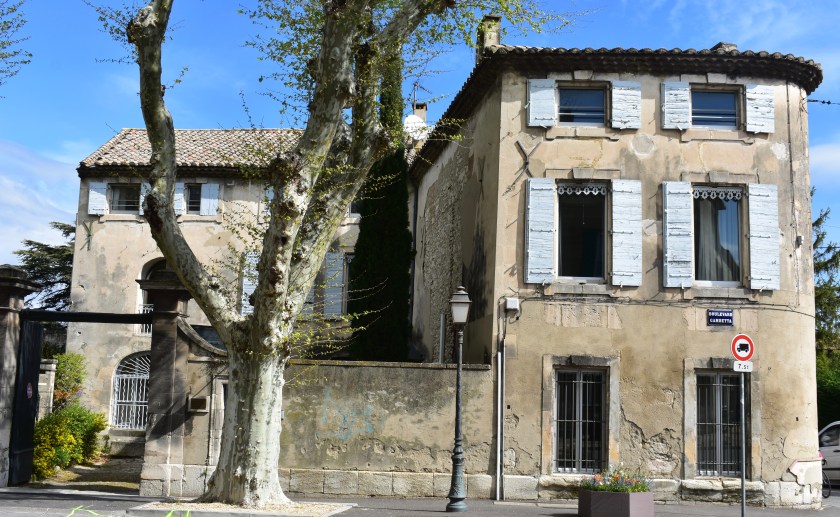 Julie and Jody washed and dried their dirty horseback riding clothes, rested and read. We joined them in relaxing in the sunshine, reading and cloud-watching when we returned from our walk. The clouds in Southern France are beautiful–the contrast between the blue, blue sky and the bright white clouds.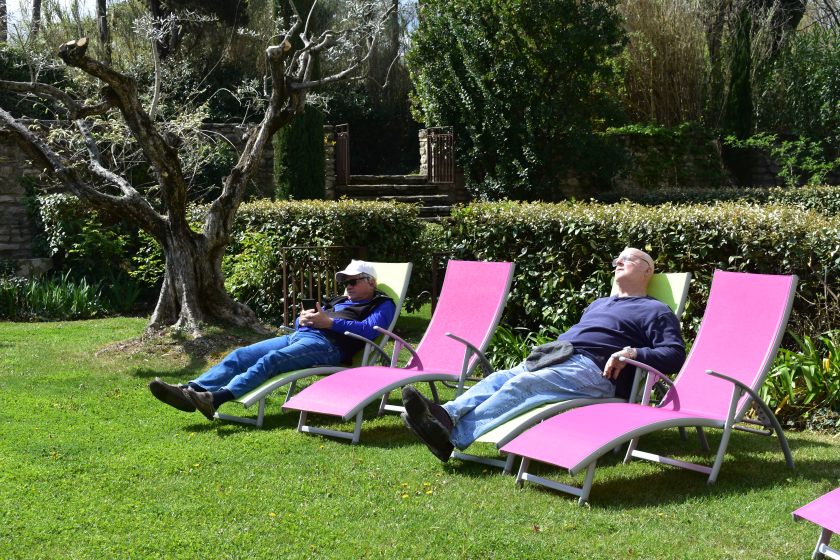
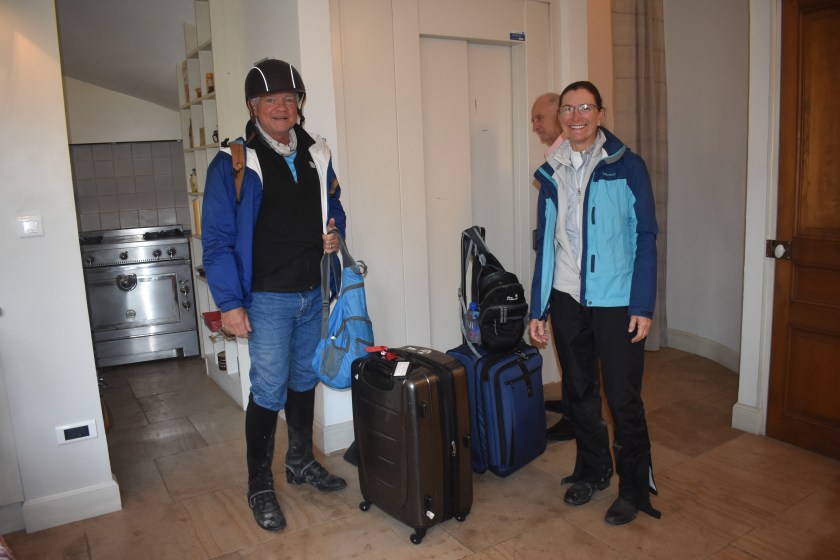 Two more couples joined us late this afternoon–Mike and Susu Kearney had spent the week before in Istanbul and Jody and Julie Stagg had just left their horses (for the week) in the Carmargue following a tour of Provence on horseback. The eight of us had a tasty dinner at home and heard tales about our friends’ adventures.

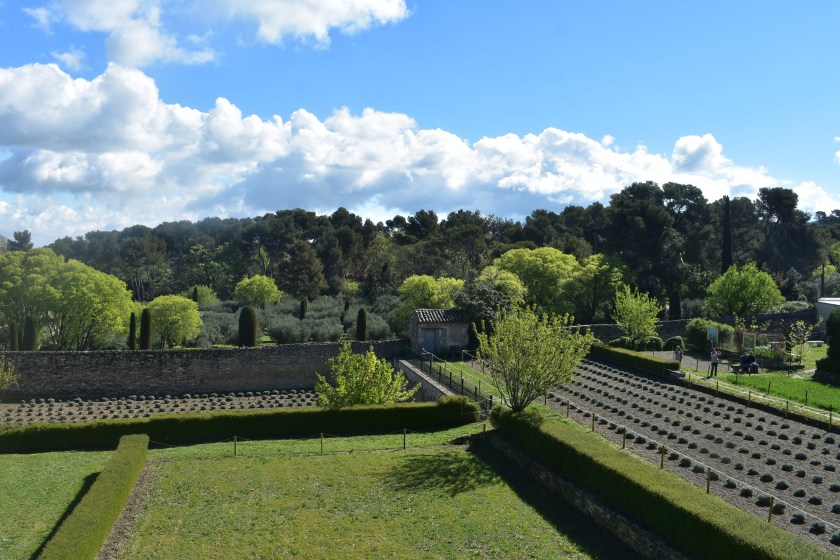
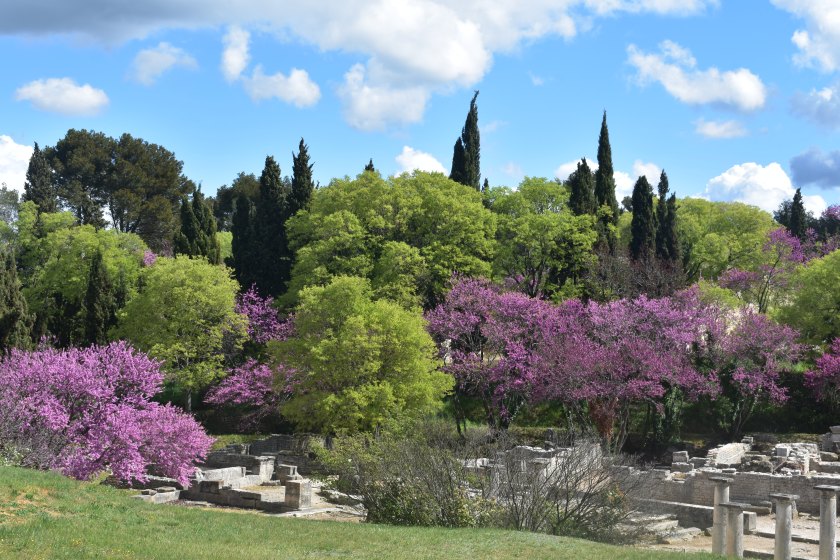
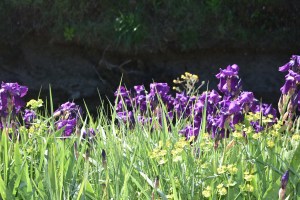 Allan and I walked through the alley behind our villa to a small path alongside a stream with blooming irises on the banks up Avenue Vincent Van Gogh to the Roman town of Glanum near the asylum where Van Gogh was treated for his mental illness. It was another gorgeous day so we walked through the olive groves and the edge of the pine forest along the Alpilles Ridge.
  We had a beautiful view from the ridge.
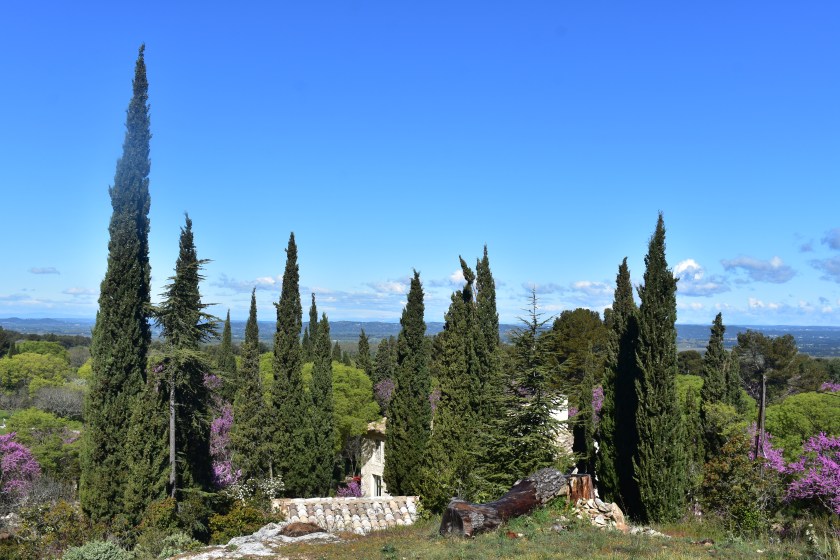 The archeological excavation is fenced from the trail we walked so we retraced our steps and decided, once more, to visit the asylum. Along the beautifully landscaped entry from the street, copies of Van Gogh’s paintings are placed where he might have stood to paint them.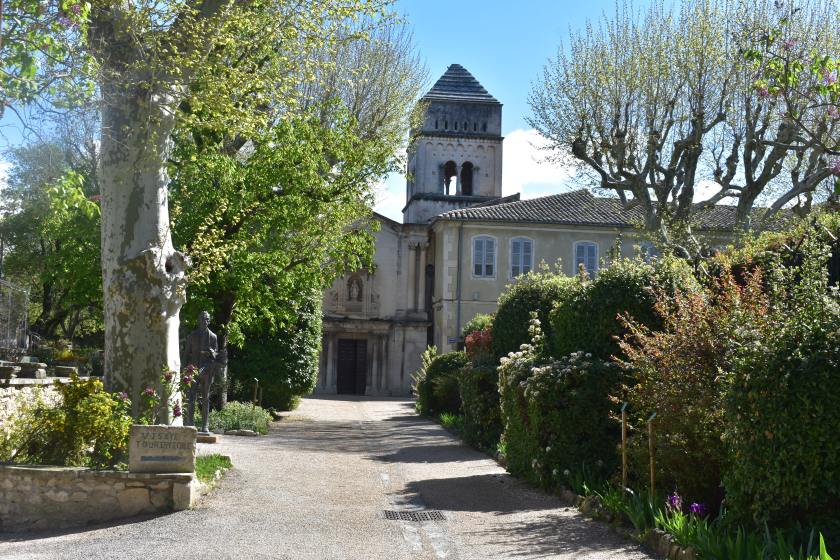

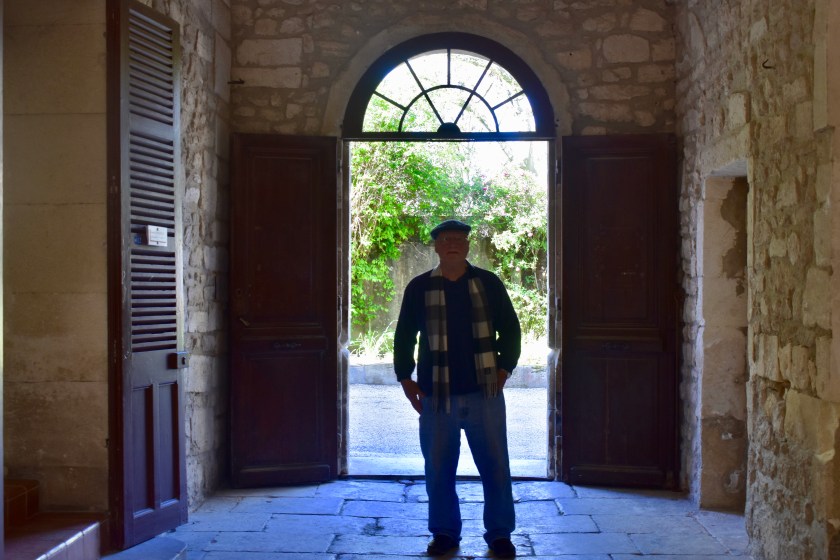


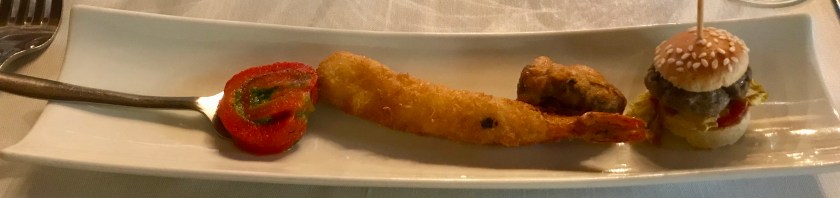 Our first course was an aperitif of champagne and an amuse-bouche of a poached red pepper strip rolled around pesto sauce, a shrimp flash fried in panko bread crumbs, a fig stuffed with goat cheese and the tiniest tasty hamburger I’ve ever seen. Next we had artichoke risotto; the main course was chicken, prosciutto and asparagus roulade with yellow squash and dessert was a French style tiramisu. The meal ended with a relaxing cup of espresso.
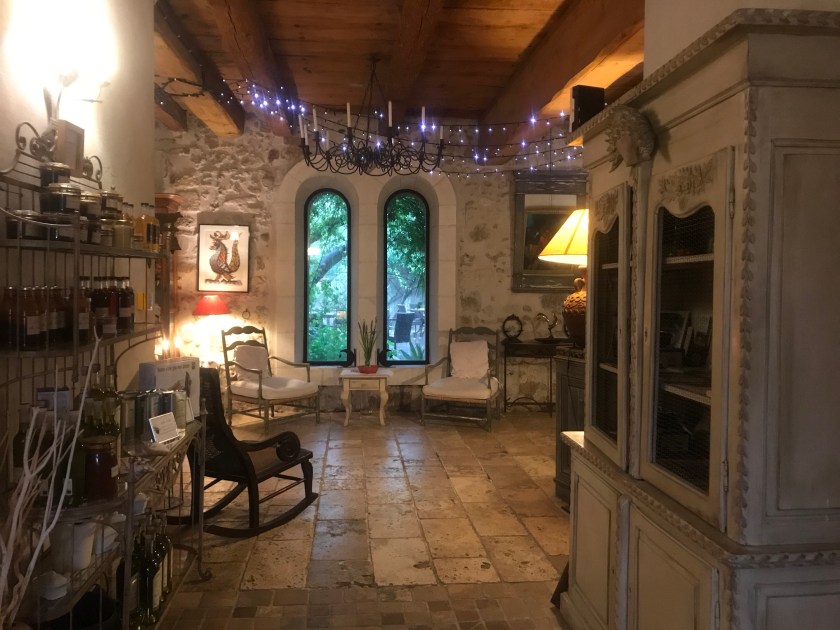
 The hotel has an eclectic collection of rooster figurines throughout the downstairs. This one is in the dining room.

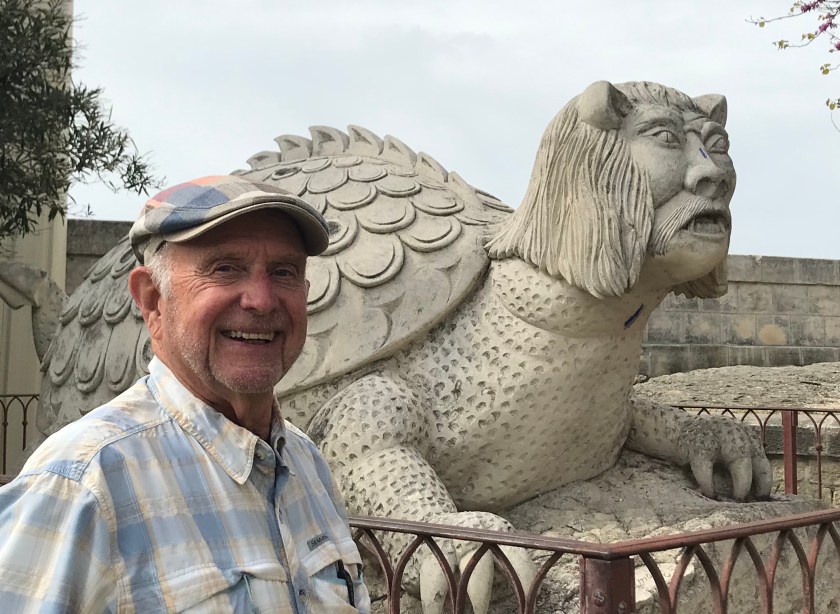


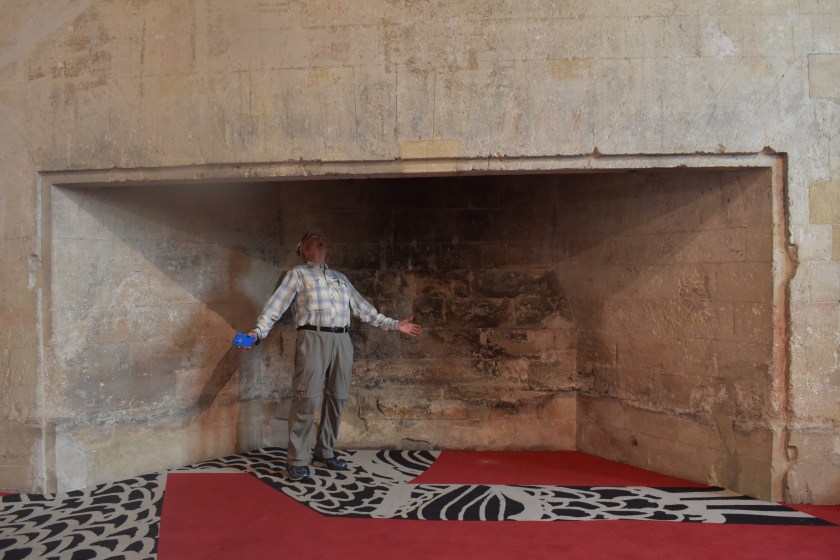 Clay was swallowed by the fireplace in the banquet room (ignore the carpet, a modern addition).


 Even the gargoyles are in remarkably good shape. On another note, we were surprised to see that each of the bed chambers we toured had an indoor toilet that emptied into the Rhone River. After climbing down the 8ish stories on a tiny stairway we browsed the gift shop and continued on our visit of close by small towns. Our final village was Beaucaire and we simply drove through the tiny streets.


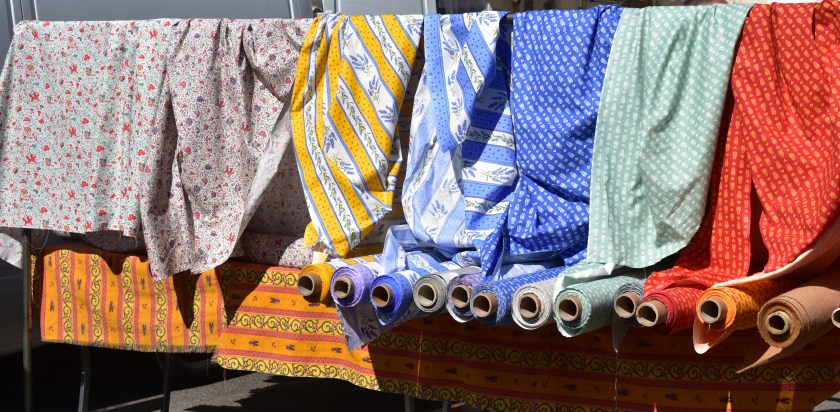
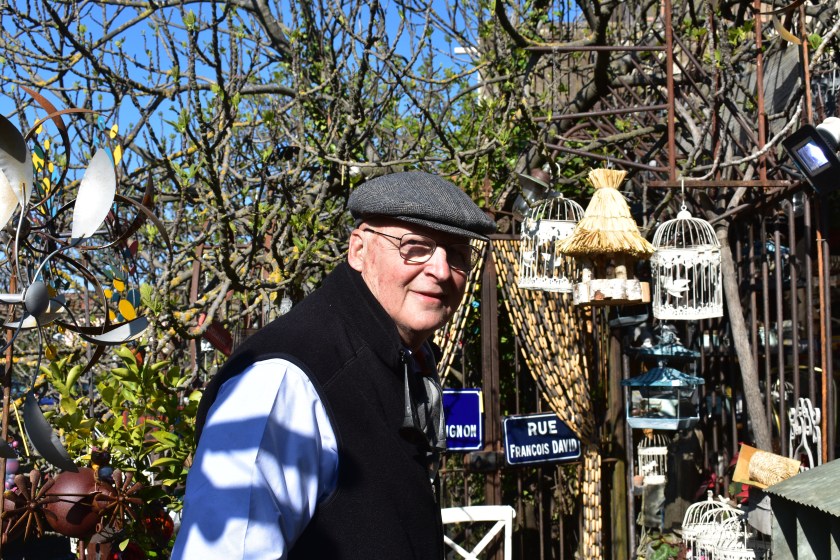
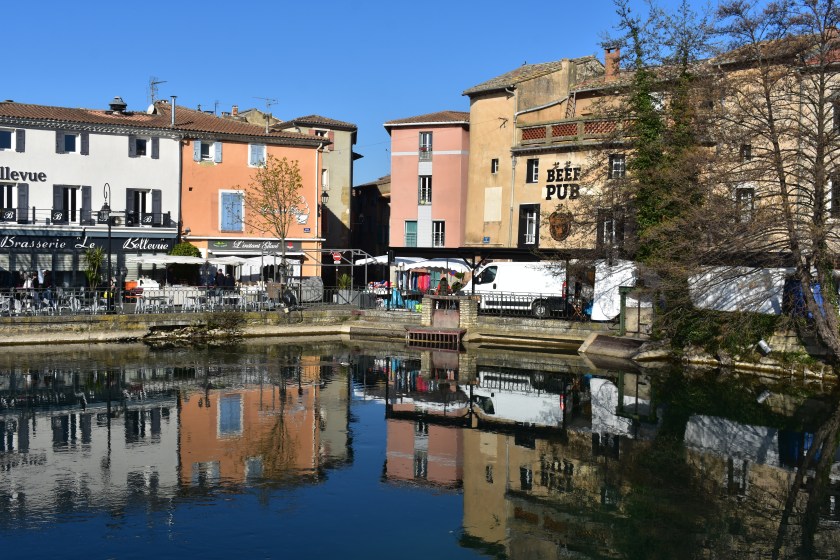 Isle Sur la Sorgue is a grand market in a beautiful setting on the Sorgue River. Certainly the biggest market we have seen yet this year, it has farmer’s produce, provencal items, and a huge antique component.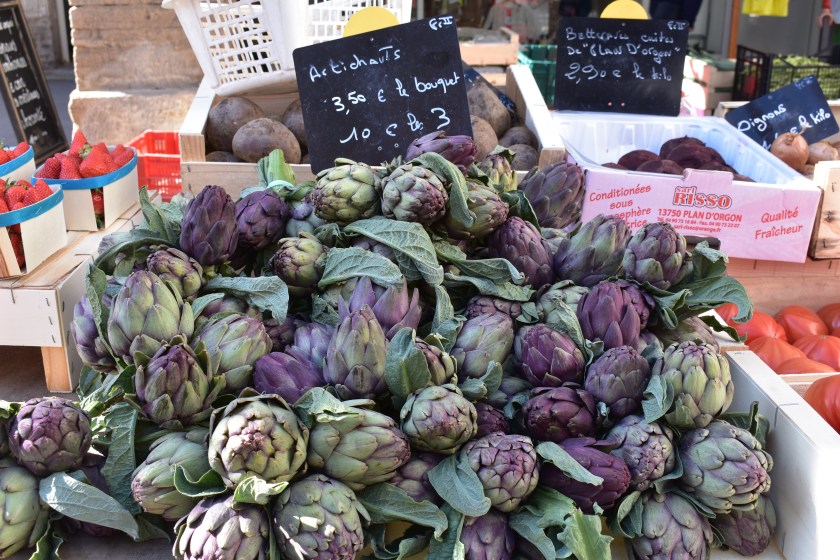


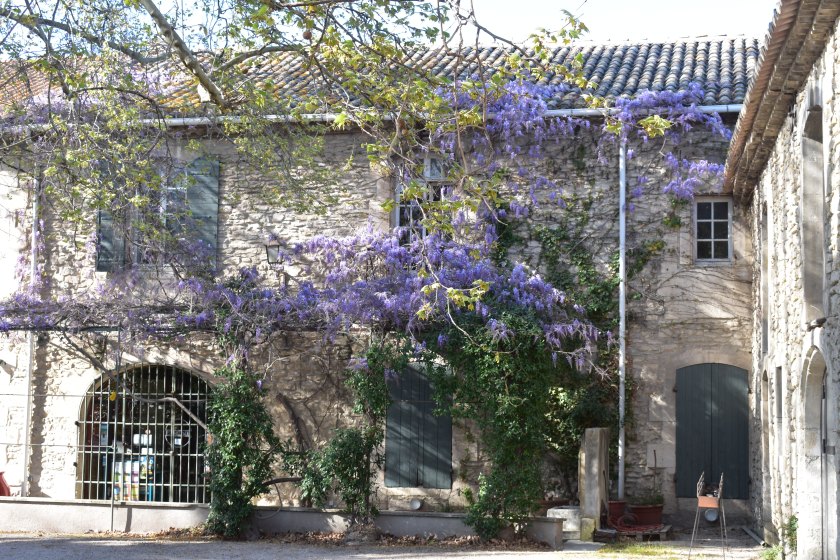 This beautiful wisteria is in the courtyard we drive from every day as we leave our villa. It gets more full and sweeter smelling every day.


 Latest Travels