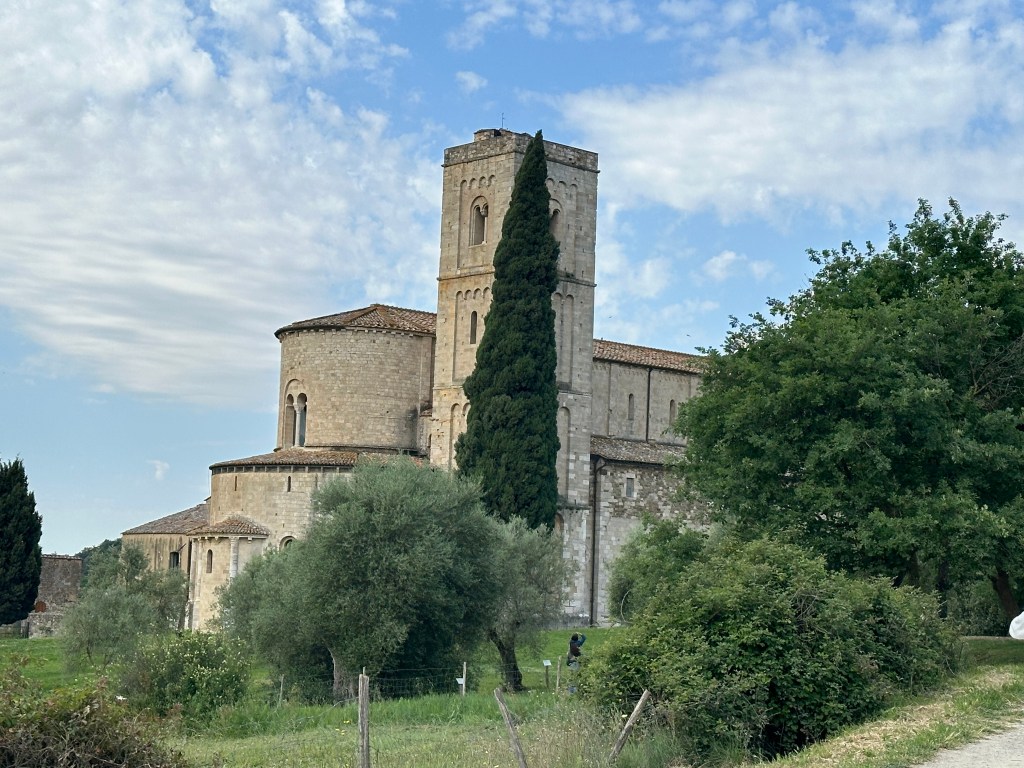
We shuttled from our hotel In Raffa to the Sant’Antimo Abbey, formerly a Benedictine Monastery near Montalcino. It went unused for years, was restored and is currently occupied by community of monks of the Olivetan Benedictine order.
In the first floor of the monastery is a small shop that specializes in lotions and creams that are made from local herbs and plants; there are hundreds! From the monastery we began our 2.6 mile hike to lunch at the Mastrojanni saffron, wine and olive estate. The hike was, as usual, quite beautiful and interesting.
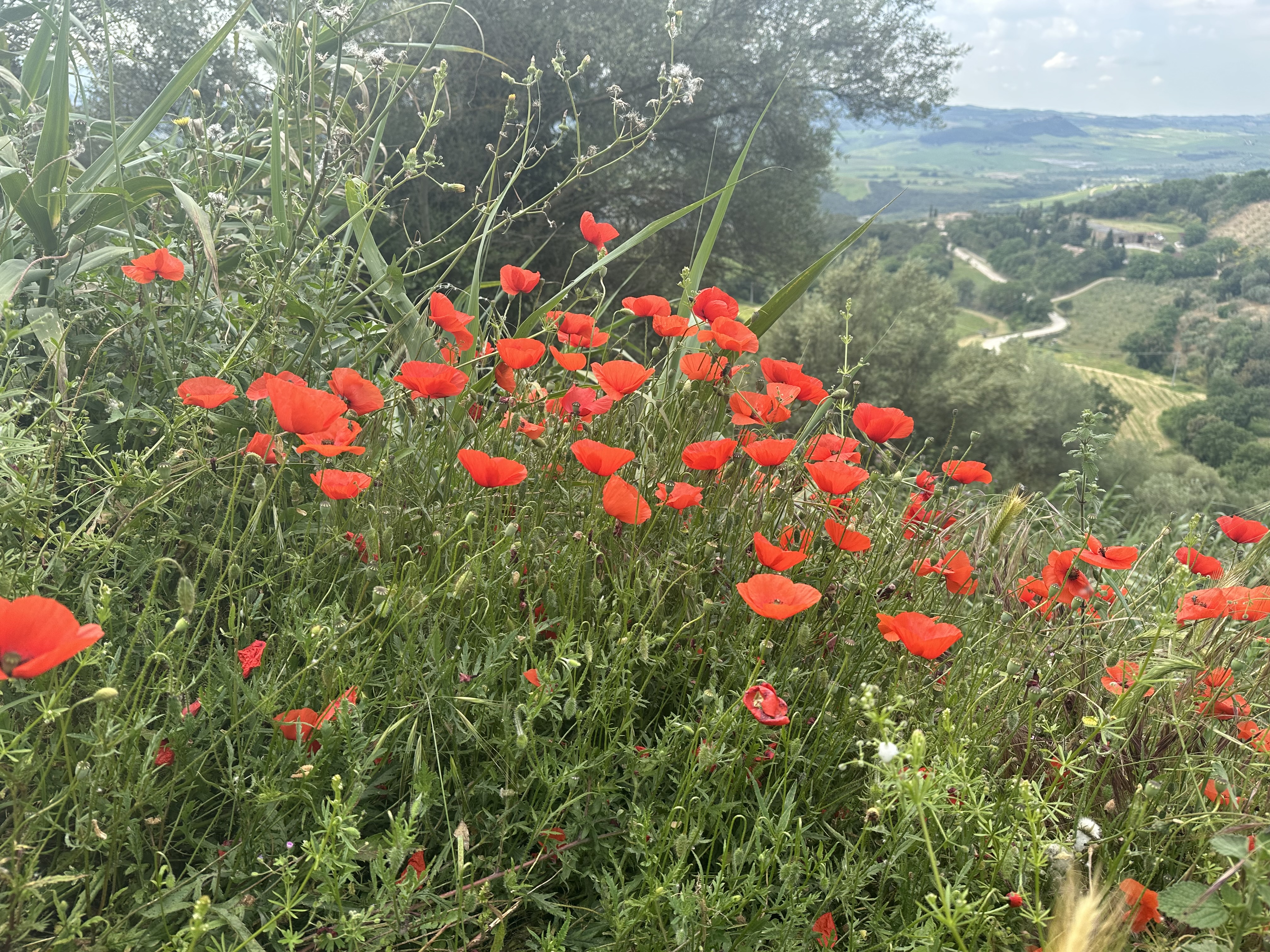
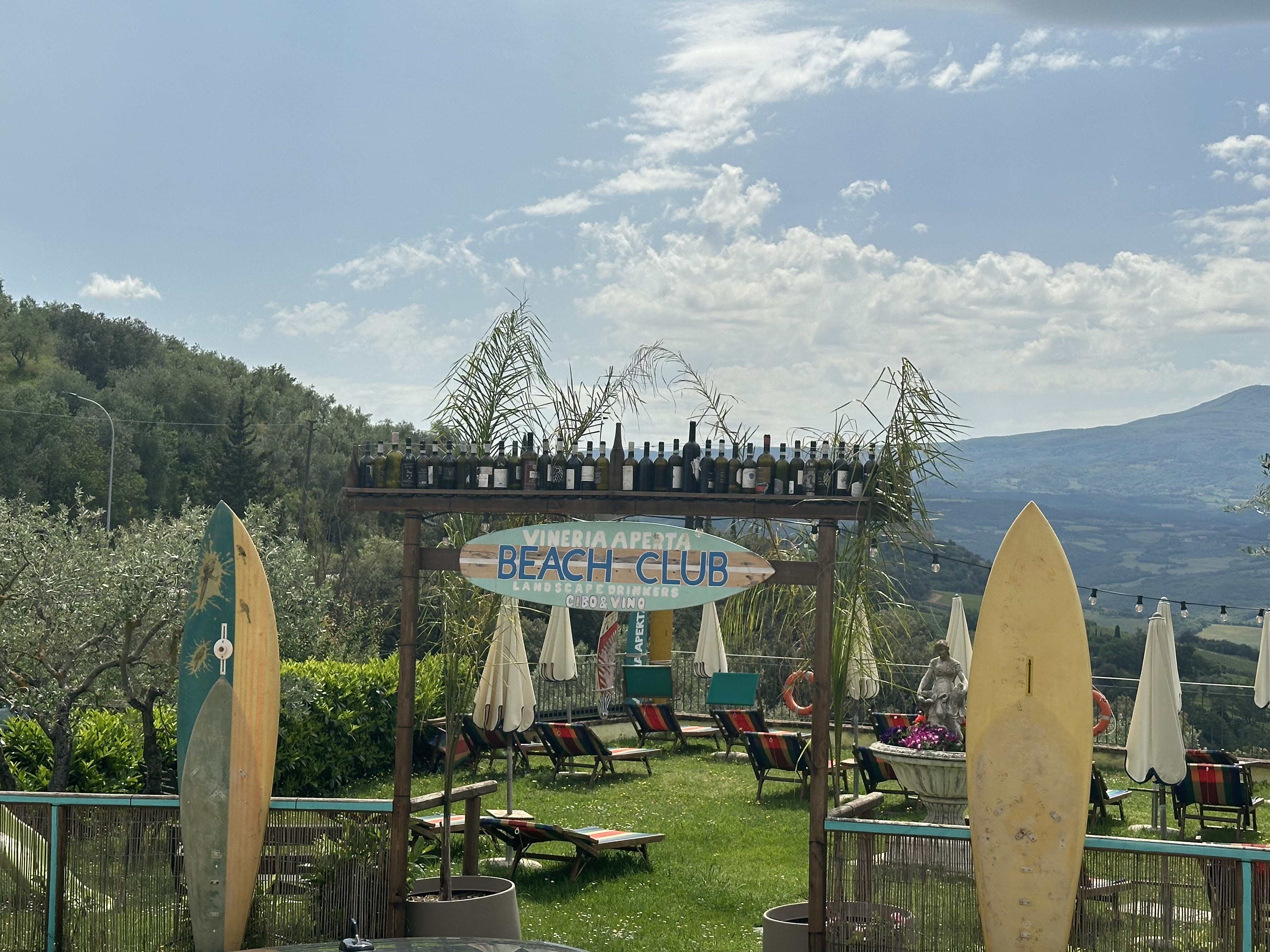
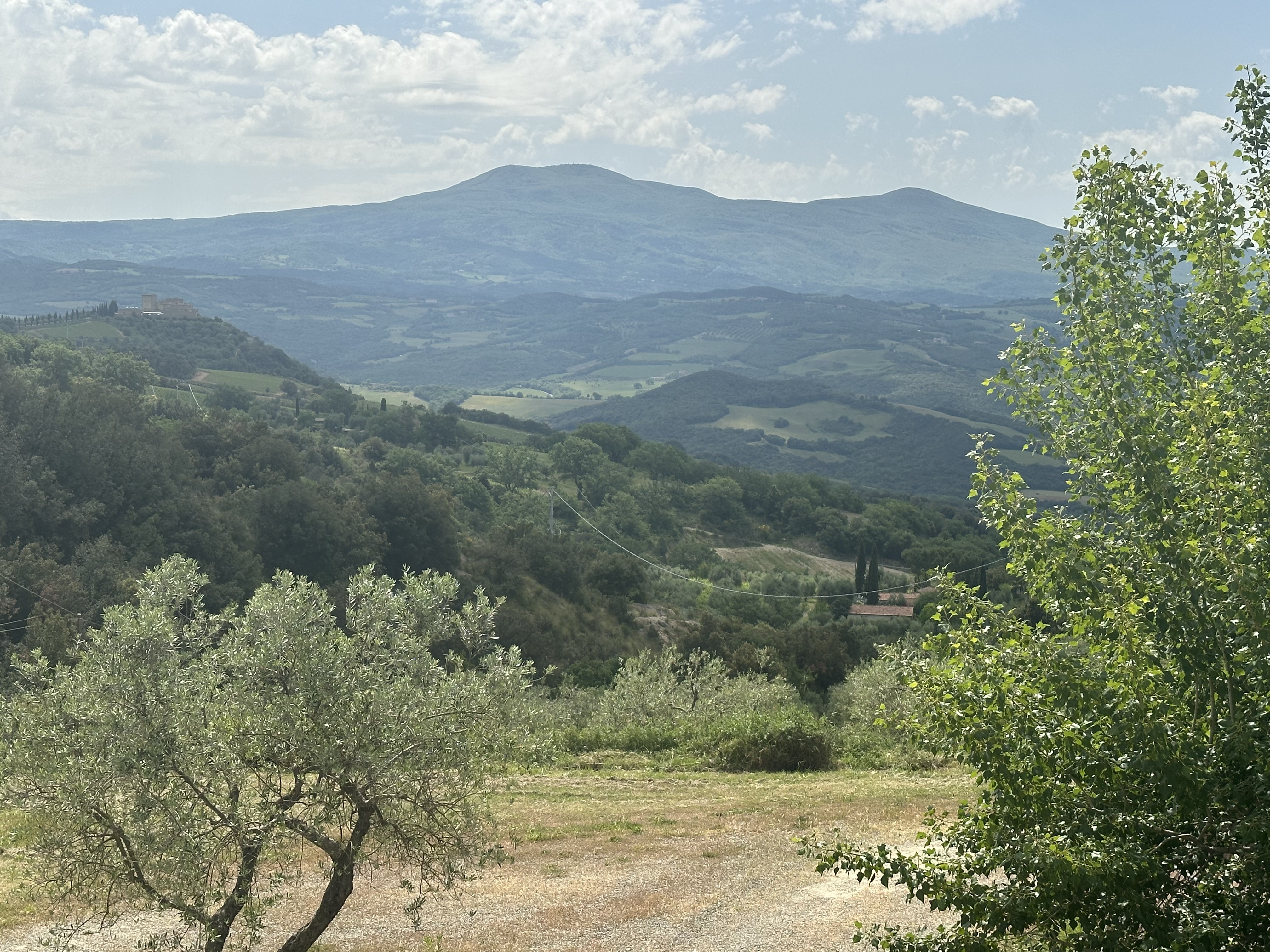
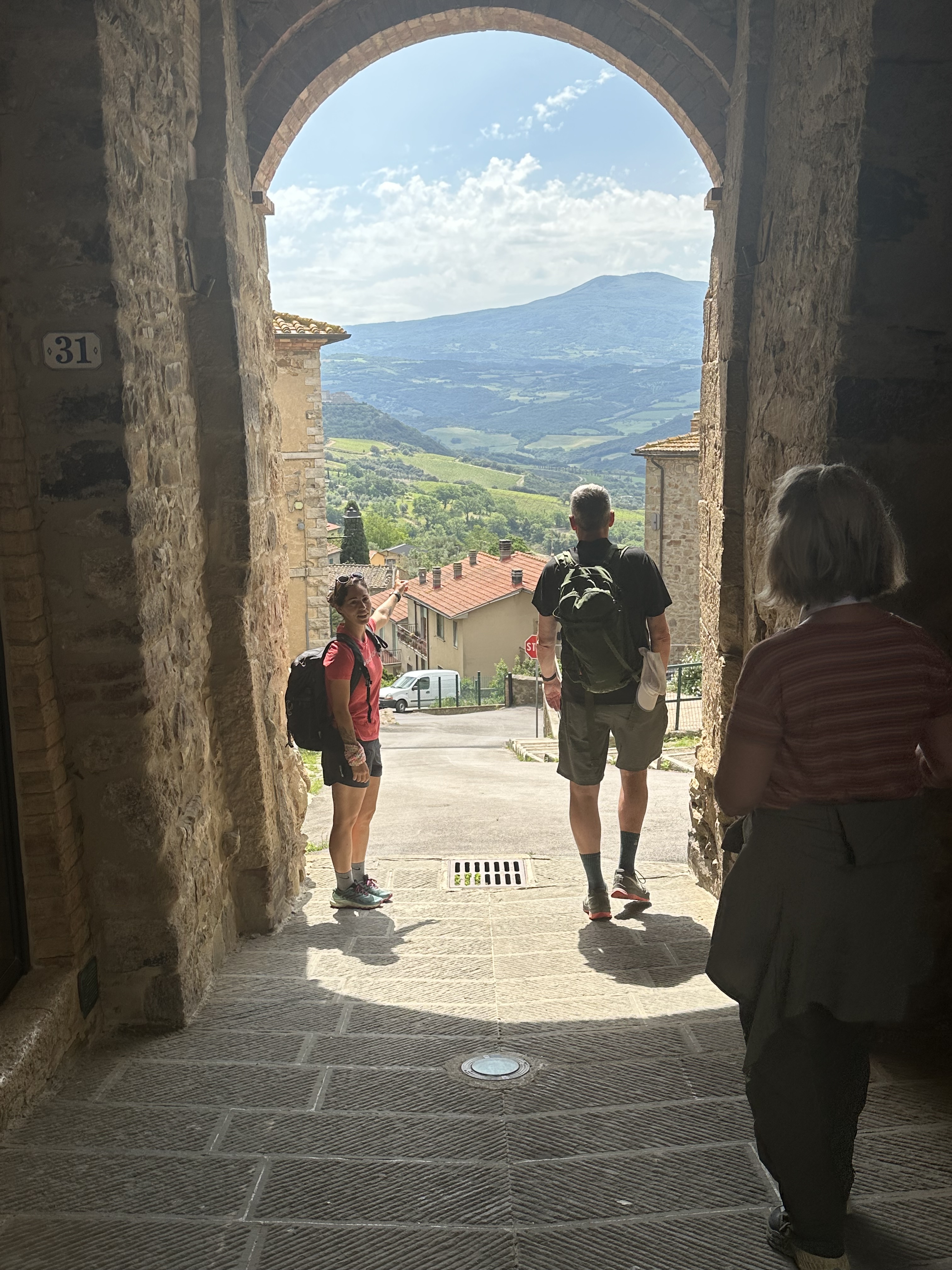
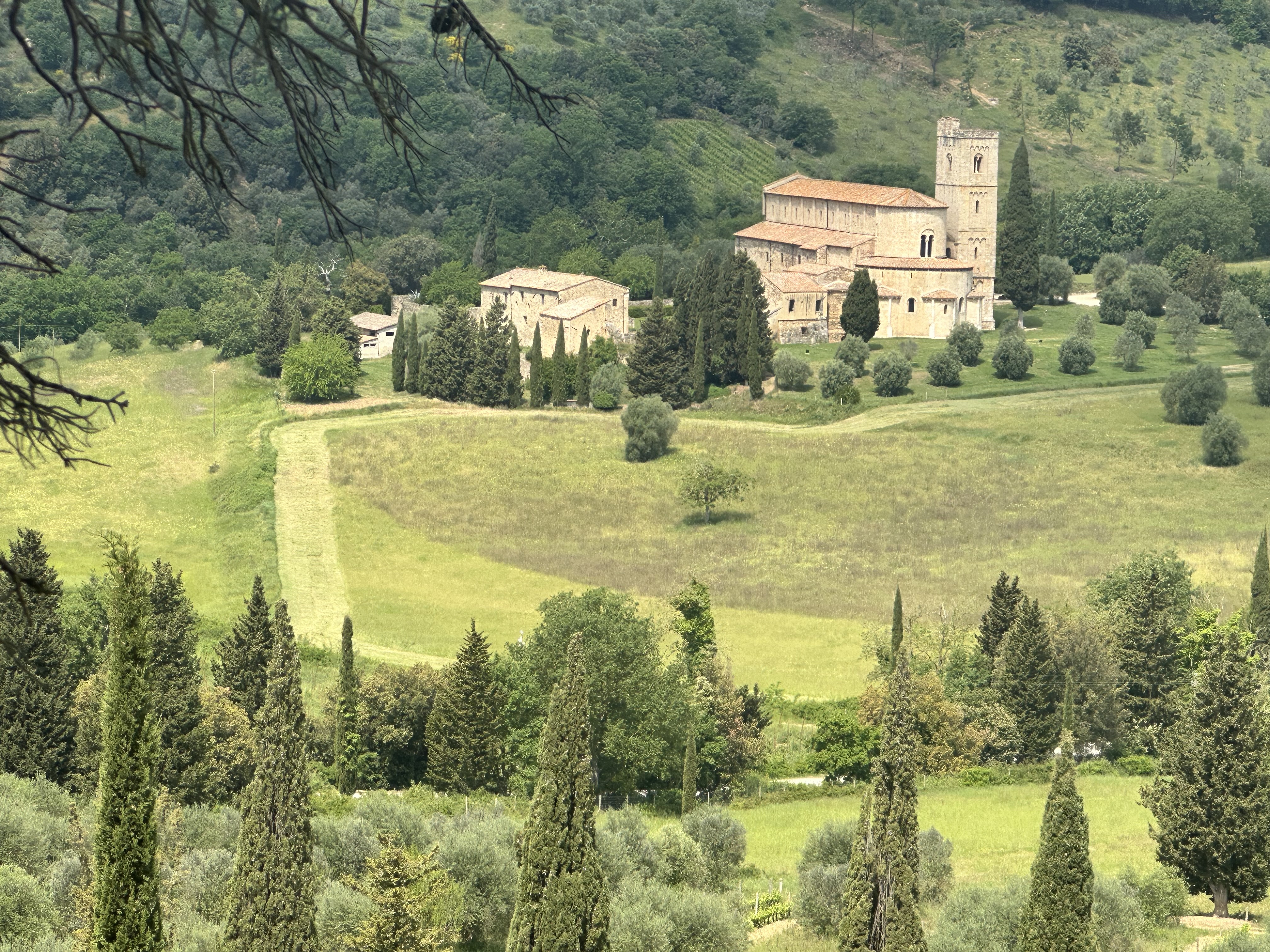
Poppies and cacti lined our path up to Castelnuevo, a small medieval village with amazing views. In the village we loved the Beach Club–a bar with the sign that says, “Landscape Drinkers” and lounge chairs overlooking a view of the mountains. As we continued to climb, we saw Mont Amiata–a volcanic mountain. The lava under the ground heats the thermal pools at our hotel for tonight and further up we had a beautiful view of the abbey.
We arrived at Mastrojanni and were treated to a slide show and tasting of local saffron. The Mastrojanni family began growing the Crocus Sativus flower by planting about 50 bulbs; now they grow close to 500 bulbs. It takes 125-150 flowers for one kilo of saffron. The flowers are picked by hand in September and the flower’s stigma are cleaned for the saffron. Saffron grown in Tuscany has many medicinal properties and the universities nearby are studying it as a treatment for depression, stress and lately Altzheimer’s Disease. After we learned about the manual process of growing and harvesting saffron, we tasted pecorino cheese topped with saffron-infused honey. Wow!
Our lunch at Mastrojanni was scrumptious and before the last course of arborio rice cooked with saffron, we were treated to a demonstration of how to prepare the dish. We tasted two wines, Rosa and Brunello that are produced and bottled on the property and the finale to our lunch was Creme Brûlée…my very favorite dessert!
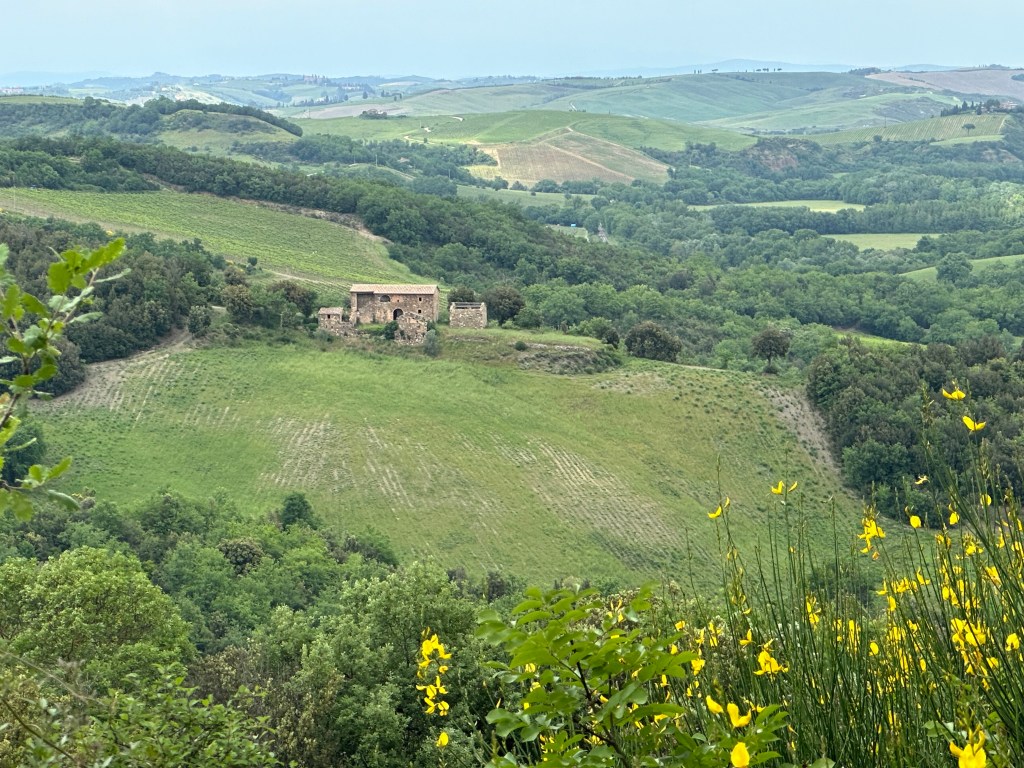
After lunch we left from the Mastrojanni Relais (restaurant) and began our afternoon hike (6 miles) to Marcucci. The views on hikes in the Val d’Orcia region of Italy are different from Chianti. In Chianti we mainly saw large vineyards and olive orchards; in Val d’Orcia we are seeing more agricultural land. We are further south and the climate is different. Vineyards and olive orchards need rain at specific times in their growing period to make a “good year.” There is not typically enough rain in Val d’Orcia to support grapes and olives. And, for instance saffron bulbs do not like water!
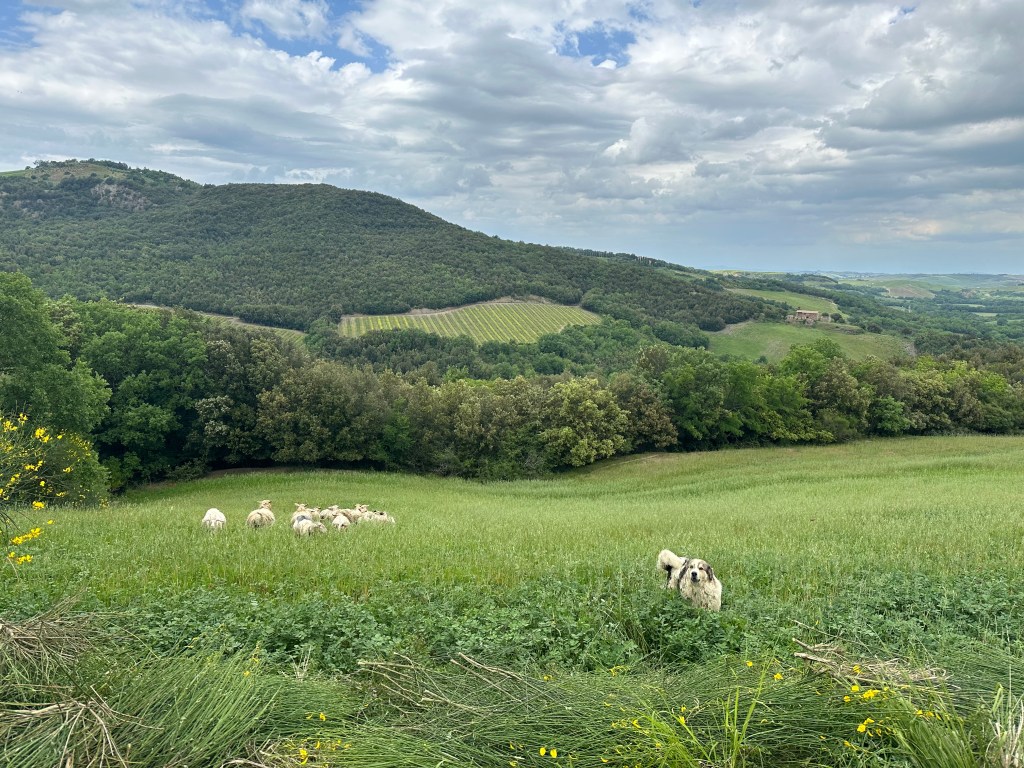
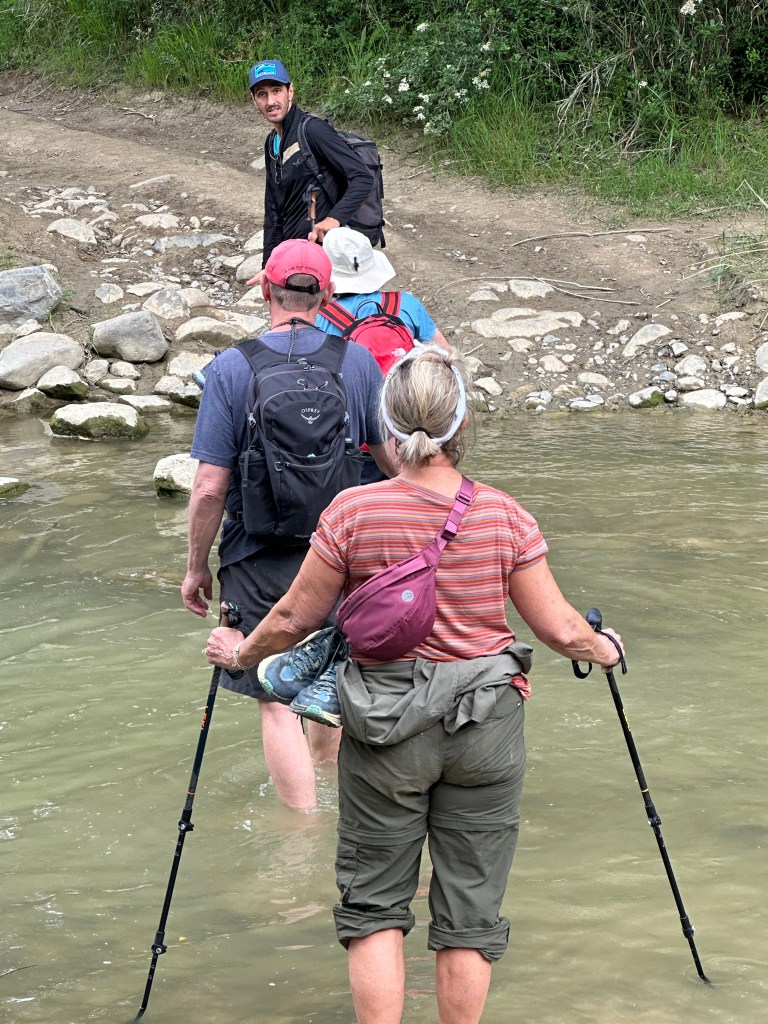
Sheep were warned of our approach by their Great Pyrenees watch dog and of course all of the views from our climb were beautiful. Going downhill, we saw signs of wild boar (cinghiale) and although we did not see them, one of our leaders did see a family along the trail. Before the next uphill, we forded a slow moving stream with a gravel bed.
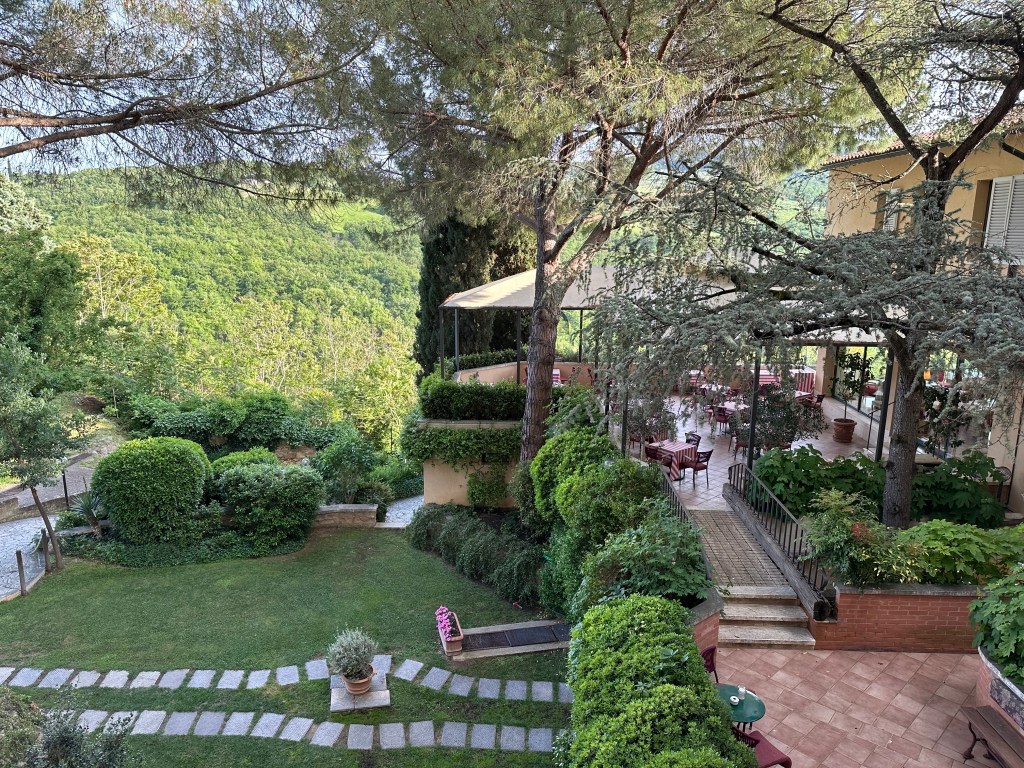
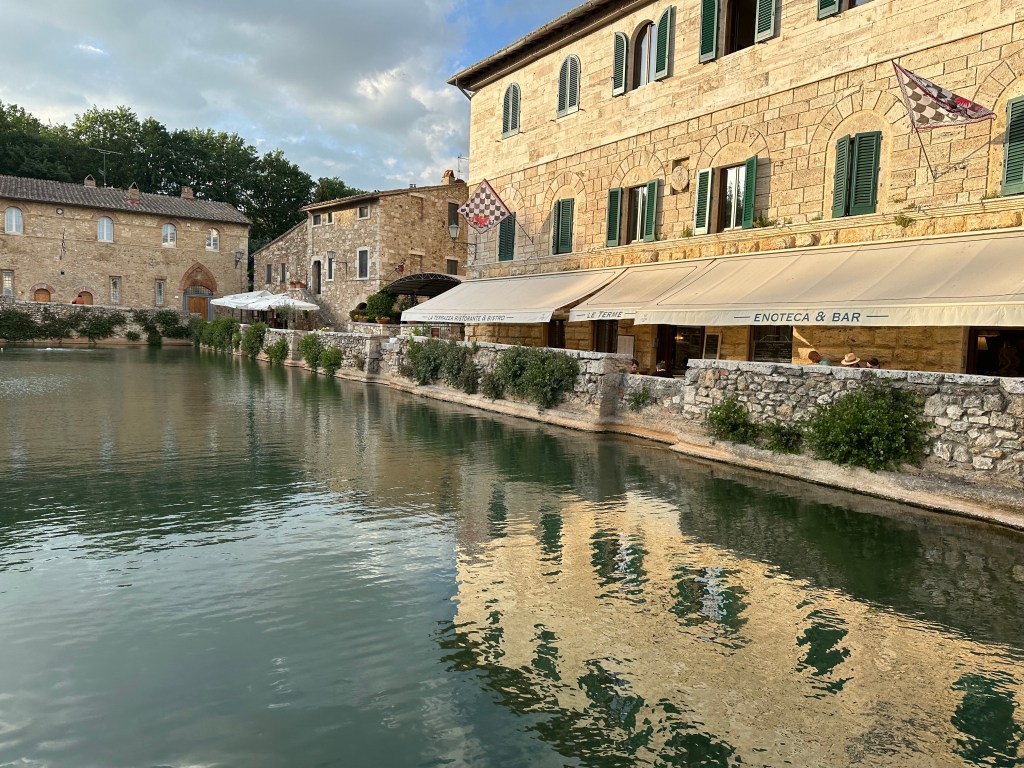
We arrived at Bagno Vignoni just in time to shower and rest for a few minutes before we had dinner on our own. The view from my window is of the grounds of our hotel with the forested mountains in the distance. Joy and I chose to have dinner at La Terrazza Ristorante, on the small lake in the middle of town. After each having a spritz (mine was campari; joy had limoncello) we split the stewed cinghiale which tasted a lot like very good roast beef.
It was a long beautiful day full of activity and we turned in early or as early as is possible on a Backroads trip.
Nancy
 Latest Travels
Loved loved reading about this awesome trip -I have missed y’all.
<
div dir=”ltr”>
<
blockquote type=”cite”>
LikeLike
Wow!! Your trip so far has been wonderful and beautiful!! I’m jealous and wish Linda and I were there. Linda asks that you also send your travels to her. lhebbler@gmail.com
Take care and continue to have a great time!
George
LikeLike