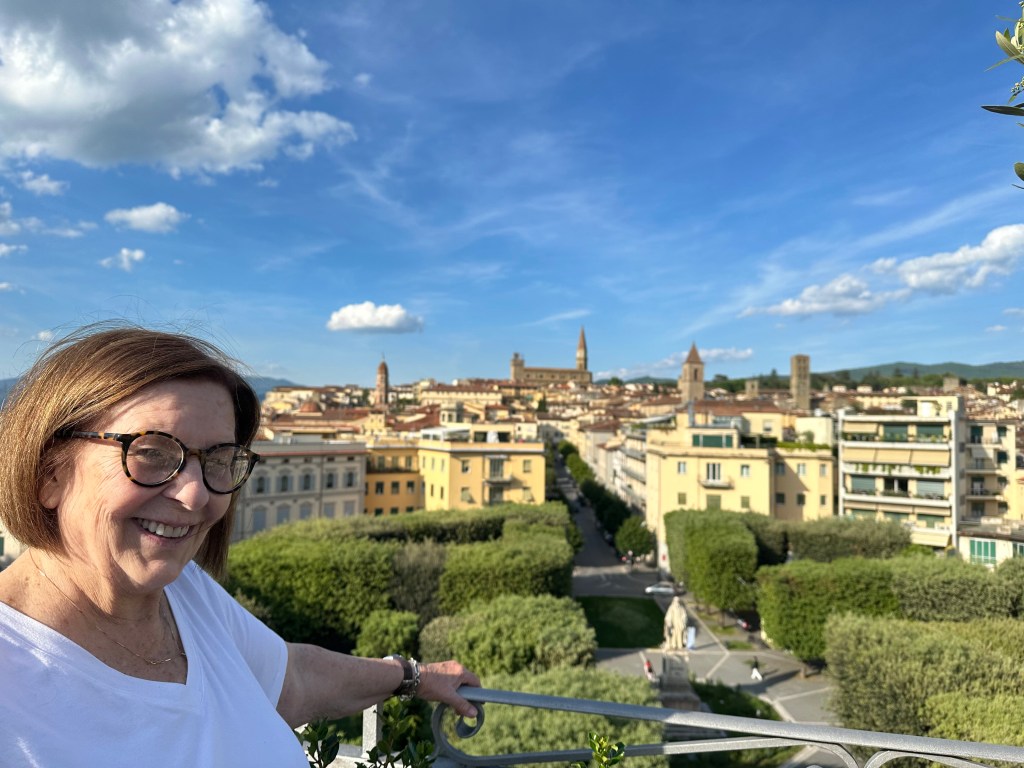
To Pienza

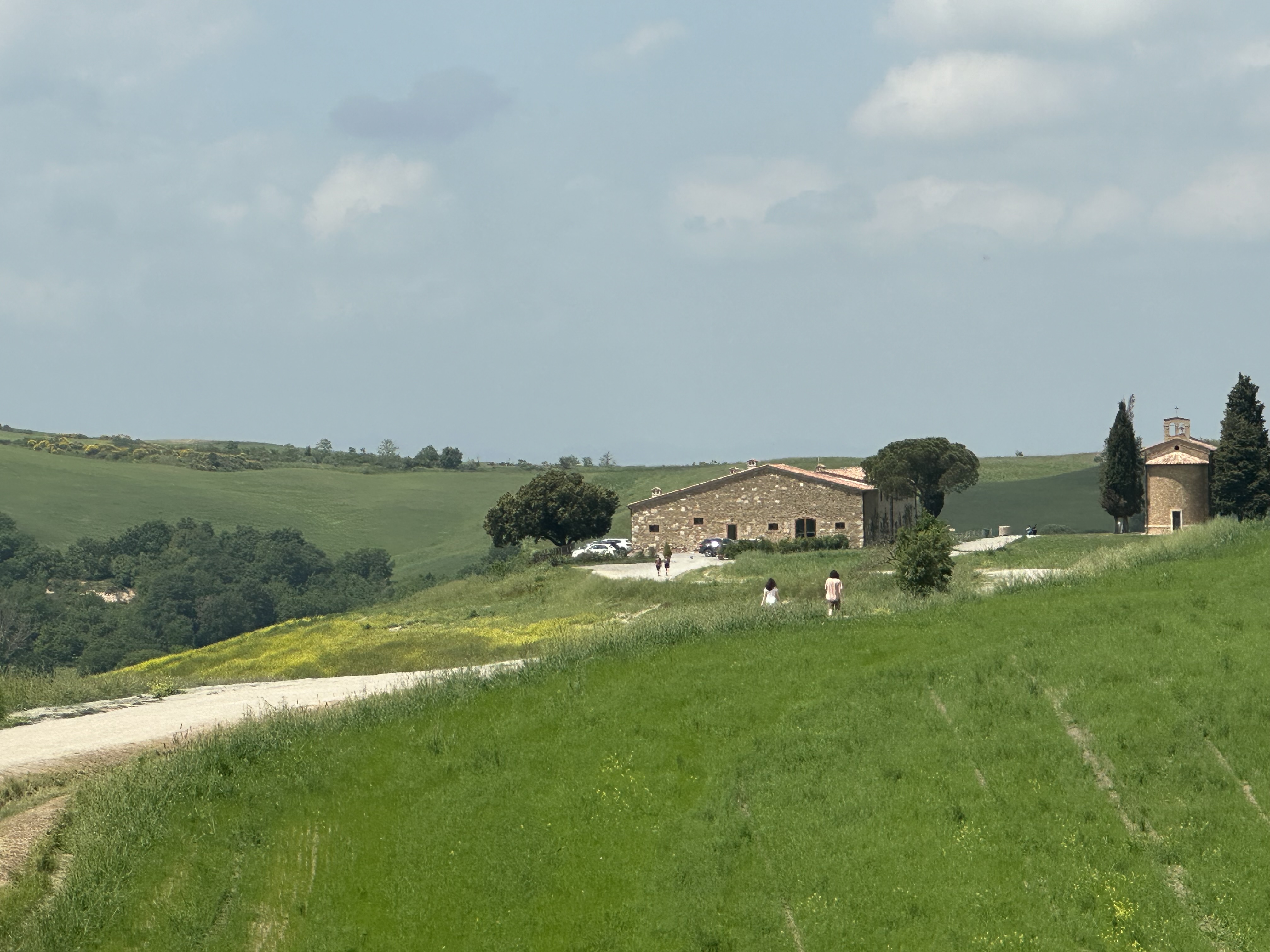
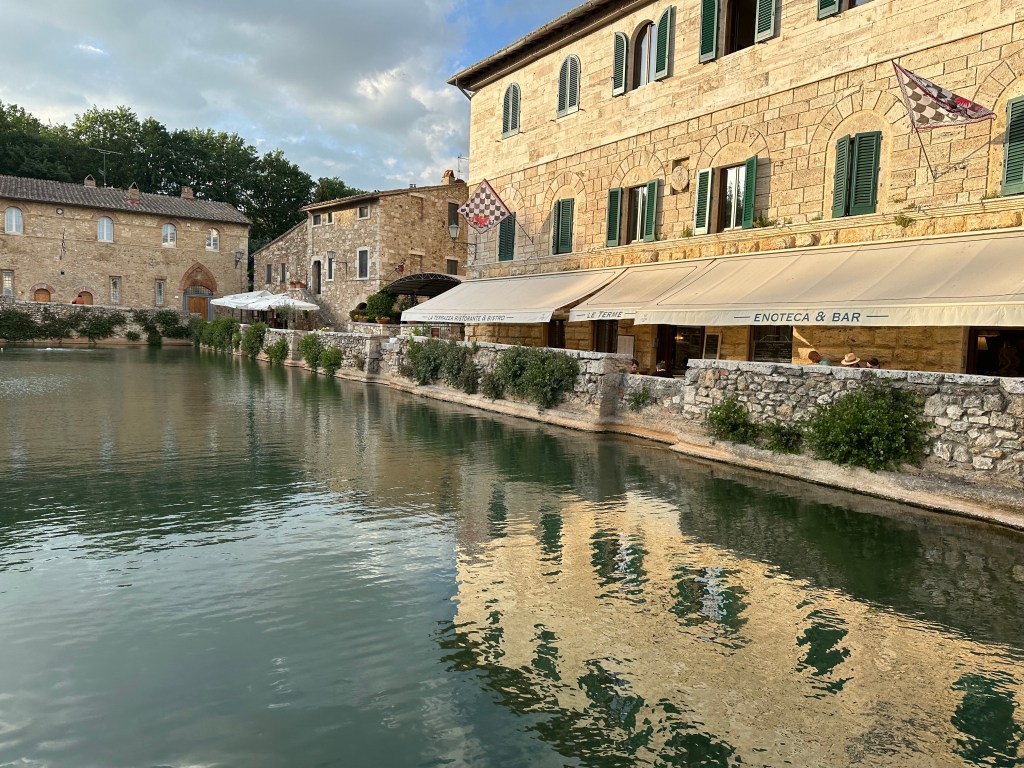
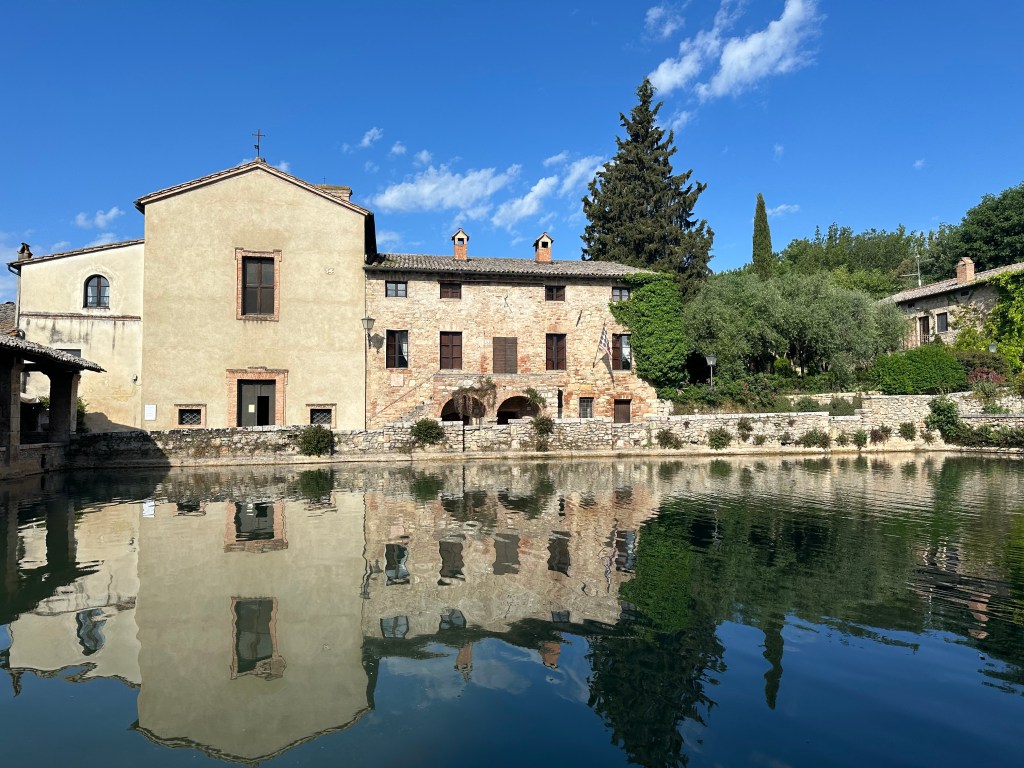
Our hike to Pienza began in Bagno Vignoni where we stopped at the small simple church on the lake.
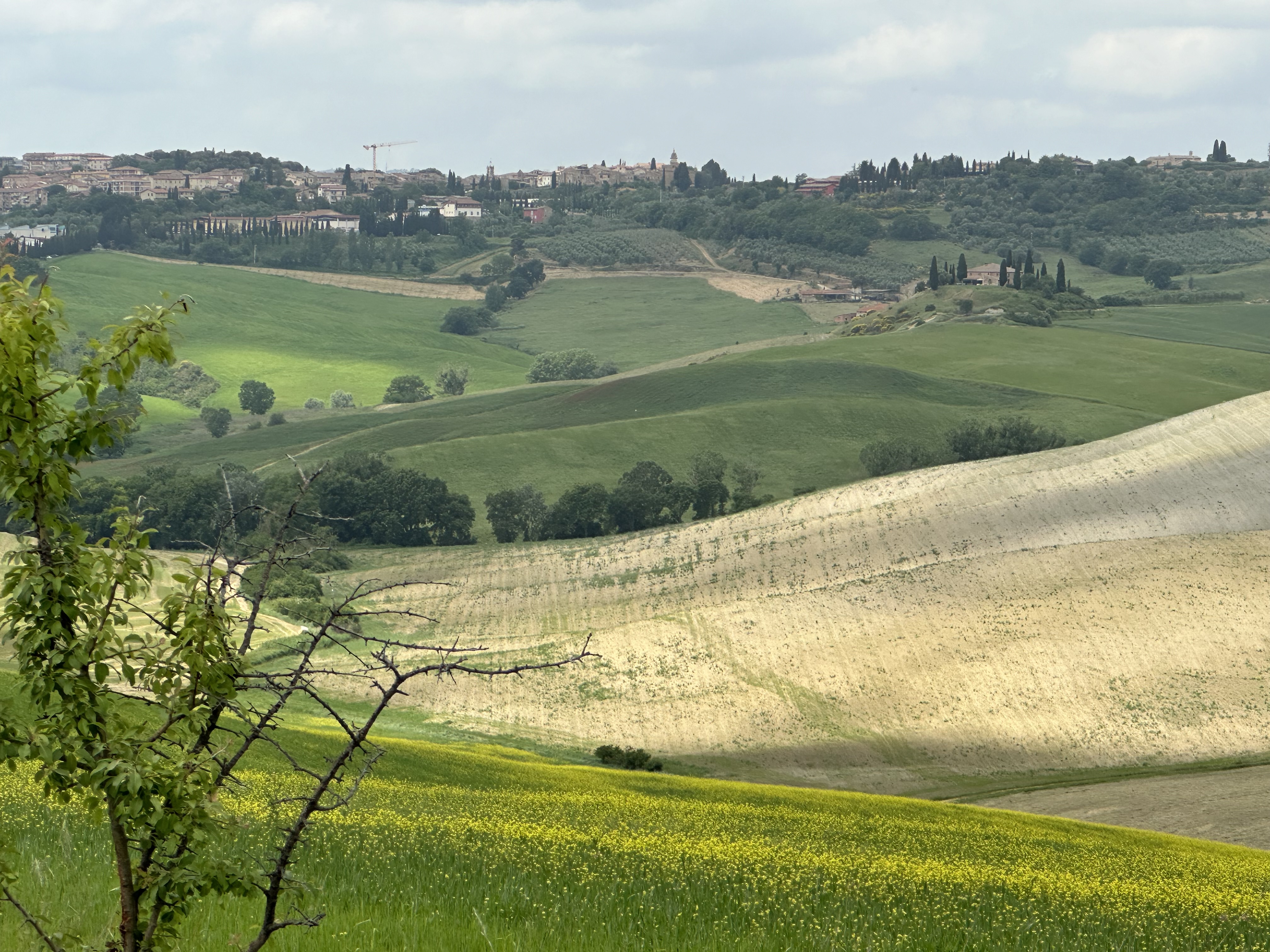
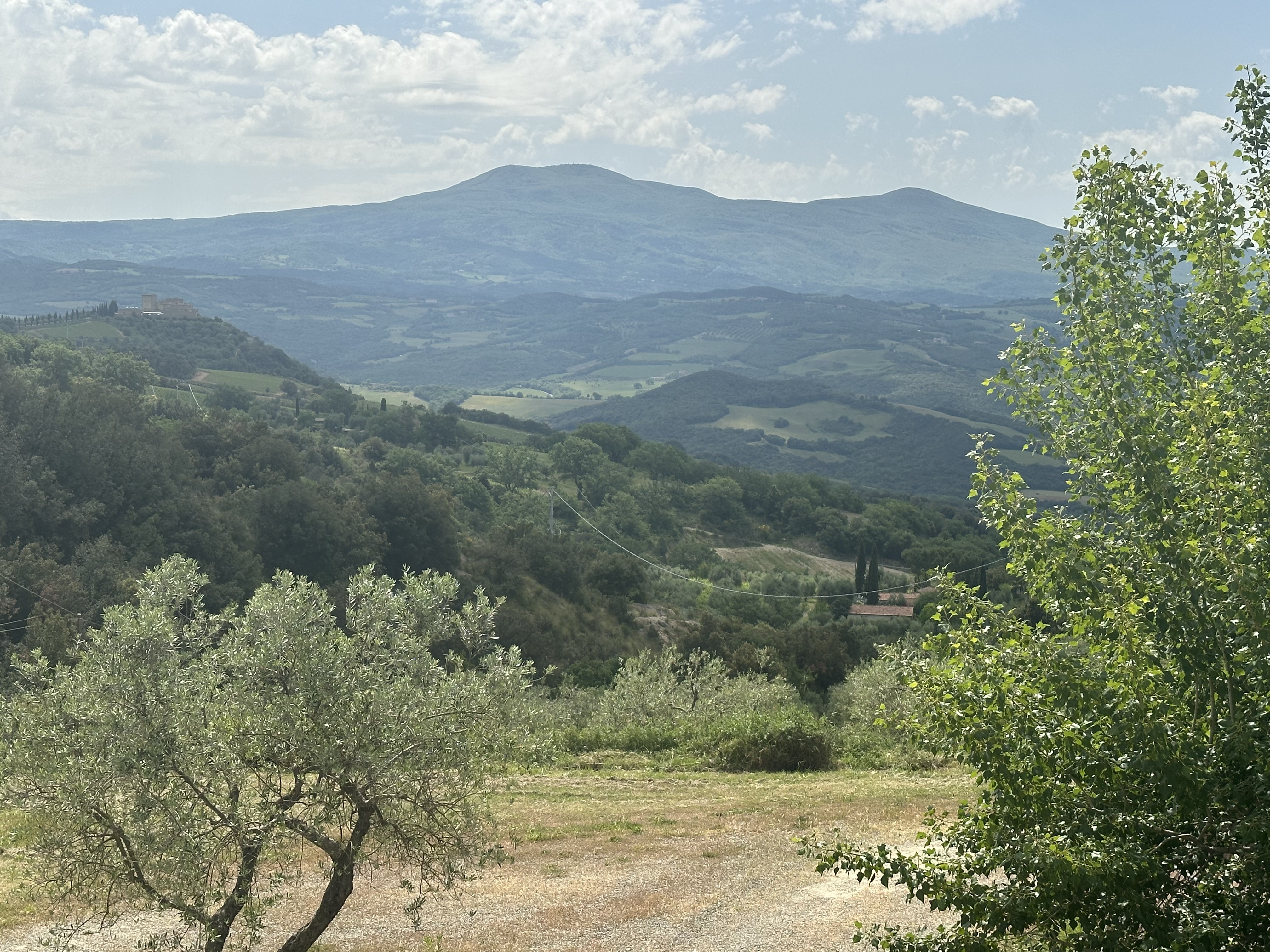
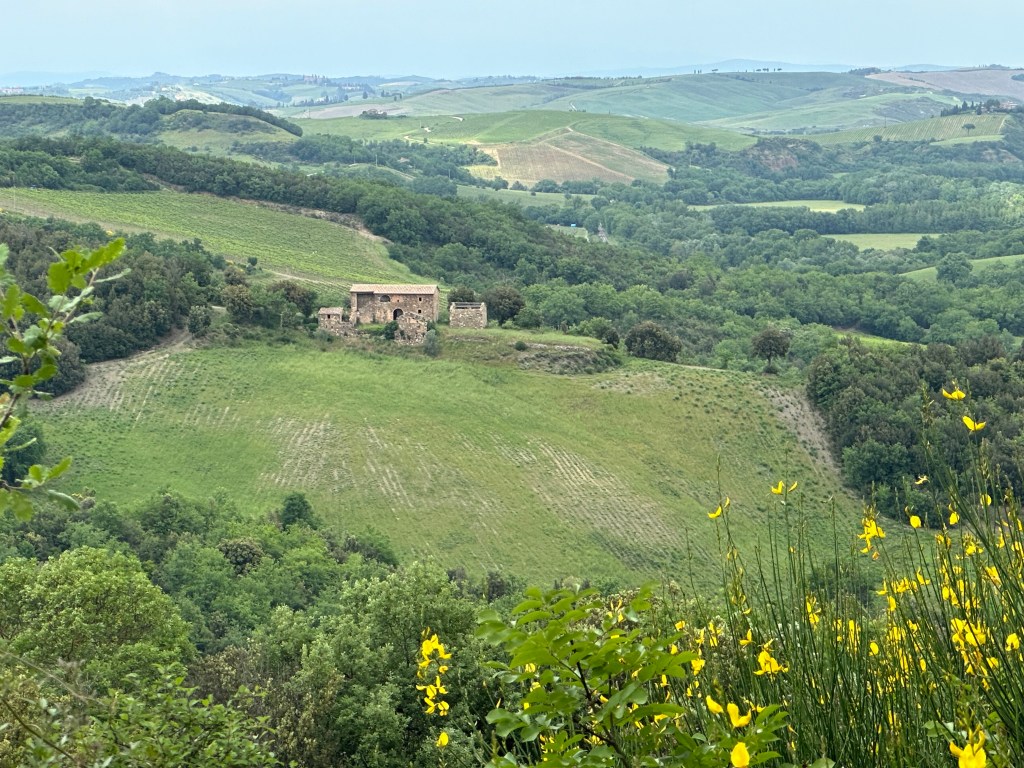
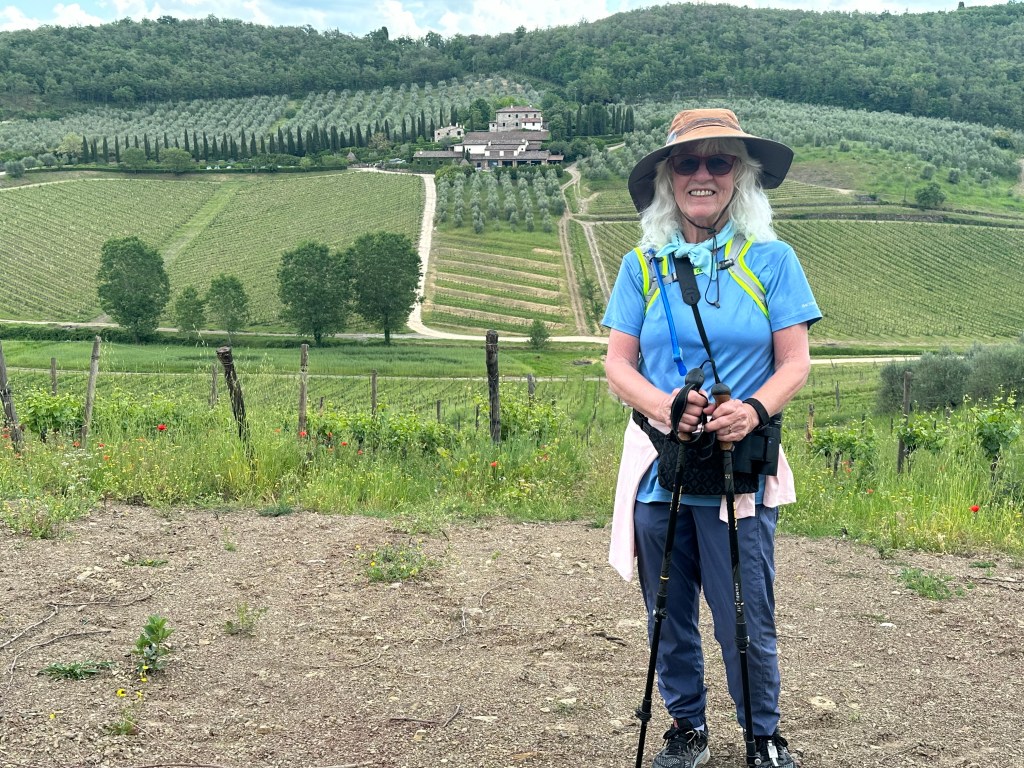
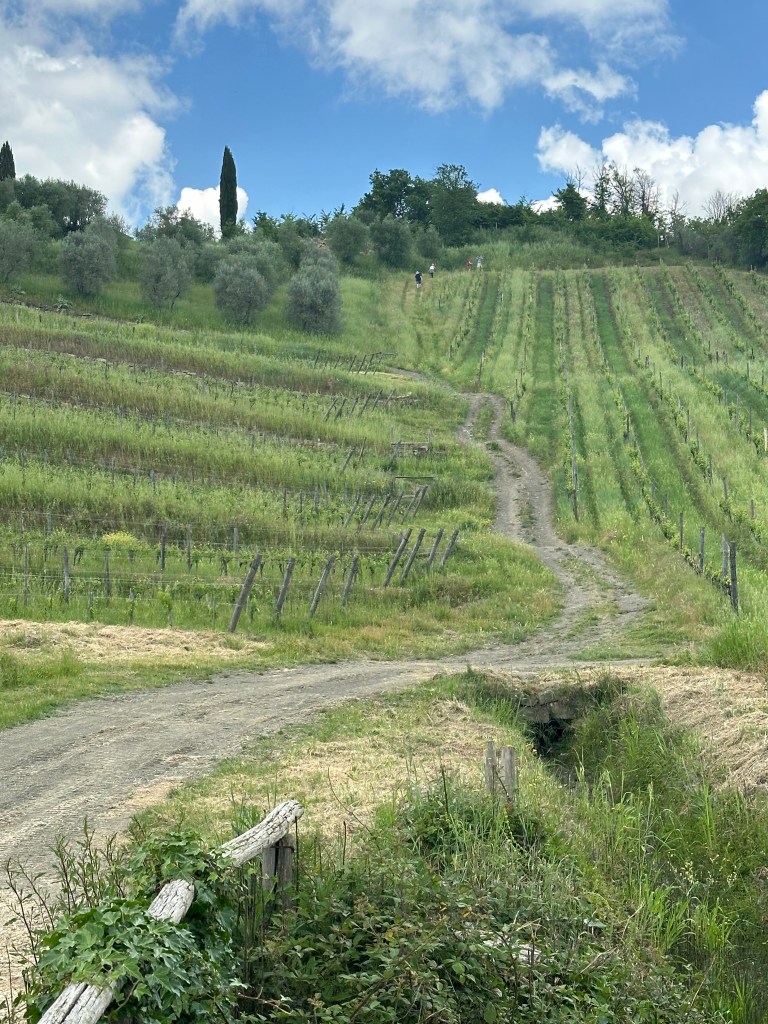
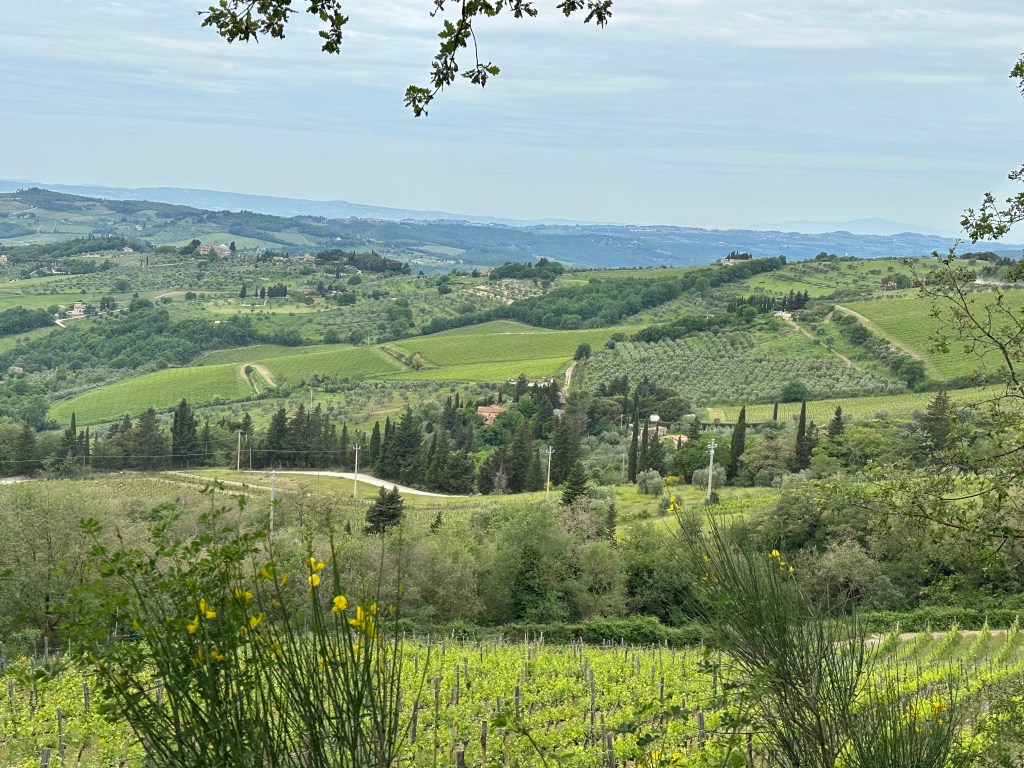
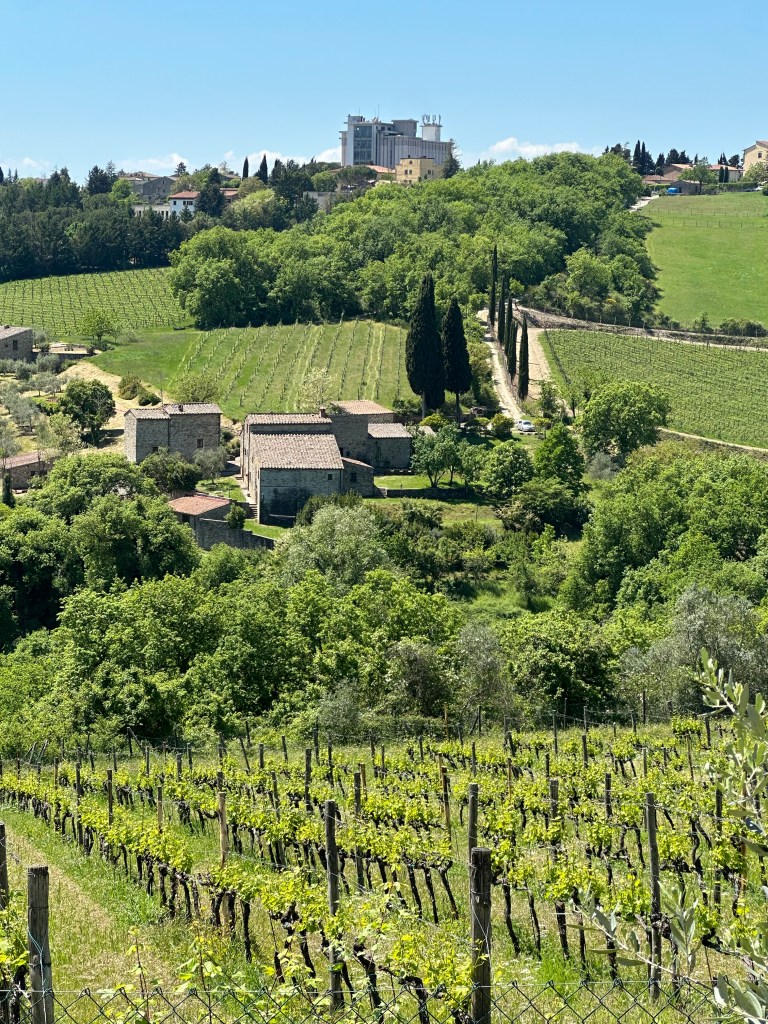
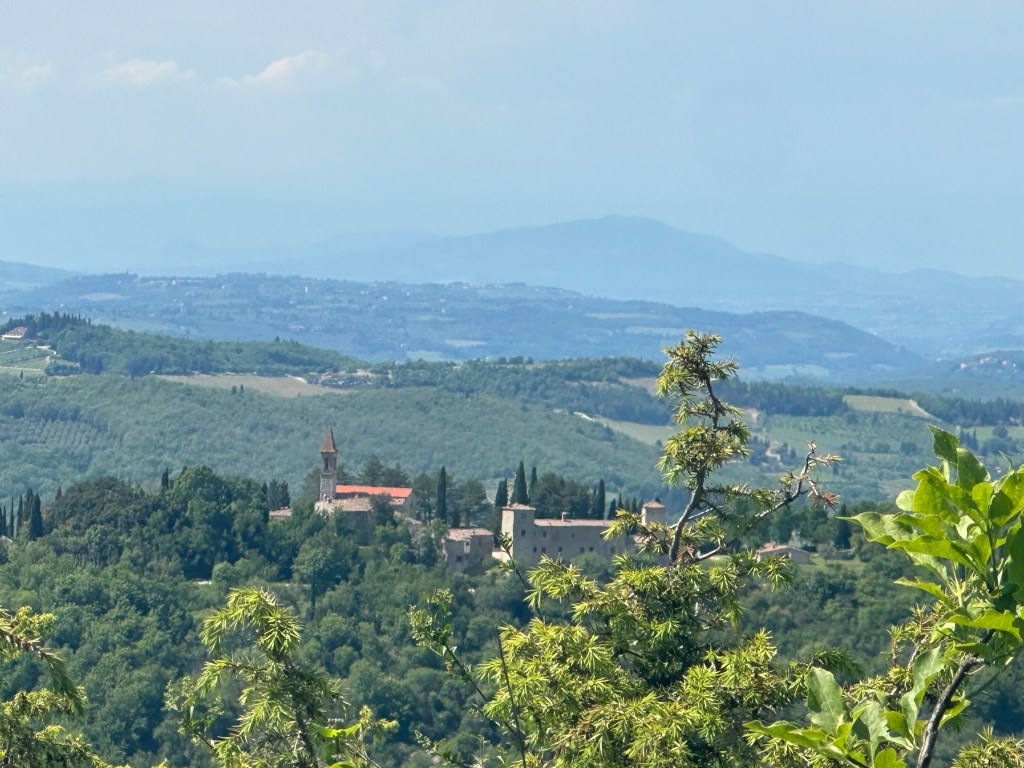
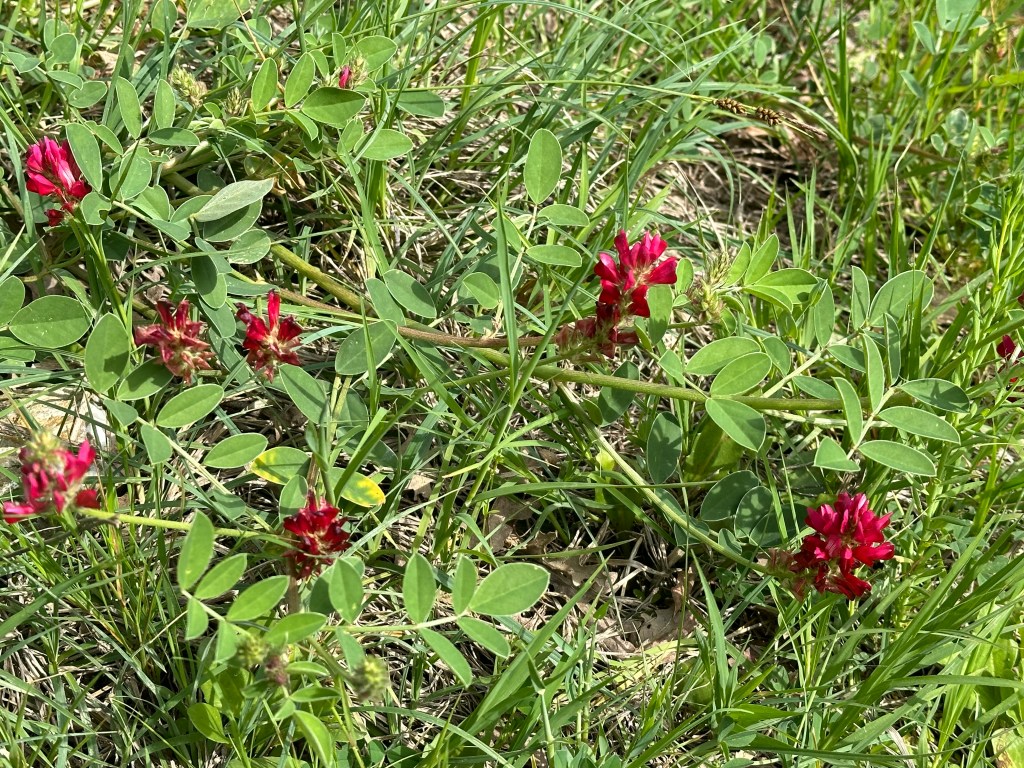
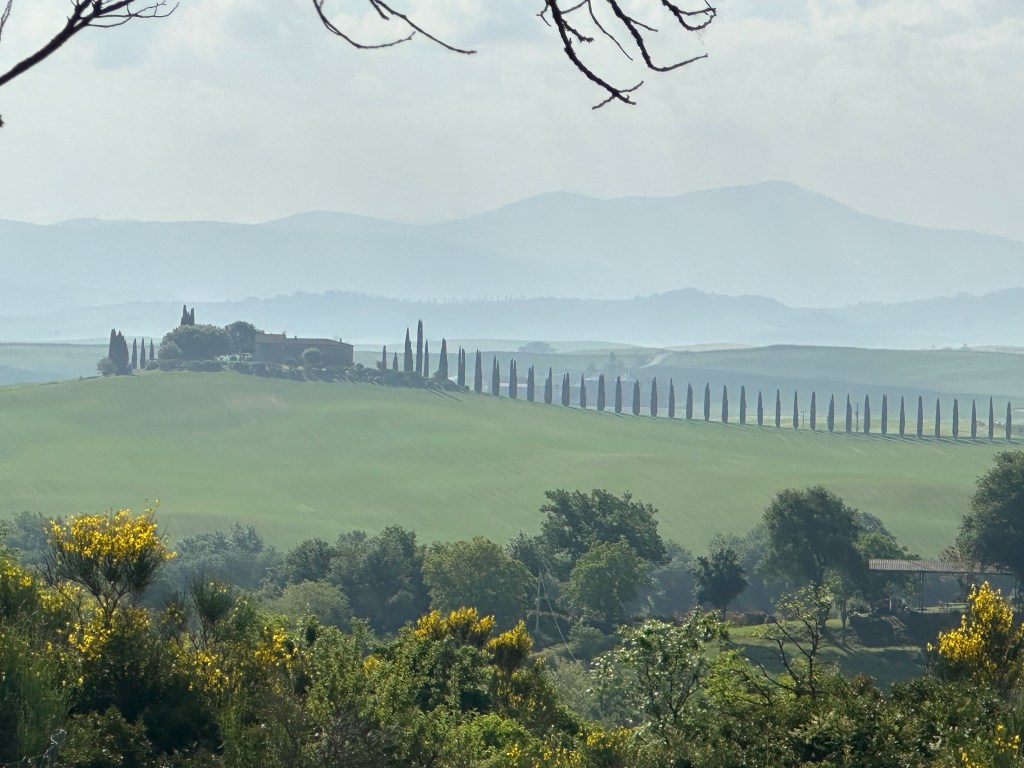
From there we hiked up through fields and forested paths. The flowering plant sulla grows throughout this part of Tuscany and we tasted its edible red bloom. It is not a clover but it reminds me of our crimson clover because it grows along the sides of the road. And, once again the views were spectacular. The cypress trees lining roads up to villas are so typical and I love the misty mountains in the background.
Lunch today was at an agriturismo where we tasted their locally grown vegetables: panzanella (bread salad) made with red beets and topped with sliced truffles, herbed ricotta topped bitesized zucchini boats, a tasty vegetable pie, herb salad in a jar, sliced beef over lightly pickled cucumbers, and freshly made focaccia bread. We gathered outside under a tree and tried to spot the pheasants whose raspy call we could hear.
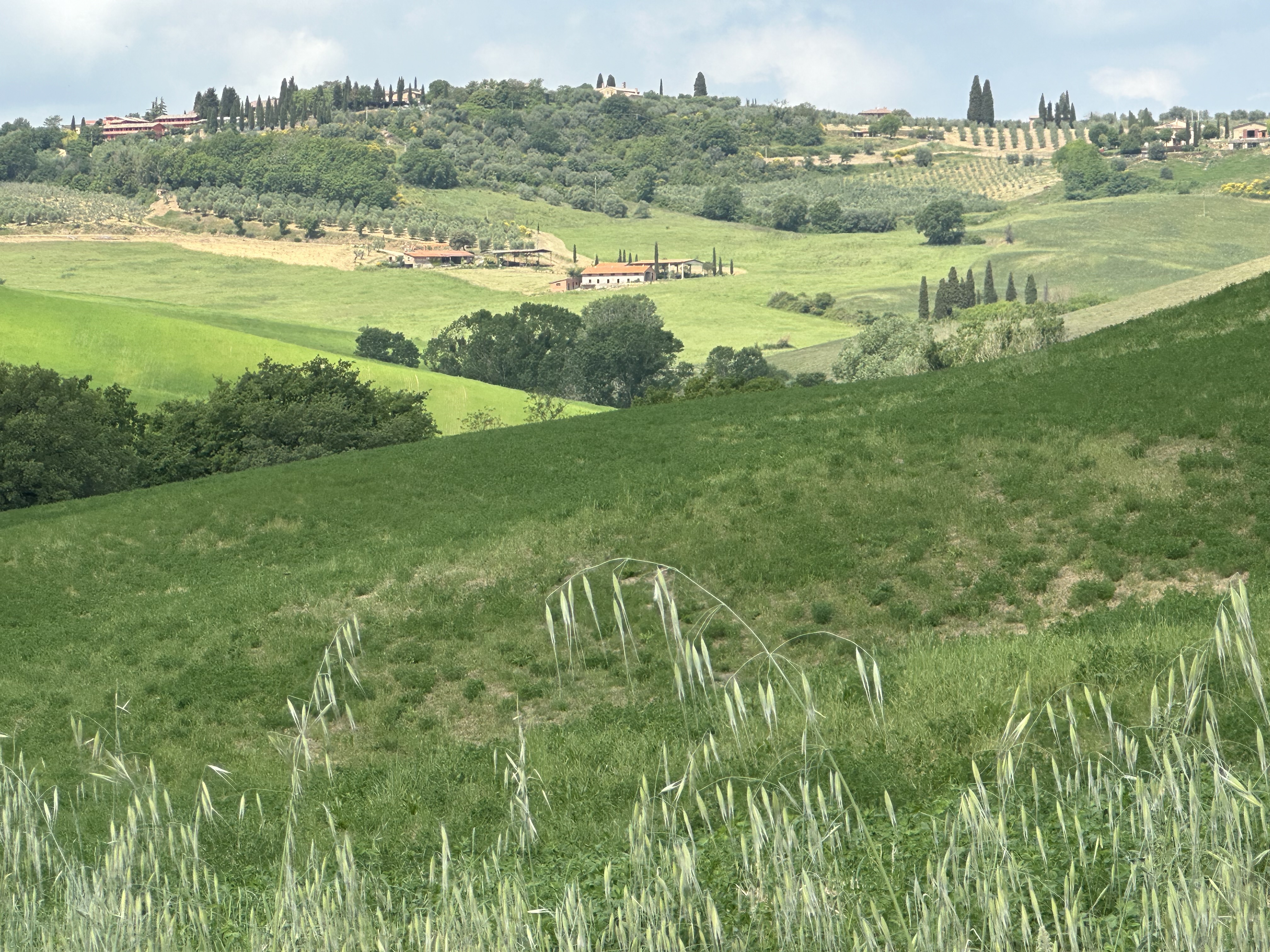
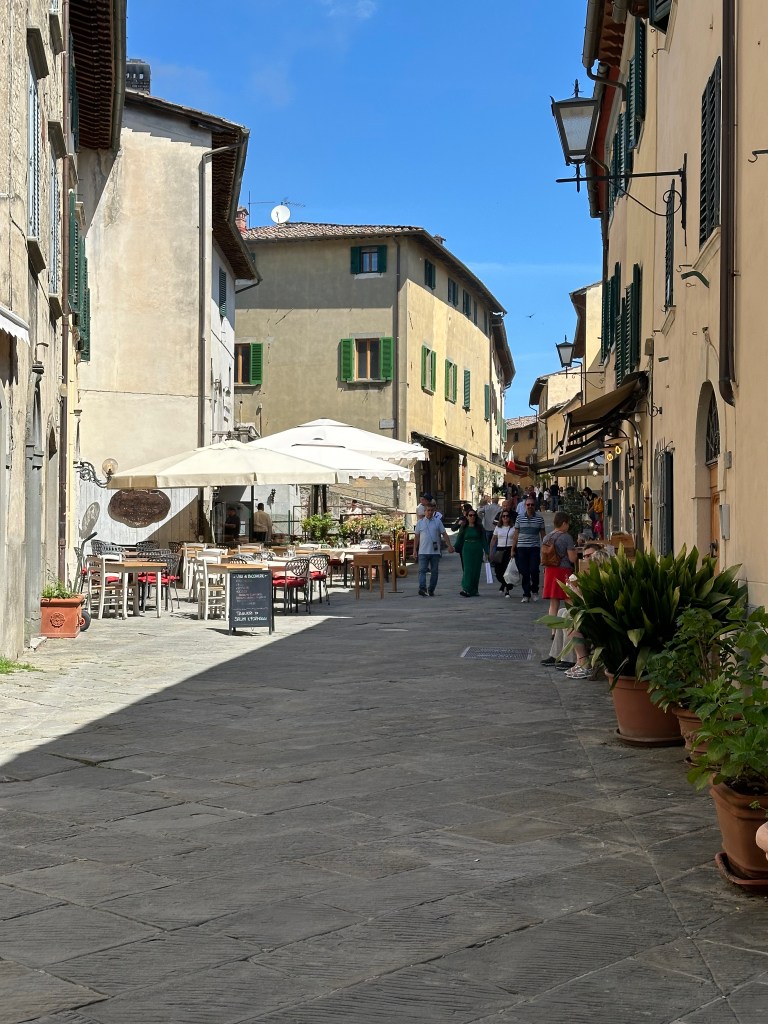
The renaissance town of Pienza was the first to be redesigned as a “planned” town by architect Bernardo Rossellino in the late fifteenth century. Pope Pius II was born in the Tuscan town and he hired Rossellino to transform his birthplace. Rossellino applied the principles of his mentor, Leon Battista Alberti, a humanist thinker and architect. The stone town overlooks the Val d’Orcia (valley of the Orcia river) and is full of small specialty shops along cobblestone streets.

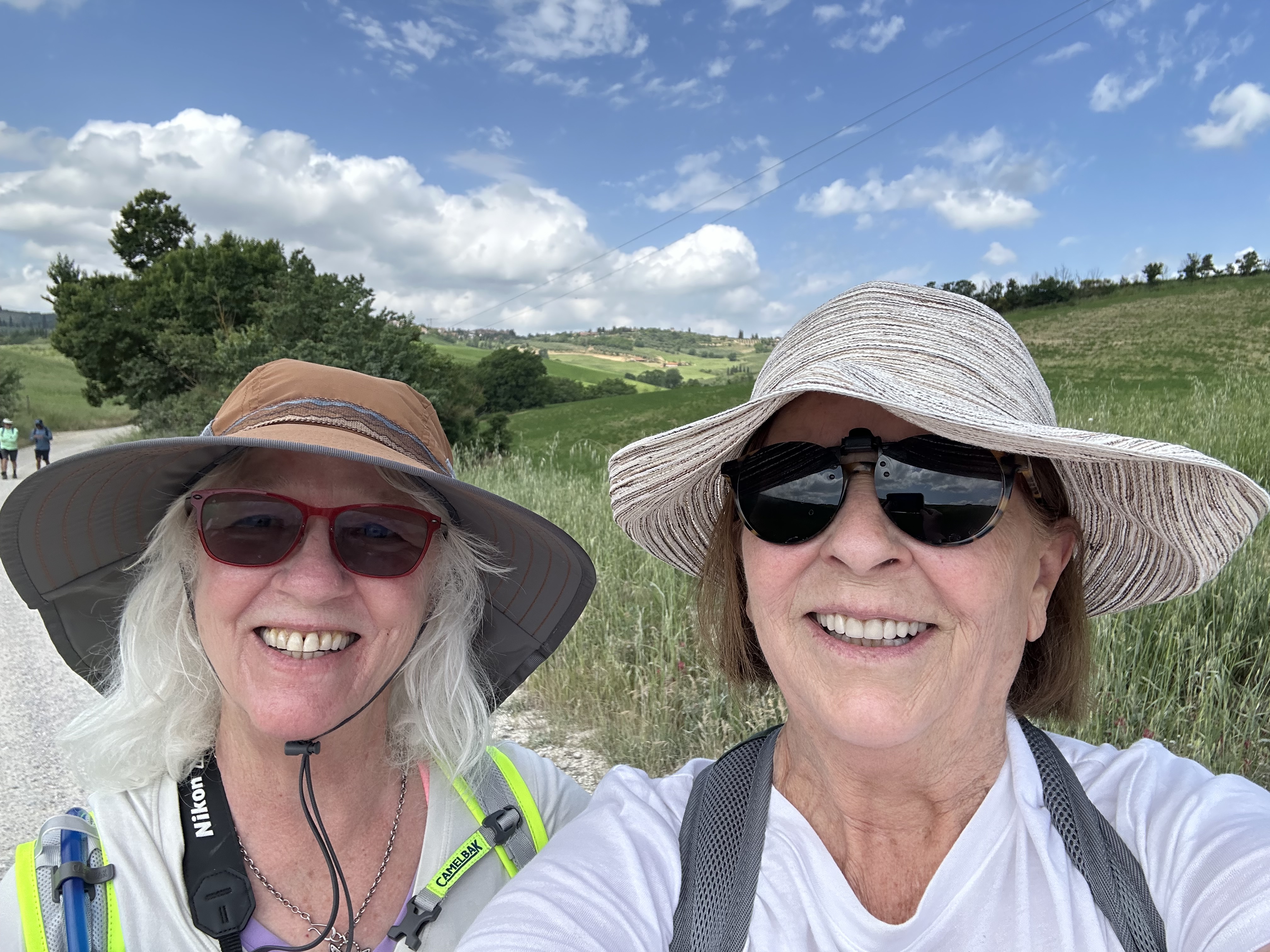
After our 7 mile hike up and down these rolling hills we shuttled back to our hotel, Posta Marcucci and rested a bit before our final evening with Backroads. We sat near the mineral spring pools, toasted each other and the trip with prosecco. This trip, for me, was special in a large part because of the people. We were all around retirement age and enjoyed being outside, learning and seeing new things. Each of us brought a different perspective and everyone respected and enjoyed being together. Our leaders went above and beyond to be sure we all were having fun. And, spending this time with my friend, Joy, I will always treasure.

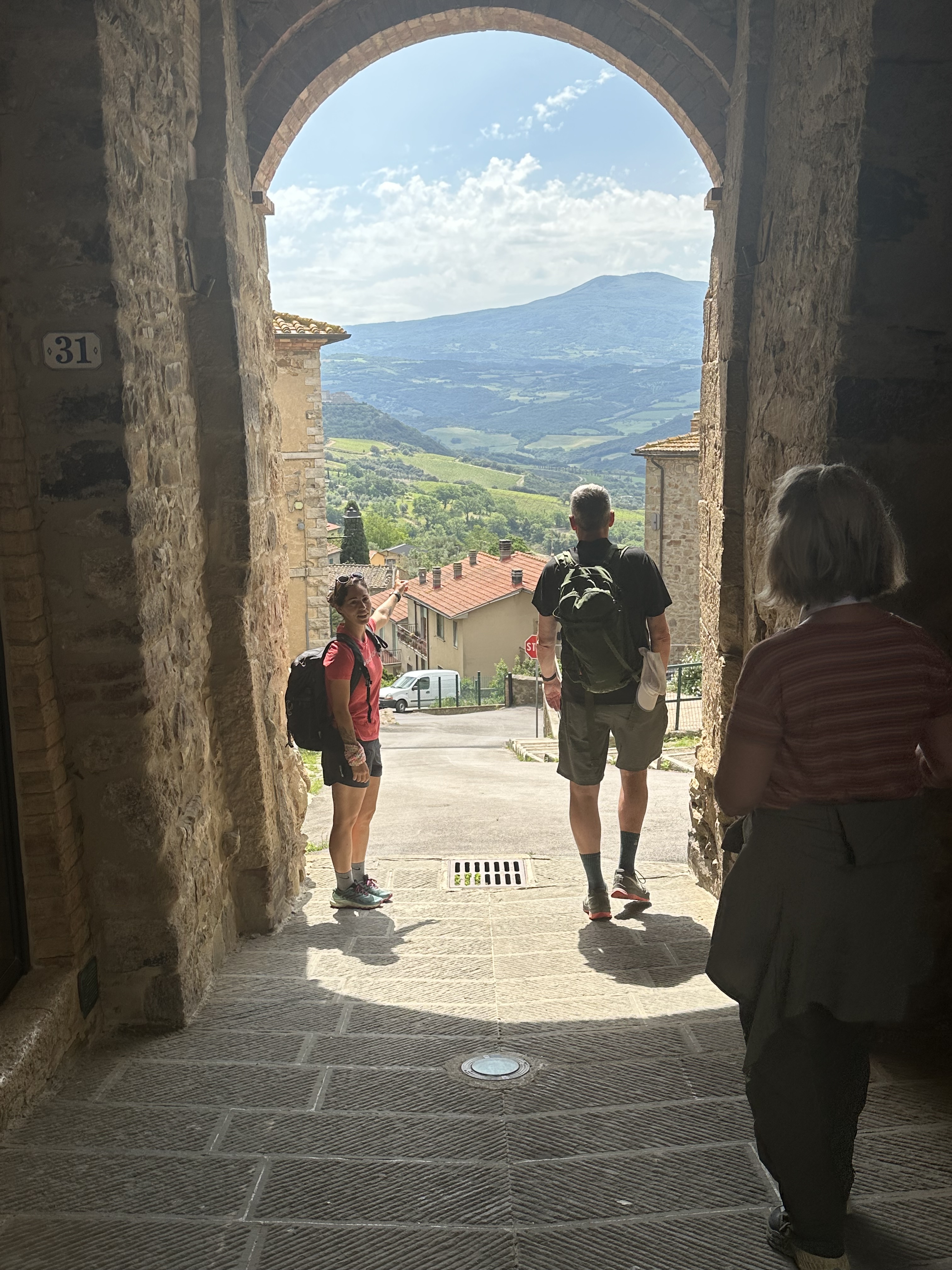
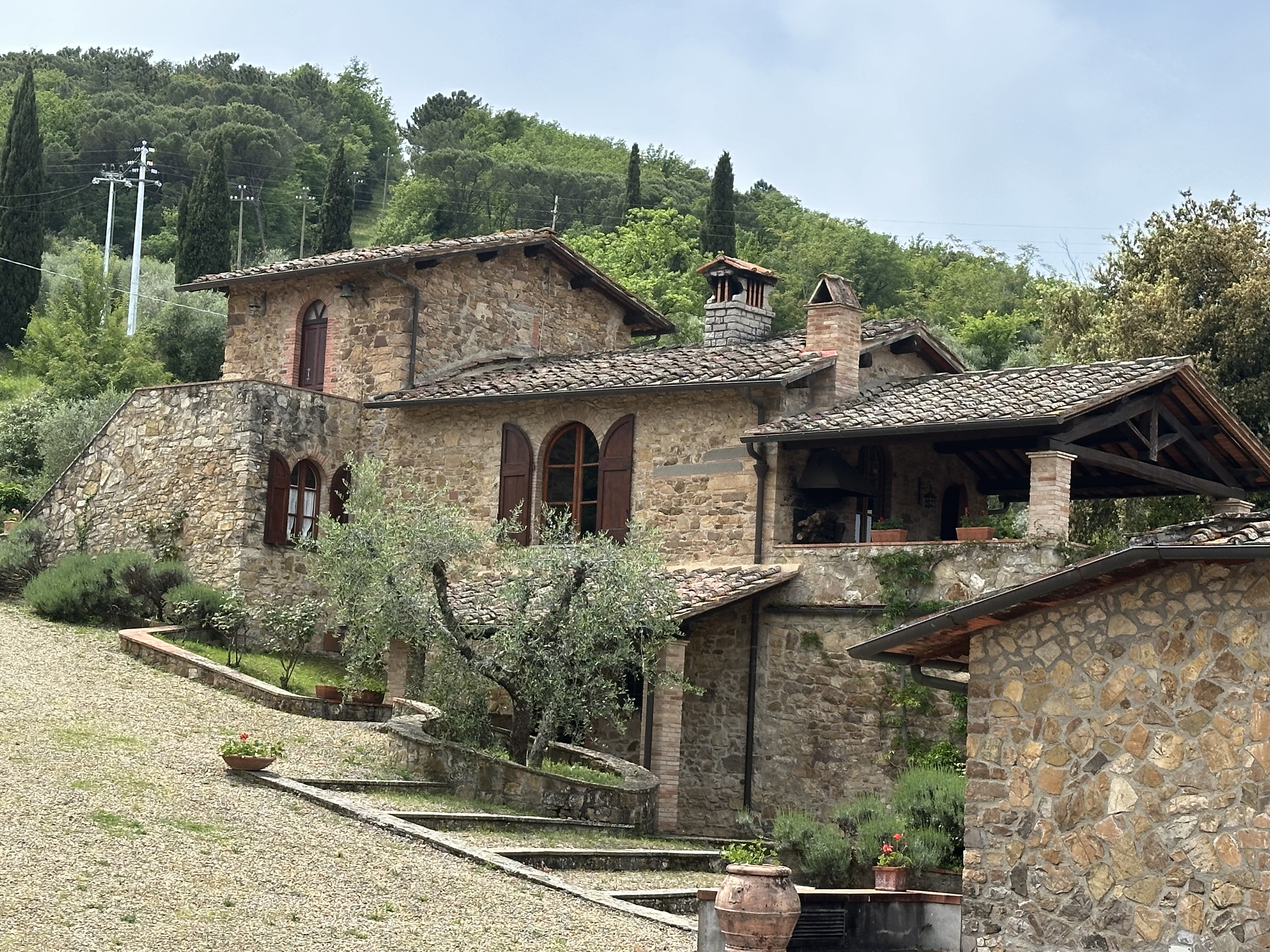
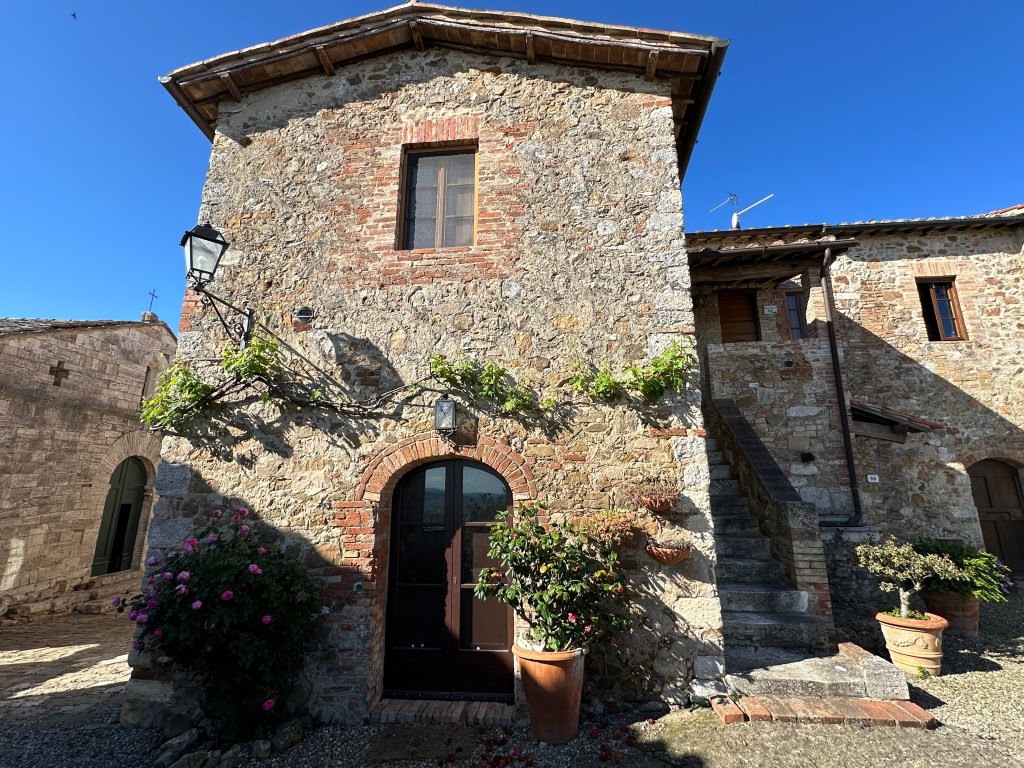
Next morning: Before heading to Florence we hiked up to Vignoni Alto and back (about 2.5 miles). This pristine village on the very top of a mountain has 28 residents (and 3 cats). Each of the stone buildings was more charming than the next–plenty of flowers and grapevines like this above many of the entryways. It would be a lovely getaway.
Joy and I are headed to Florence for the next leg of our journey.

Nancy
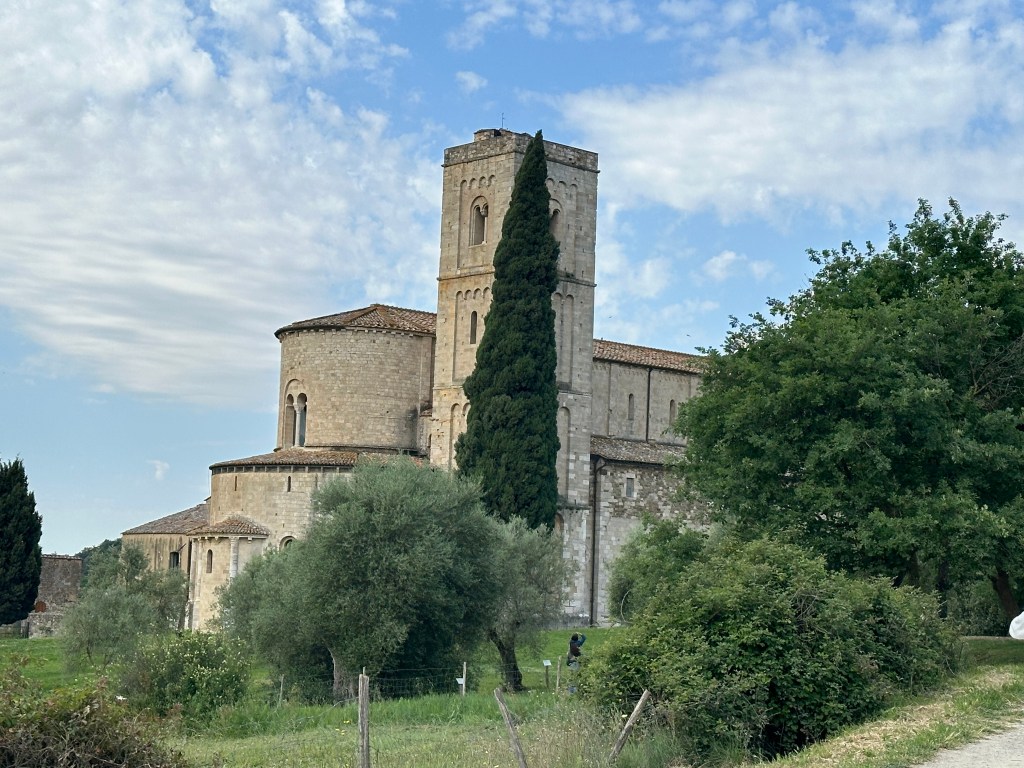
Val d’Orcia

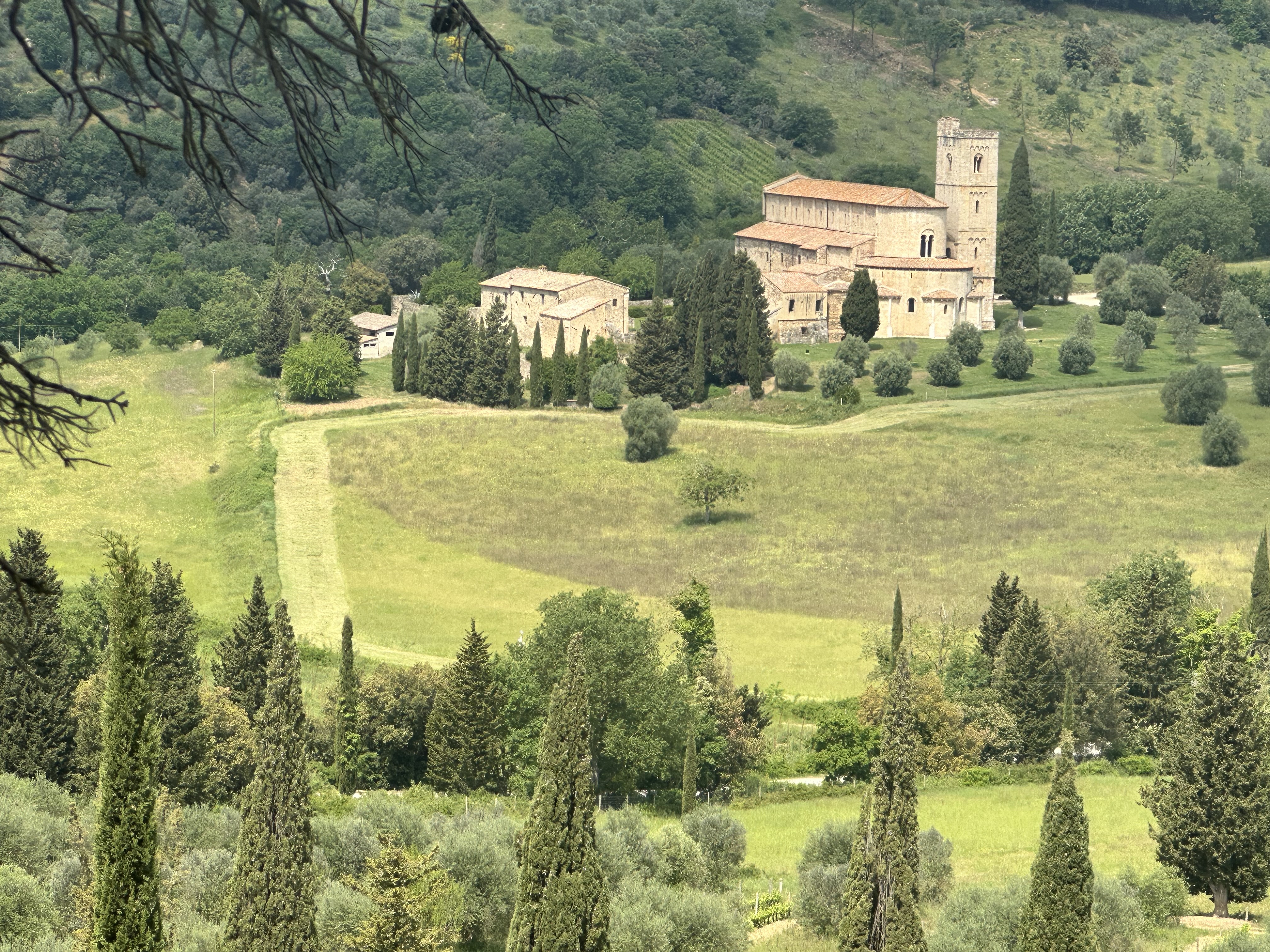
We shuttled from our hotel In Raffa to the Sant’Antimo Abbey, formerly a Benedictine Monastery near Montalcino. It went unused for years, was restored and is currently occupied by community of monks of the Olivetan Benedictine order.

In the first floor of the monastery is a small shop that specializes in lotions and creams that are made from local herbs and plants; there are hundreds! From the monastery we began our 2.6 mile hike to lunch at the Mastrojanni saffron, wine and olive estate. The hike was, as usual, quite beautiful and interesting.

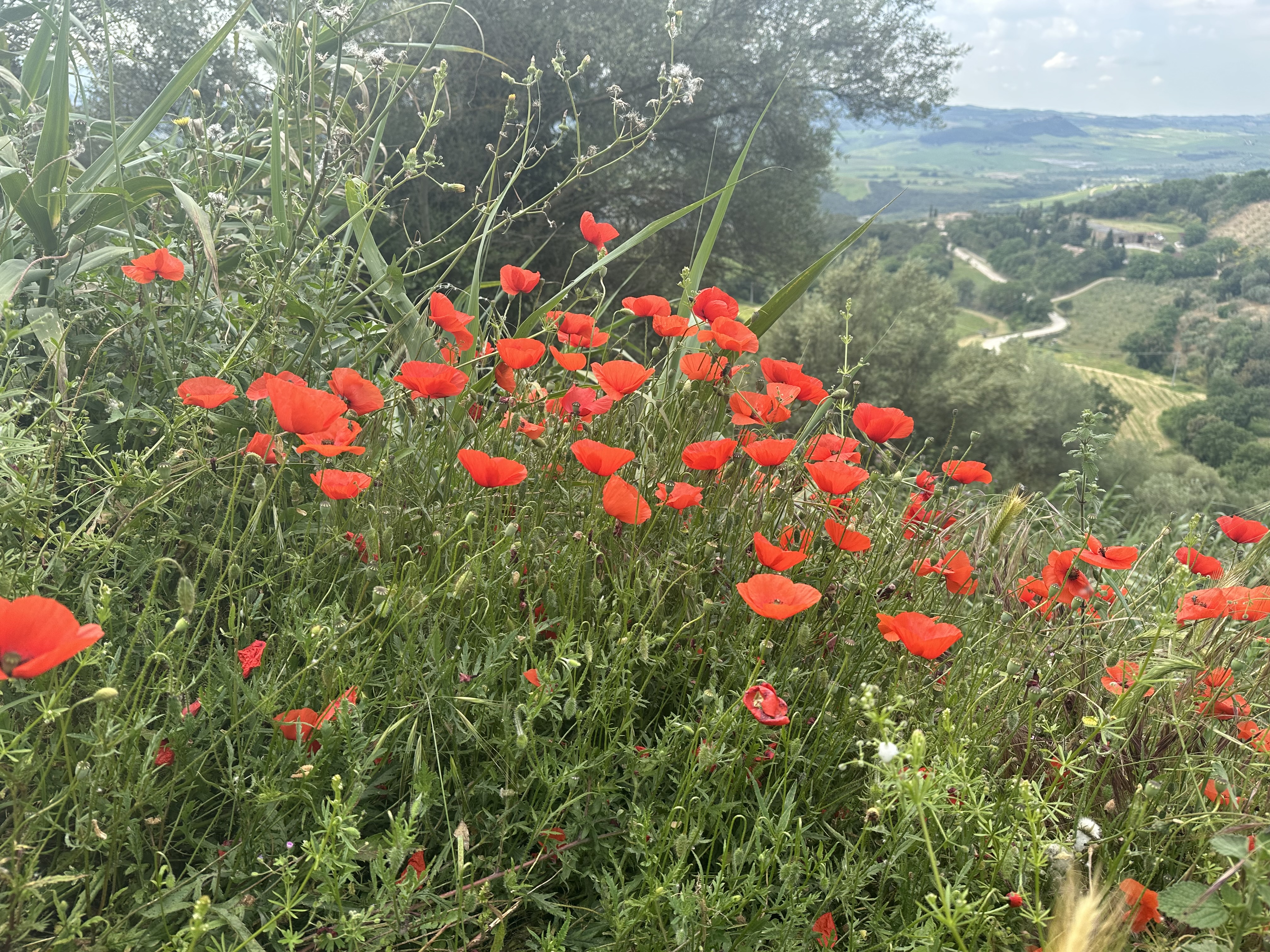
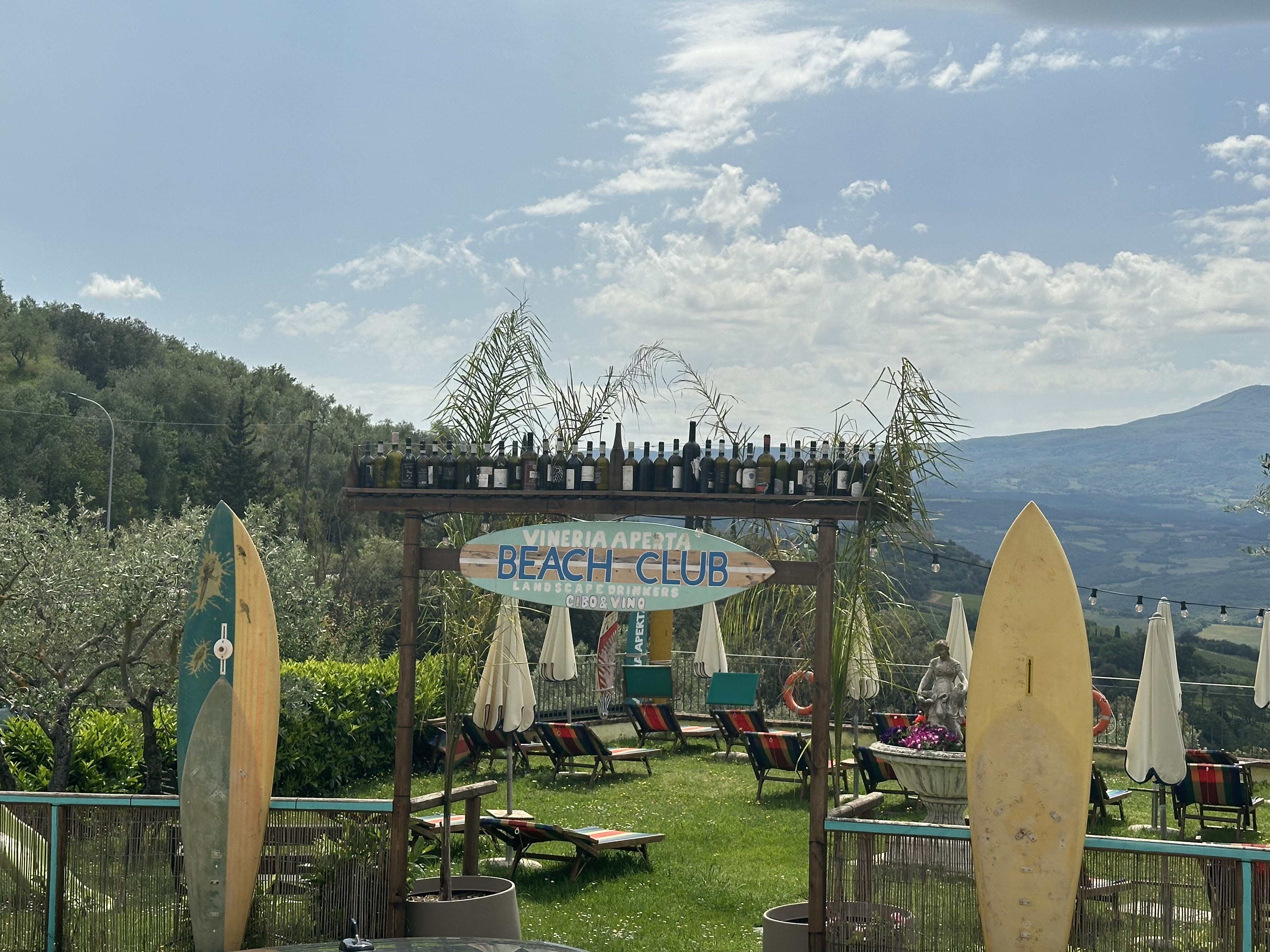
Poppies and cacti lined our path up to Castelnuevo, a small medieval village with amazing views. In the village we loved the Beach Club–a bar with the sign that says, “Landscape Drinkers” and lounge chairs overlooking a view of the mountains. As we continued to climb, we saw Mont Amiata–a volcanic mountain. The lava under the ground heats the thermal pools at our hotel for tonight and further up we had a beautiful view of the abbey.

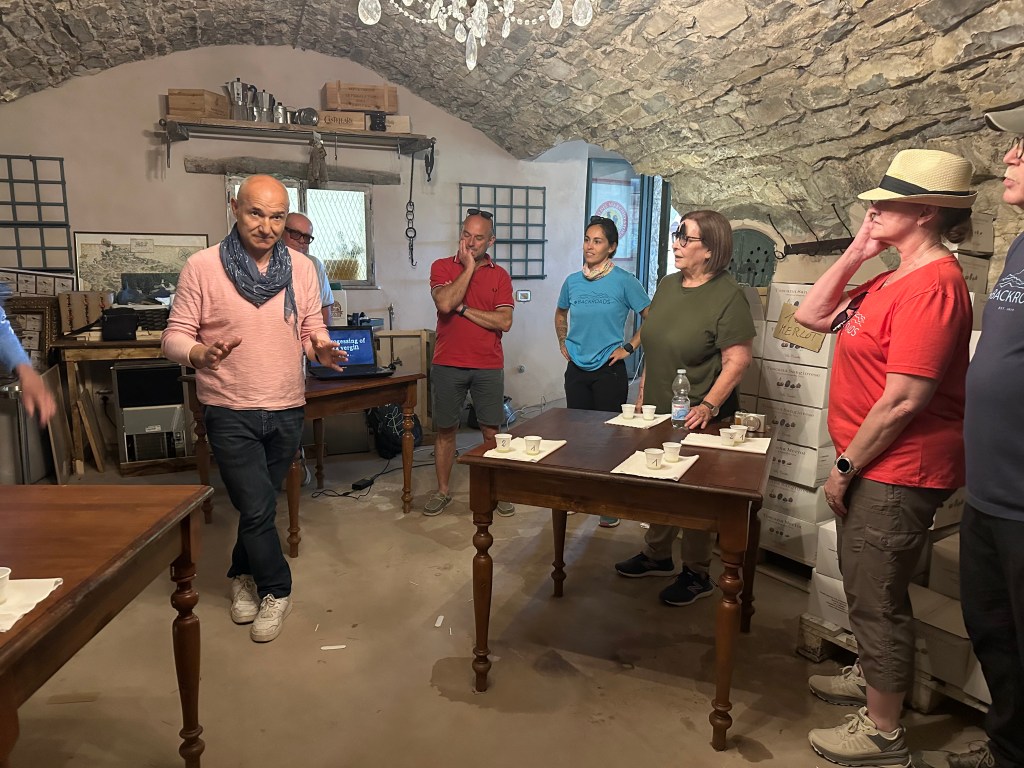
We arrived at Mastrojanni and were treated to a slide show and tasting of local saffron. The Mastrojanni family began growing the Crocus Sativus flower by planting about 50 bulbs; now they grow close to 500 bulbs. It takes 125-150 flowers for one kilo of saffron. The flowers are picked by hand in September and the flower’s stigma are cleaned for the saffron. Saffron grown in Tuscany has many medicinal properties and the universities nearby are studying it as a treatment for depression, stress and lately Altzheimer’s Disease. After we learned about the manual process of growing and harvesting saffron, we tasted pecorino cheese topped with saffron-infused honey. Wow!

Our lunch at Mastrojanni was scrumptious and before the last course of arborio rice cooked with saffron, we were treated to a demonstration of how to prepare the dish. We tasted two wines, Rosa and Brunello that are produced and bottled on the property and the finale to our lunch was Creme Brûlée…my very favorite dessert!

After lunch we left from the Mastrojanni Relais (restaurant) and began our afternoon hike (6 miles) to Marcucci. The views on hikes in the Val d’Orcia region of Italy are different from Chianti. In Chianti we mainly saw large vineyards and olive orchards; in Val d’Orcia we are seeing more agricultural land. We are further south and the climate is different. Vineyards and olive orchards need rain at specific times in their growing period to make a “good year.” There is not typically enough rain in Val d’Orcia to support grapes and olives. And, for instance saffron bulbs do not like water!

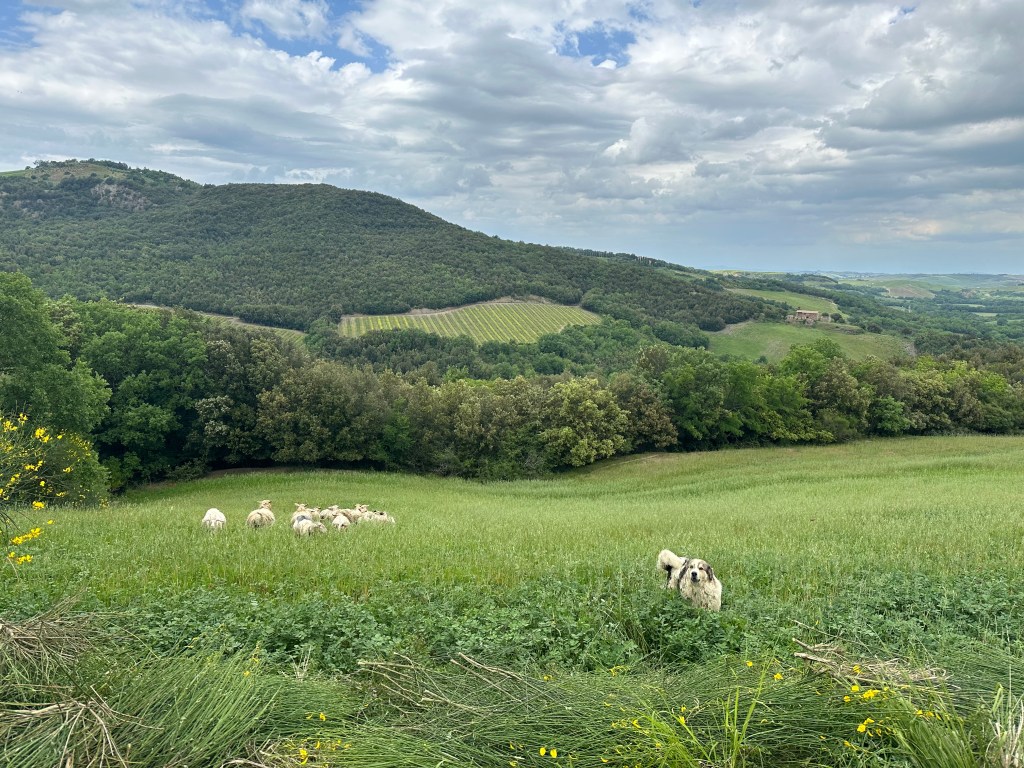
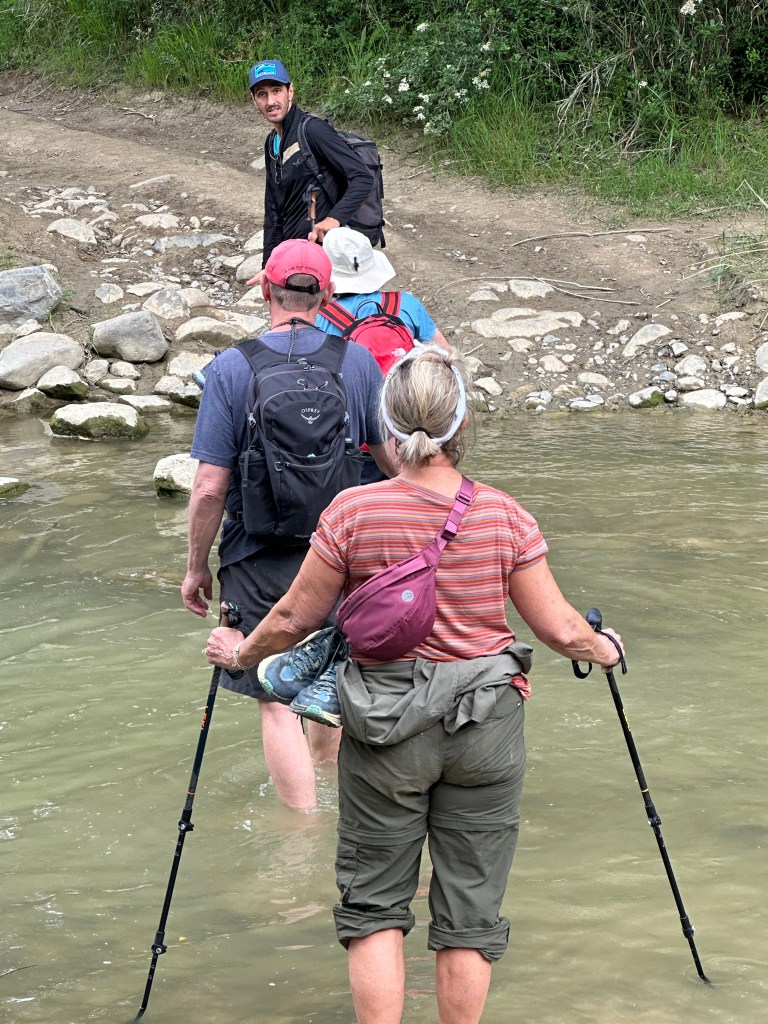
Sheep were warned of our approach by their Great Pyrenees watch dog and of course all of the views from our climb were beautiful. Going downhill, we saw signs of wild boar (cinghiale) and although we did not see them, one of our leaders did see a family along the trail. Before the next uphill, we forded a slow moving stream with a gravel bed.

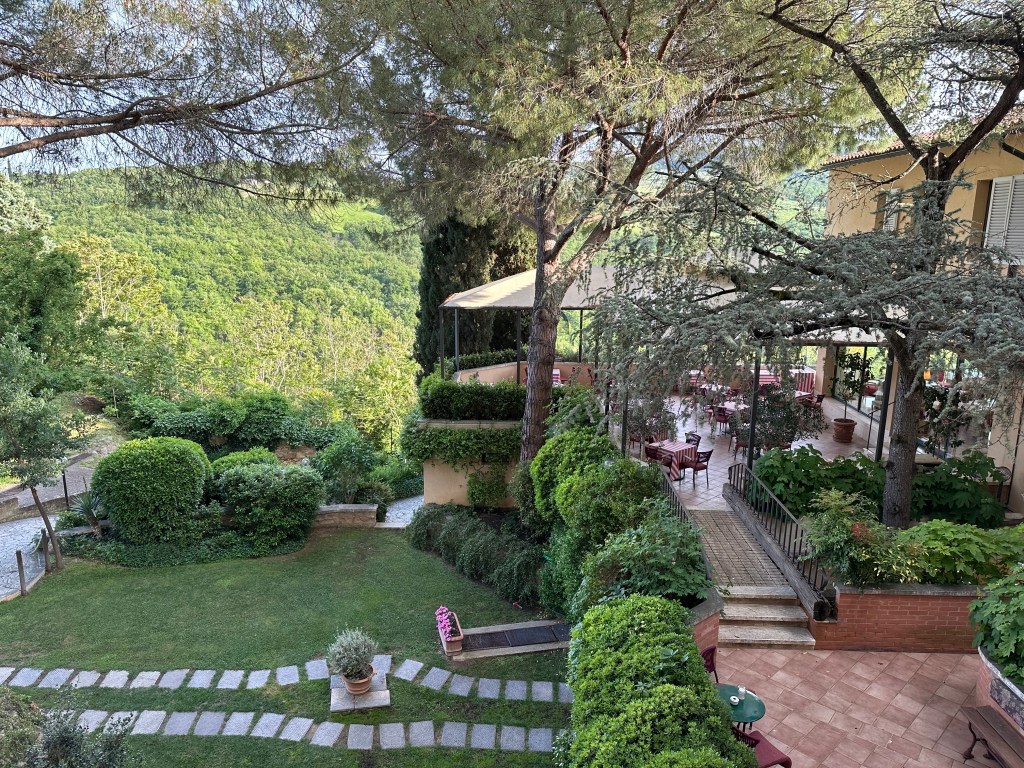
We arrived at Bagno Vignoni just in time to shower and rest for a few minutes before we had dinner on our own. The view from my window is of the grounds of our hotel with the forested mountains in the distance. Joy and I chose to have dinner at La Terrazza Ristorante, on the small lake in the middle of town. After each having a spritz (mine was campari; joy had limoncello) we split the stewed cinghiale which tasted a lot like very good roast beef.

It was a long beautiful day full of activity and we turned in early or as early as is possible on a Backroads trip.

Nancy
Last Day in Chianti

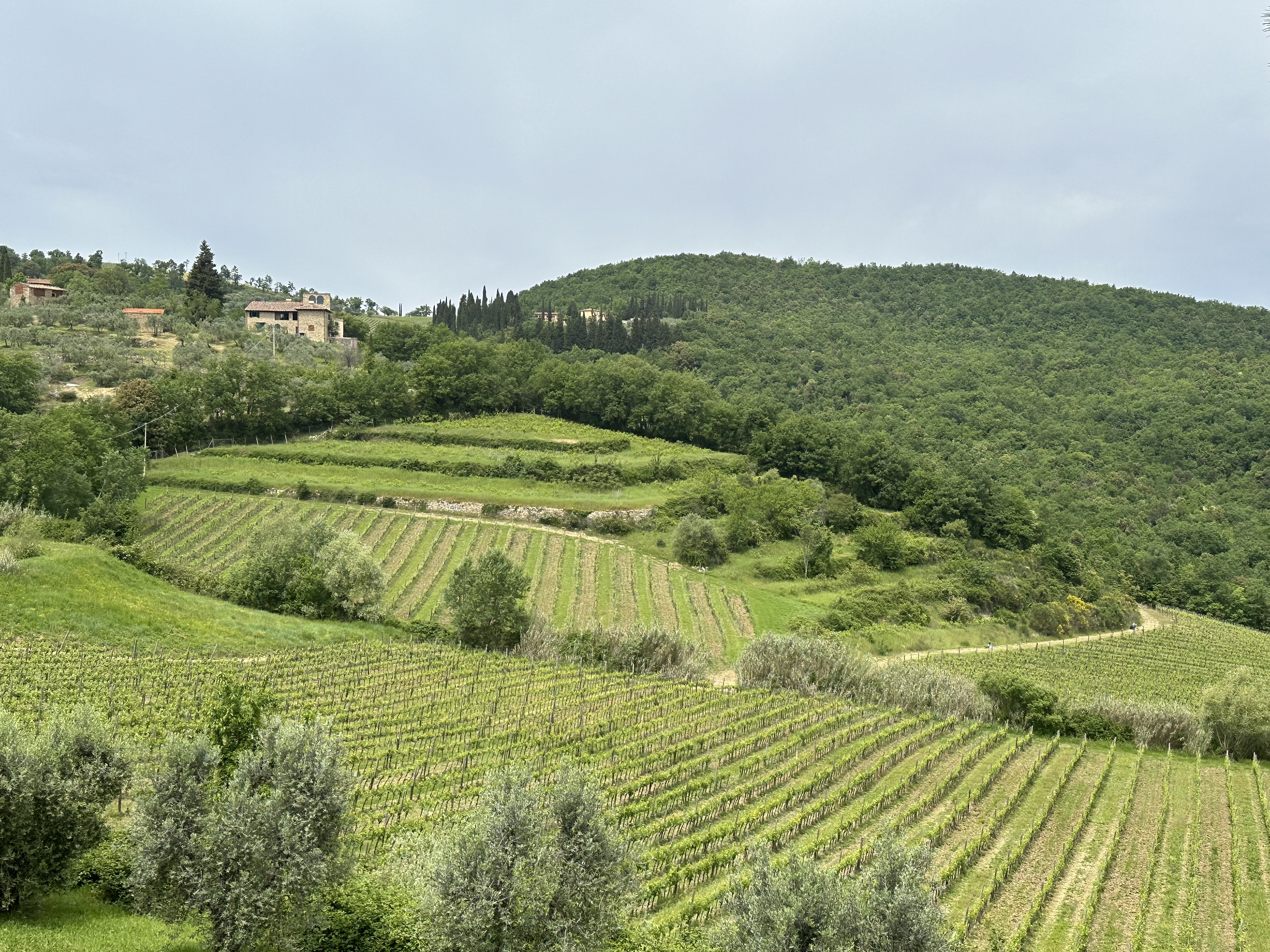
Time is flying by… already on our third day in Tuscany. We shuttled to Gaiole to begin our 7.2 mile hike–long and the uphills (we gained a total of 1311 feet) were steep, rocky and difficult. But all of the beautiful scenery was worth it. We hiked through olive, oak and pine forests and along vineyards.

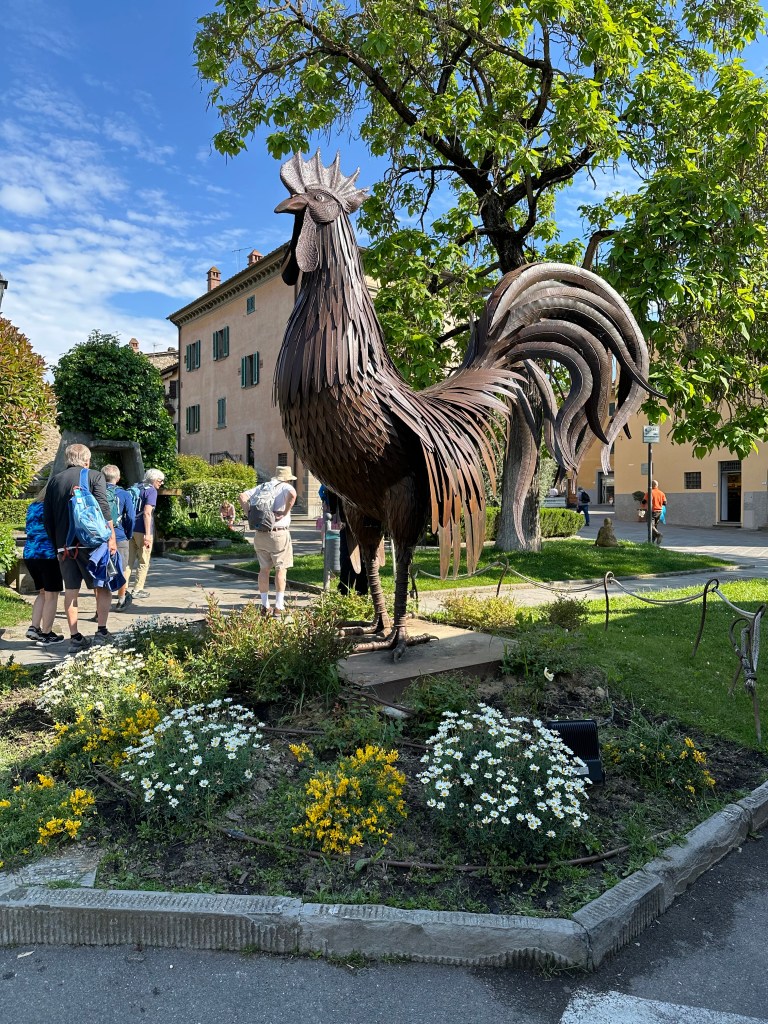
We learned the significance of the black rooster (Gallo nero) which is prominently displayed all over Chianti and particularly is the symbol of both the Chianti region and good Chianti wine, Chianti Classico. There was bloody fighting for years between Siena and Florence for territorial dominance. Legend has it that to establish a peaceful coexistence and resolve the border dispute between the two, each chose a knight to walk from their country toward the other when the cock crowed. Where they met was to help establish the border. Siena chose a white rooster and fed it well so it would be fresh and loud the next day. Florence chose a black cockerel and kept it hungry. Long before daybreak the hungry black cockerel crowed and woke the knight who began his trek long before the white rooster crowed. They met just miles from Siena, thus establishing the Tuscan border. The black rooster has been a symbol of the area since that time.

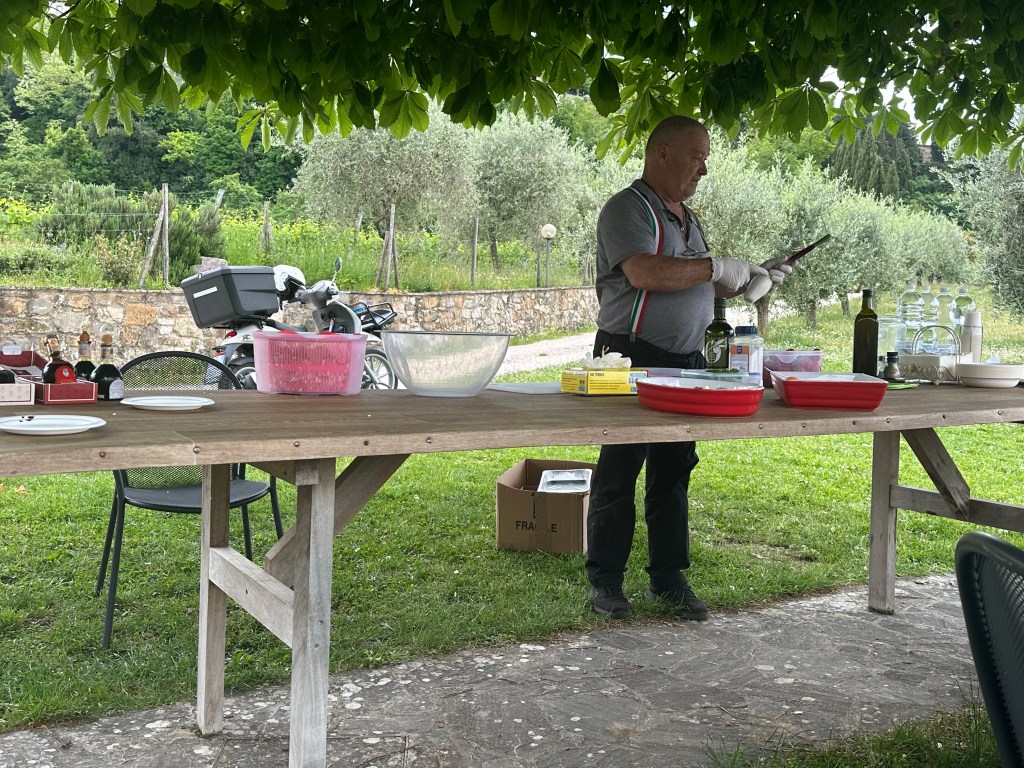
After our hike we met at an agriturismo, Le Frashette, where we were entertained by Frabrizio who explained the balsamic vinegar making process and gave a demonstration of the making of panzanella–a Tuscan bread and vegetable salad. We tasted the 12 and 25 year vinegars on parmesan cheese and gelato with blueberries…yum! Real balsamic vinegar, aged for at least 12 years is a balsamic reduction. Most balsamic vinegars we get at our grocery stores, are “a recipe” and not made in the traditional way. After our demonstration, we had a tasty lunch made by Nonna and her daughter and set off (uphill) toward downtown Radda, where we shopped…I will likely need another suitcase to get me home.

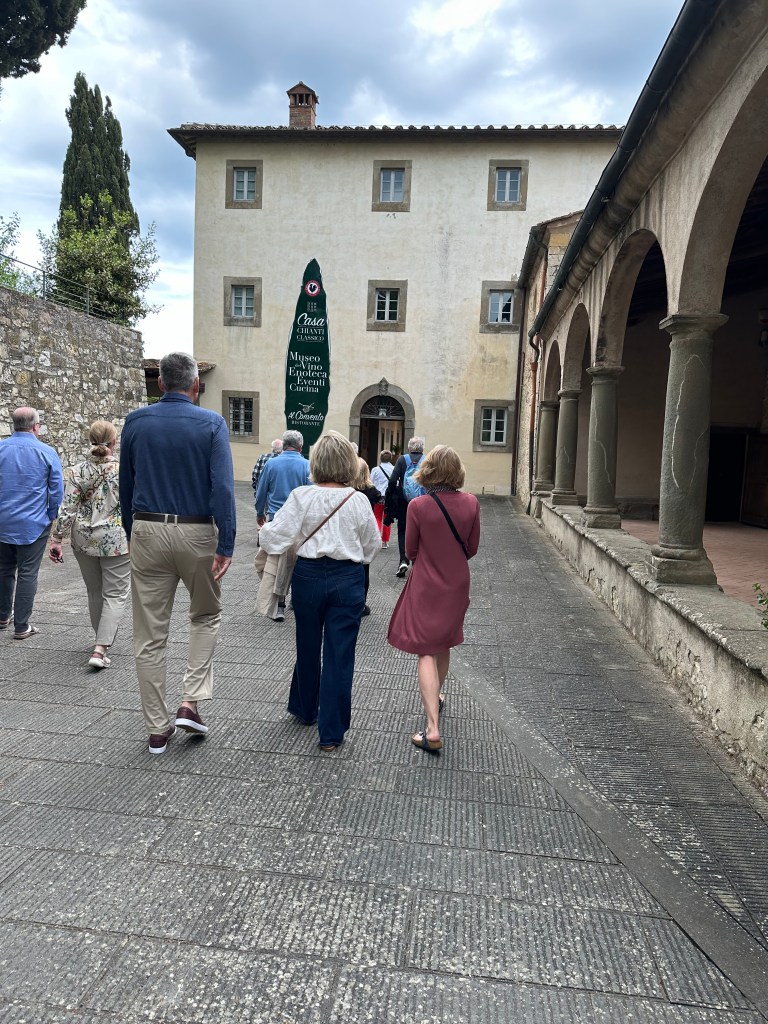
We walked to Casa Chianti Classico which is housed in a beautiful old abby. This lovely space is home to the Consortium (est. 1924) who protects and promotes the Chianti Classico Gallo Nero Brand. The consortium represents 480 producers, 342 who market their own wine under the Black rooster label. Another cooking demonstration (in the ancient kitchen) was included with our dinner in the monks’ dining room –eggplant parmigiana.

It was another lovely day in the Chianti region of Tuscany. Tomorrow we leave Chianti for Val d’Orcia.

Nancy
Panzano in Chianti

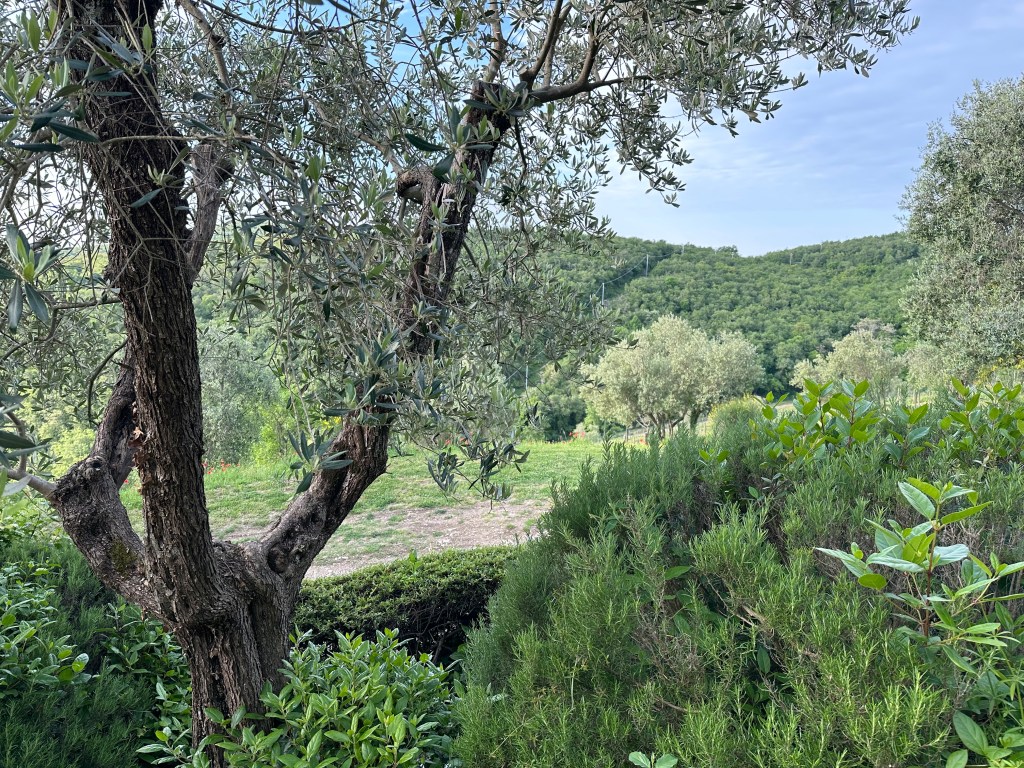
We walked 6 miles this morning along Chianti’s Strade Blanche to the town of Panzano in Chianti. We walked along rocky ravines and towering trees, with wildflowers along the wide gravel path.

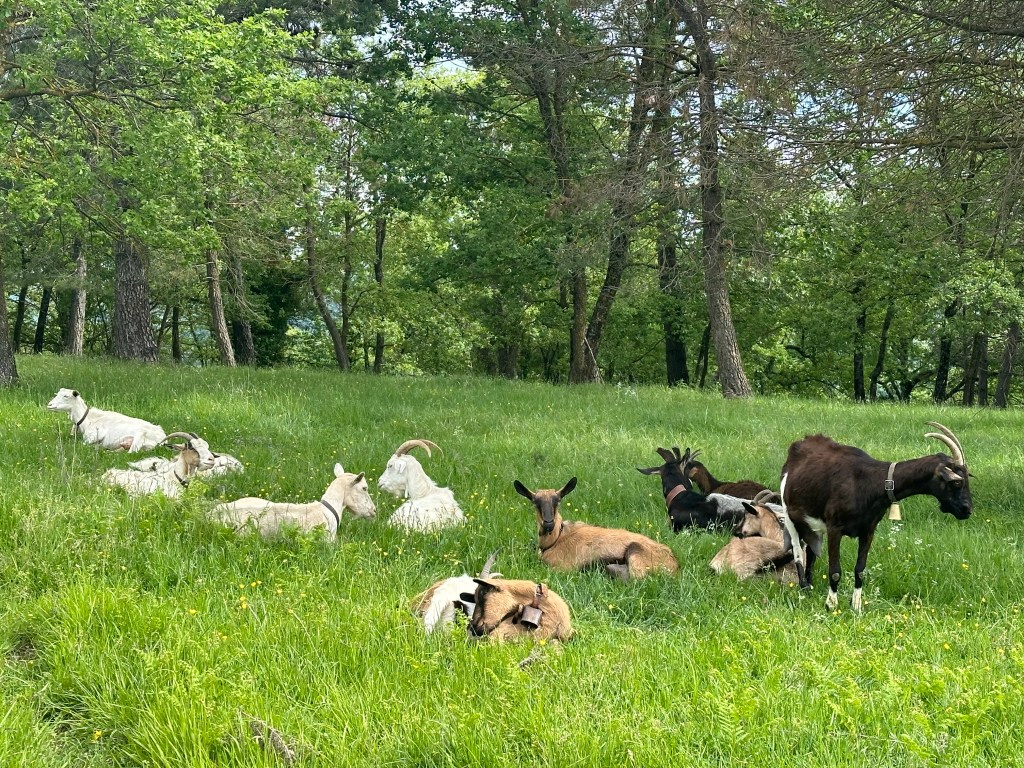
Logging and thinning of part of our walk made way for new vineyards and a herd of large goats with their protecting dog were resting. Their role was to keep the grass manageable.

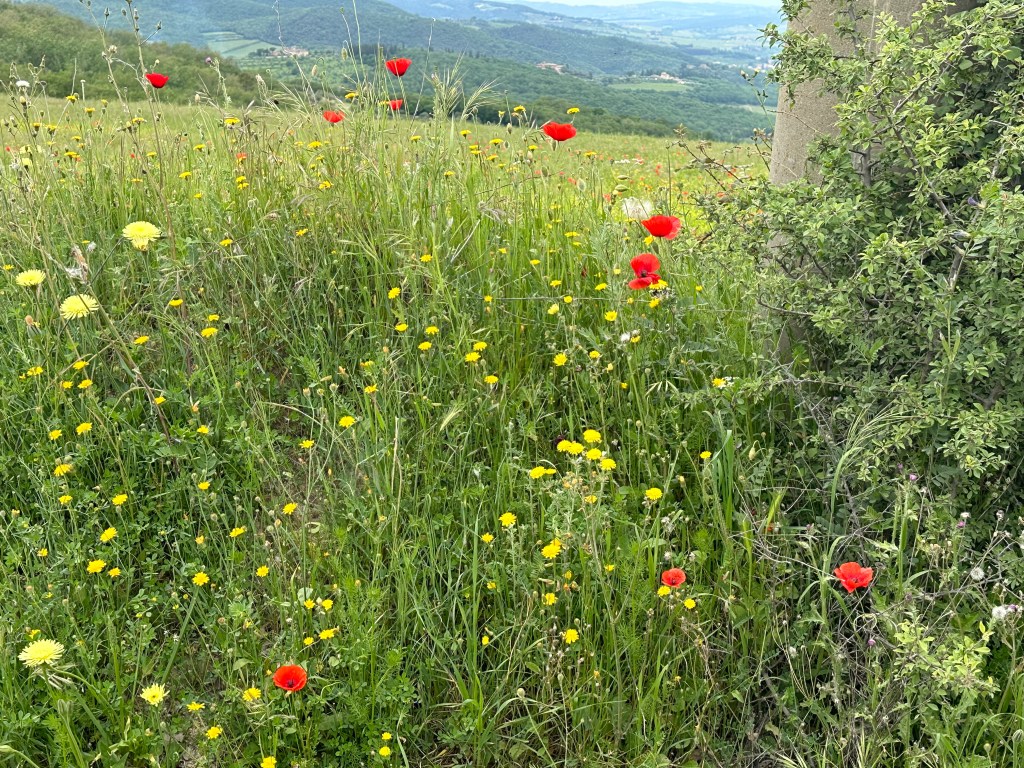
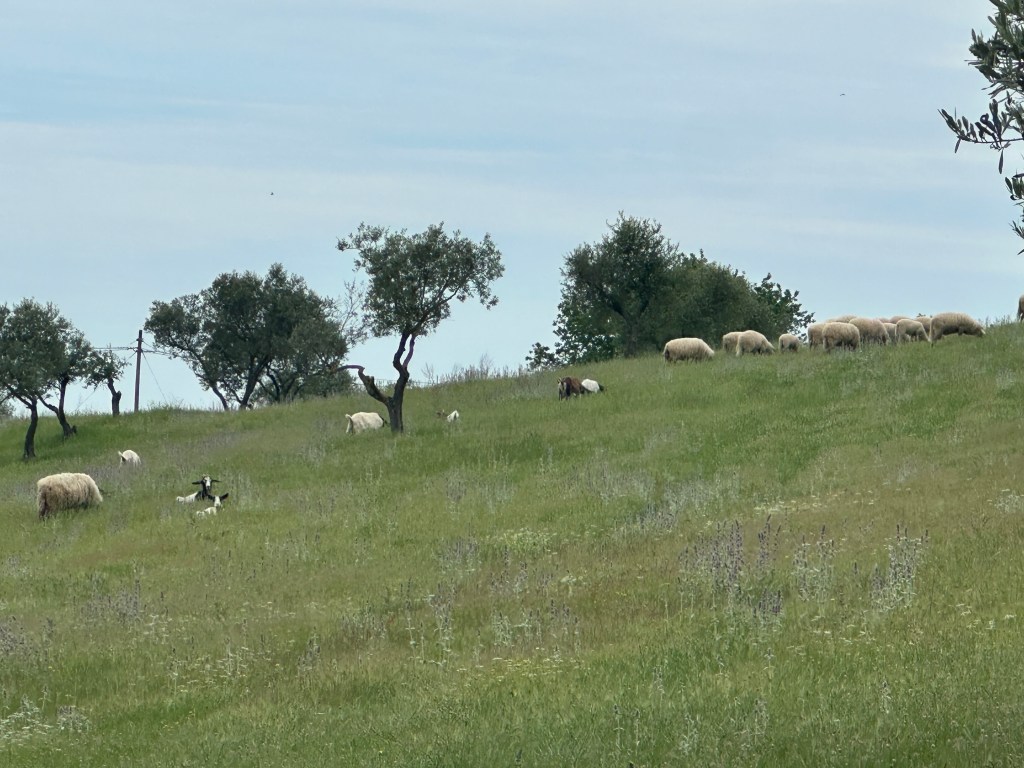
Panoramic views, fields of poppies and grazing sheep with their protective dog were just some of the sights before we reached Panzano in Chianti.

We stopped for caffe at Bar Pasticceria Sieni. I had a shot of espresso (un caffe), but most of the group had either a cappuccino or a shakerato –a long shot espresso shaken with shaken with crushed ice. It can be dolce (sweet), also called a zuccherato, or amare (bitter). . I didn’t see anyone with a caffe corretto–a shot of espresso with a shot of either grappa or samba. Italians drink a lot of caffe.

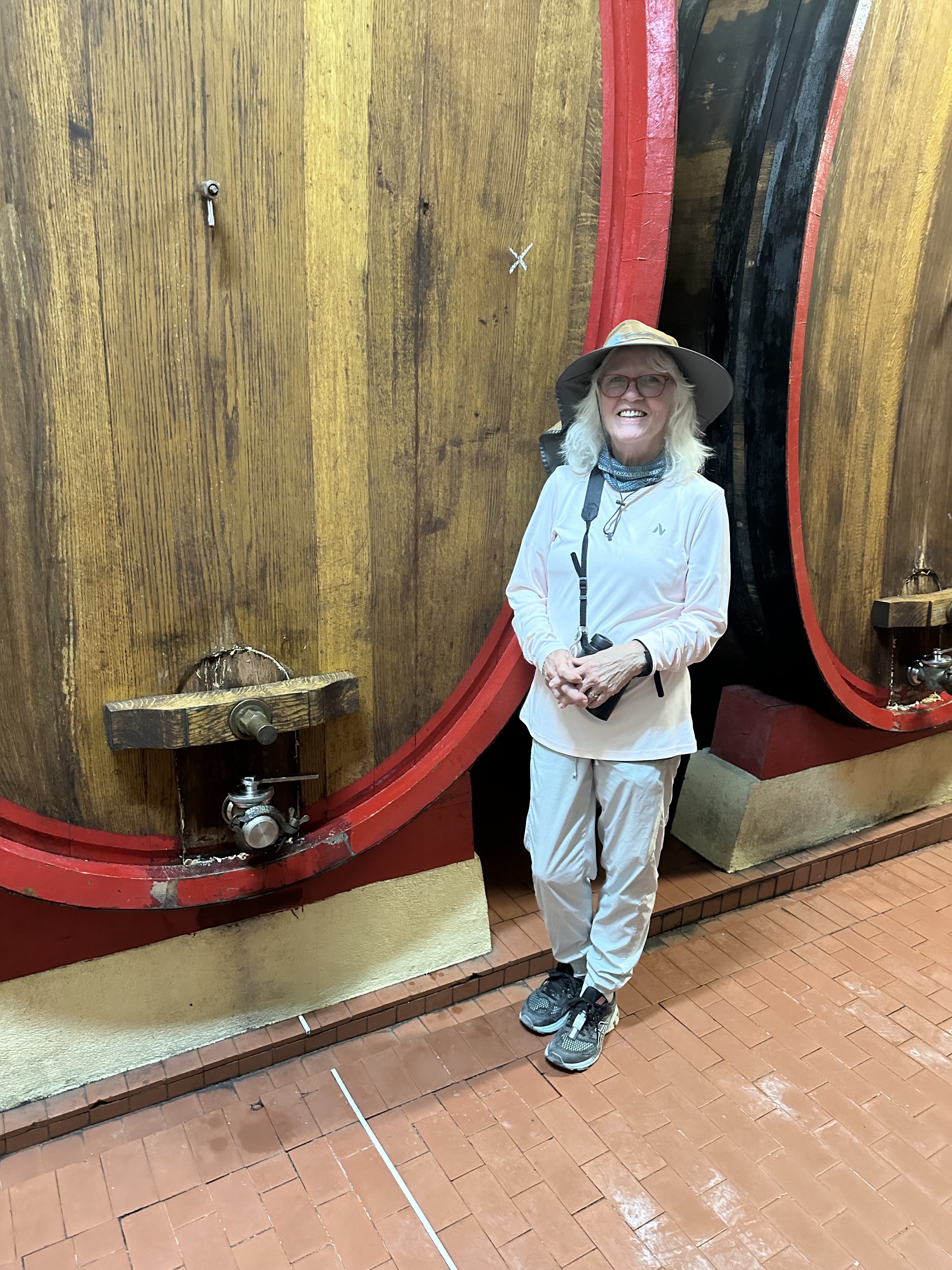
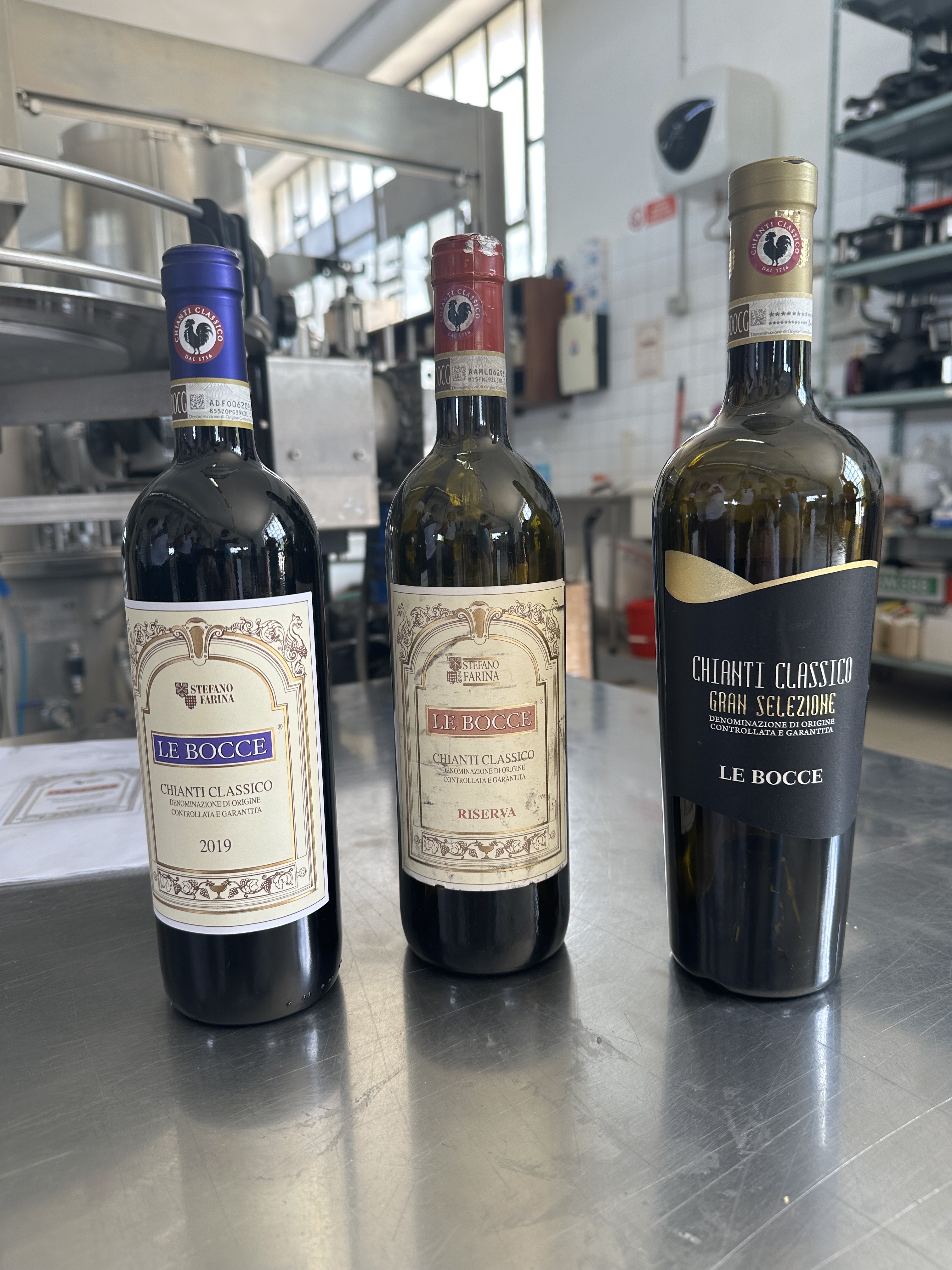
Joy stopped in to the famous butcher shop and restaurant, Antica Macelleria Cecchini, for some souvenirs. Dario Cecchini is tall with a large handlebar mustache and is apparently quite a character. He appeared in ‘Chef’s Table’ Season 6 Episode 2. We took the shuttle to our next stop, a small winery, where we toured the wine-making operation and ate lunch that was prepared by one of our leaders while tasting three different varieties of Tuscan chianti wine. We learned that good Tuscan chianti wine always has the black rooster labeled on the neck of the bottle.

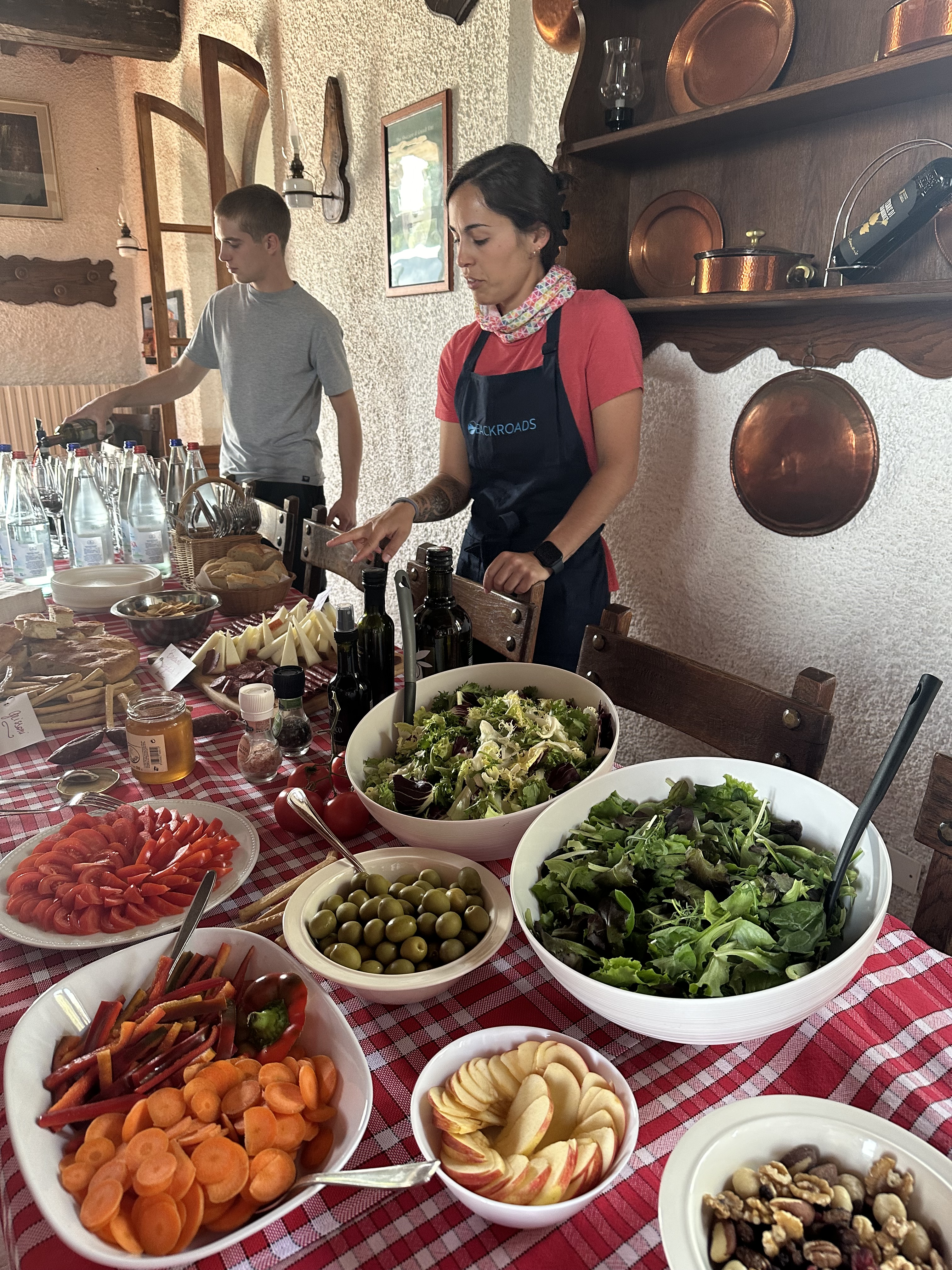
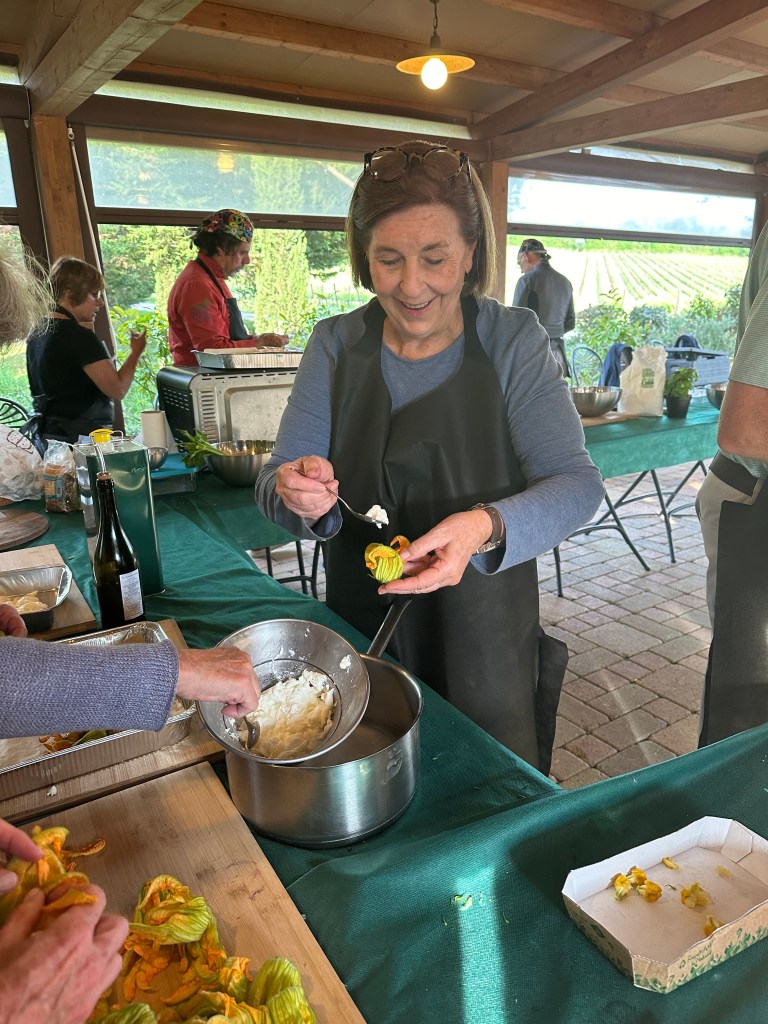
The culmination to this beautiful day in Tuscany was a cooking class, wine tasting and dinner. Our family of culinary specialists taught us to use few, fresh ingredients and only olive oil. A bit of trivia…Italians use 15 liters of olive oil per person per year but Americans only use 1 liter. While we prepped our food, we tasted fried artichoke slices, boiled egg sliced with caramelized onion on top and our first bottle of wine. I sliced tomatoes, Joy prepped red onions and we also sliced carrots and celery. This mixture is called sofrito and is a common base in Tuscan cooking. One specialist cooked the sofrito long and slow with olive oil as the basis for the “fake sauce” for pasta (fake because there is no meat).

We cleaned and stuffed squash blossoms with buffalo mozzarella cheese before sprinkling with a seed mixture and baking.

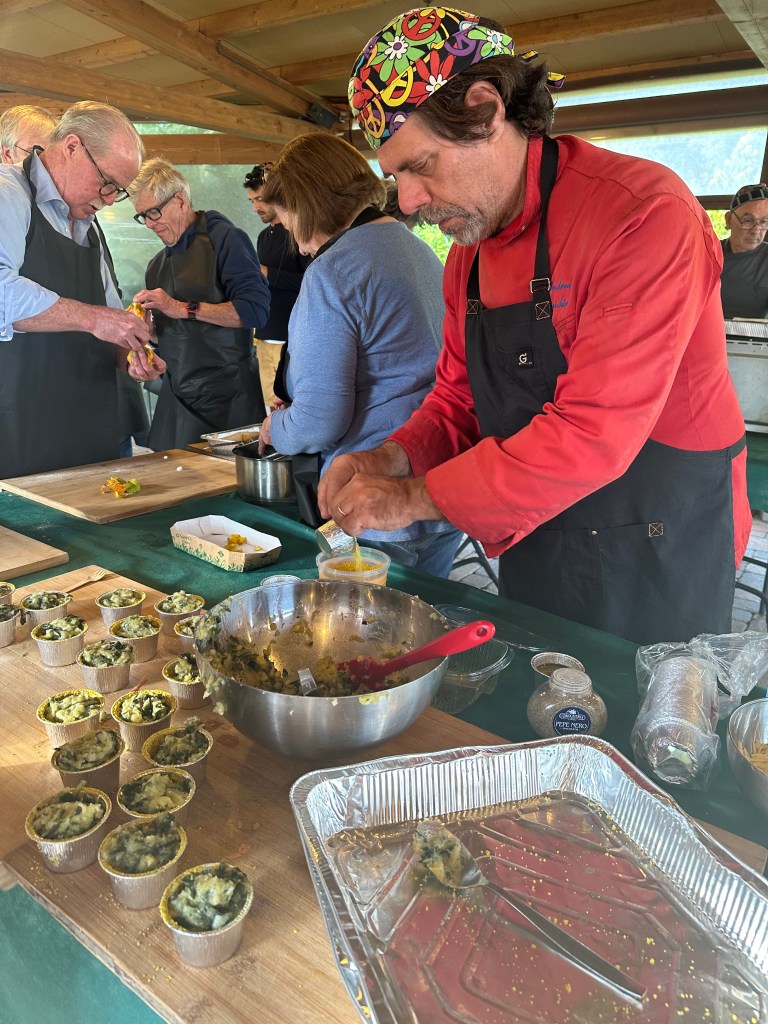
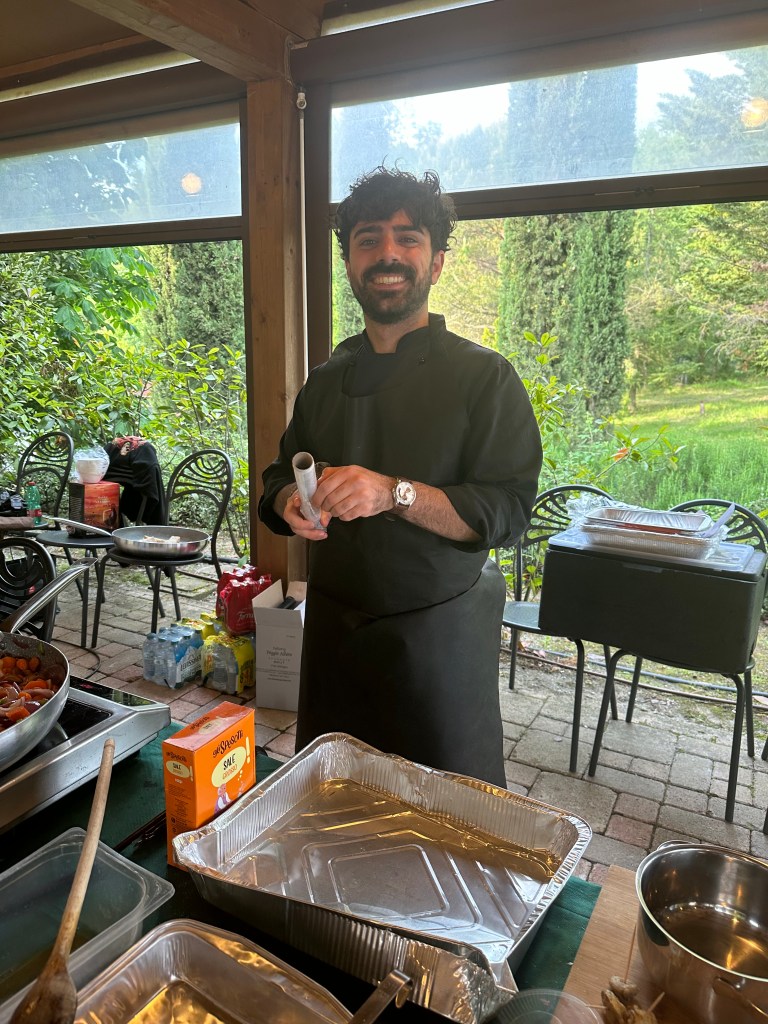
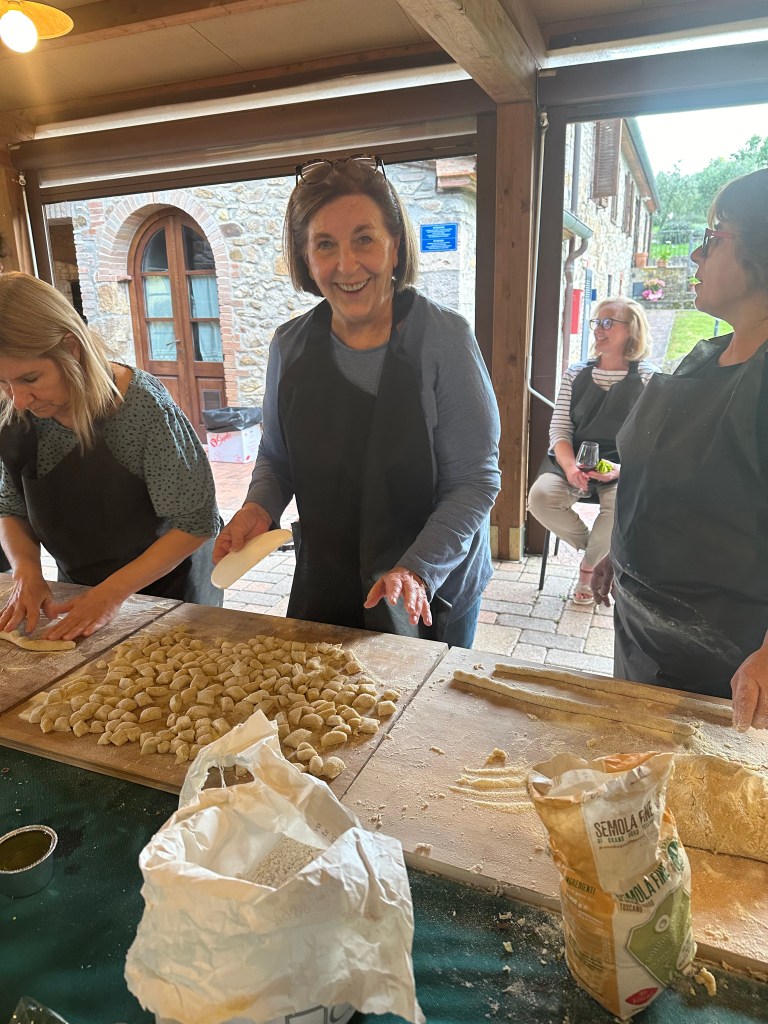
Our leader Chef Andre…these are little pies of steamed red potatoes mixed with steamed swiss chard. It is later baked. We make gnocchi using a potato ricer to keep the potatoes light and both wheat and semolina flower. We rolled and sliced the gnocchi. It was ultimately the pasta for the fake sauce.

Dessert was chocolate melted and stirred with olive oil, brown sugar and egg yolks, and meringue all folded together and baked. It was something like a lava cake and really amazing. We all ate too much and drank too much wine but it was a very fun evening of cooking.

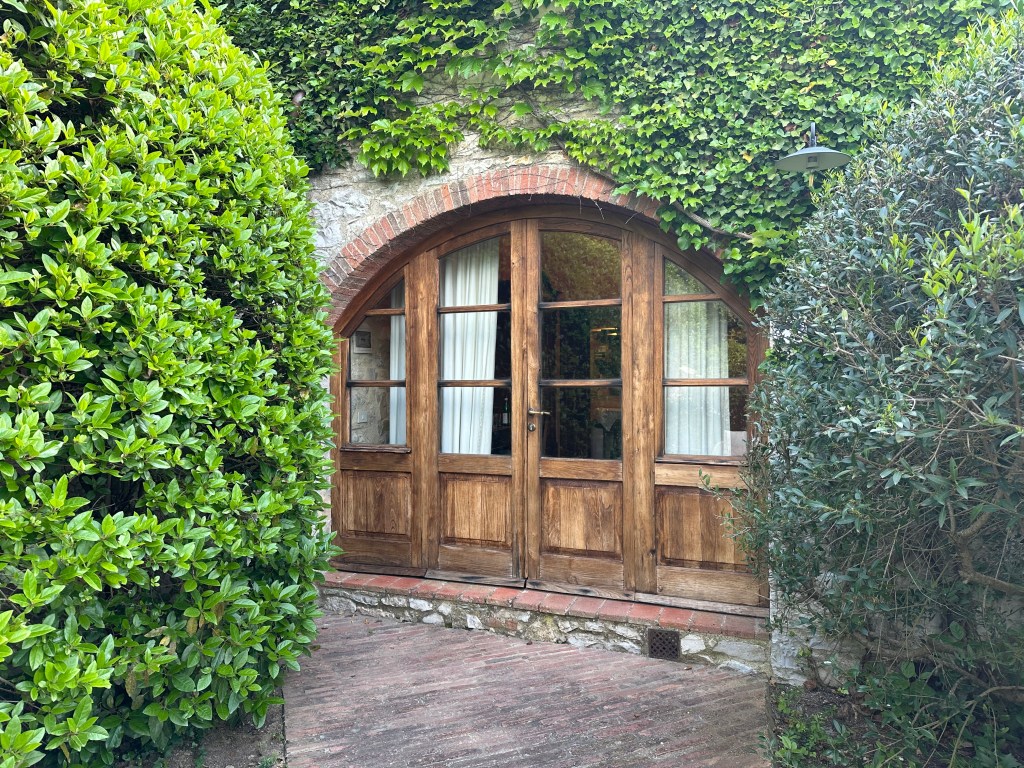
This is our last night at Borgo Vescine–tomorrow we move on to Palazzo Leopoldo in Radda. I will miss the view here from my quaint little room tucked into the hillside, swallows swooping overhead and many birds singing bright and early in the morning.

Arrivederci, Vescine!

Backroads Day 1

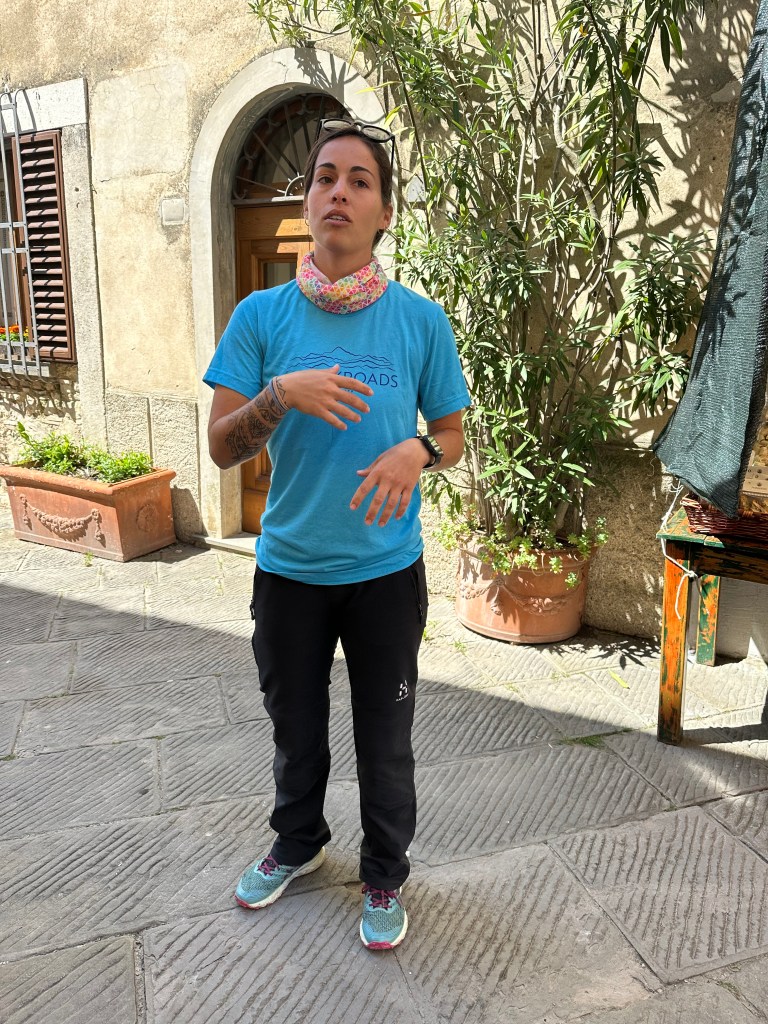
Our walking, eating (culinary) and wine tasting with Backroads has begun! We were the first to arrive at the Arezzo train station to meet our fellow travelers. There are 16 of us and everyone is lovely, all married mostly retired couples except for Joy and me. We have two guides (Lorenzo and Sara) and a van driver who keeps us in snacks and water (Emmaline) and shuttles us if we’ve had enough walking for awhile.

We shuttled through beautiful Tuscan countryside up to Castellina in Chianti, established around 900BC as a mideval stronghold. Sara led us through a covered walkway with windows which in medieval times were used to “discourage” invaders (with arrows and/or hot oil). We had coffee and pastries and gathered our snacks in a small caffe before following navigation up and down gravel roads to our first stop, an olive oil tasting and lunch at Casalta, an agritourismo. Typically, an agriturismo is an independently-owned farm that the owners have decided to use partially — although usually only partially — for accommodation purposes. That means that, 90 percent of the time, you can expect that the owners of the “hotel” are, primarily, farmers. (Or people who have someone else farm for them). Guest rooms are in the farm’s house, or an annex built nearby.

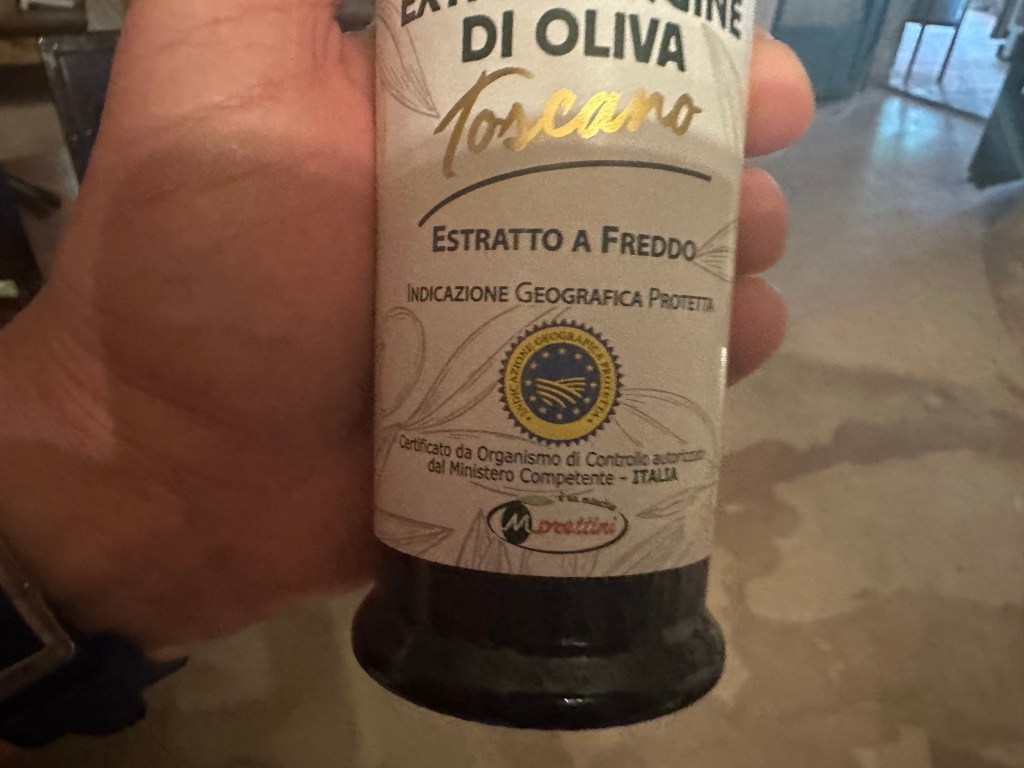
At Casalta we tasted two Italian olive oils–one from Tuscany (#1) and one that may contain olives from Spain, Greece and Italy (#2). We tasted much the same way one tastes wine and #1 was better in all three ways(color–more green, smell–fresher, and taste–has a peppery taste which we felt in the back of our throats. We learned the process to create olive oil–pick the olives, separate the leaves (feed leaves to livestock) from the olives, wash the olives, separate the water from the olives, grind the olives (with pits) to make a paste, press the paste to create the olive oil. In Tuscany, there is only one press and that creates EVOO. If you want to purchase the best olive oil, look for the seal as in the photo below.

After the tasting, we had a wonderful fresh lunch from the farm–caprese salad with olive oil and balsamic vinegar, bruschetta, farro in pesto (my favorite), quiche squares, focaccia with thin sliced ham and pastries for dessert.

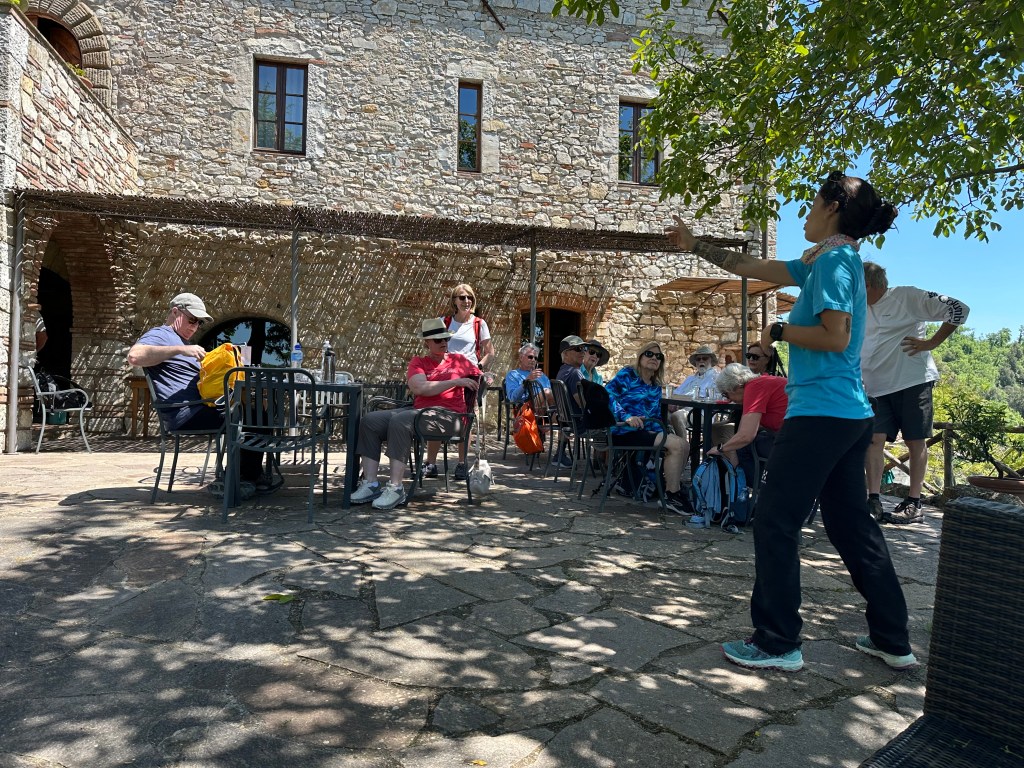
After lunch Sara told us a little more about how Backroads works and gave the route rap complete with a chalk drawing of the next hike.

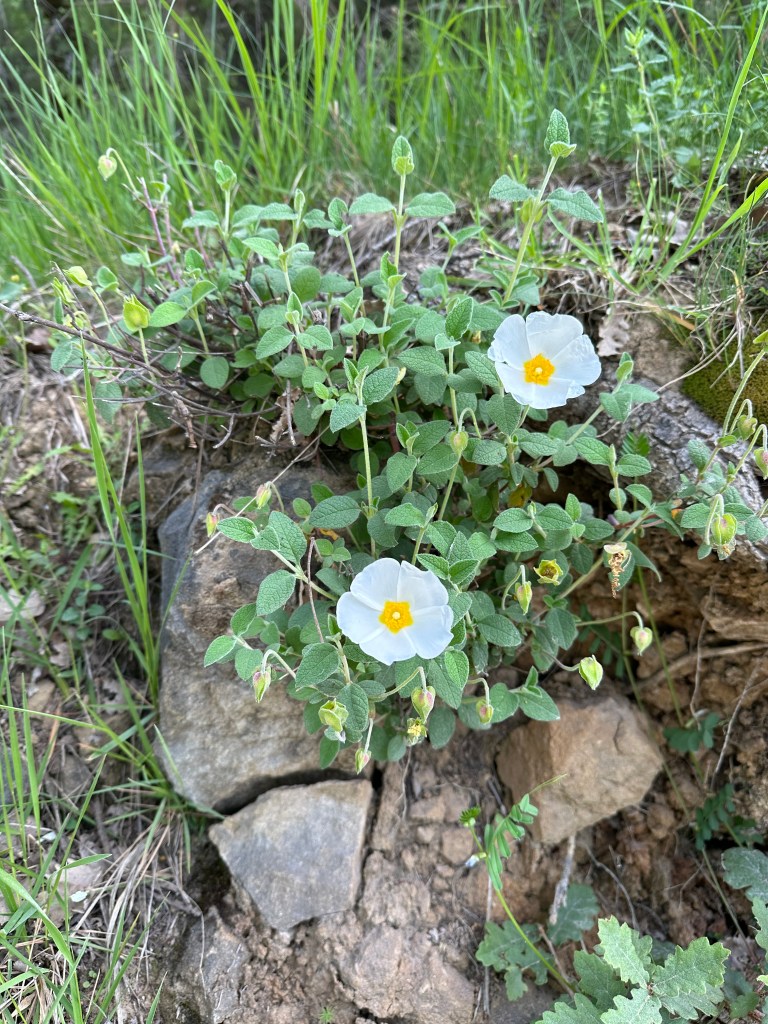
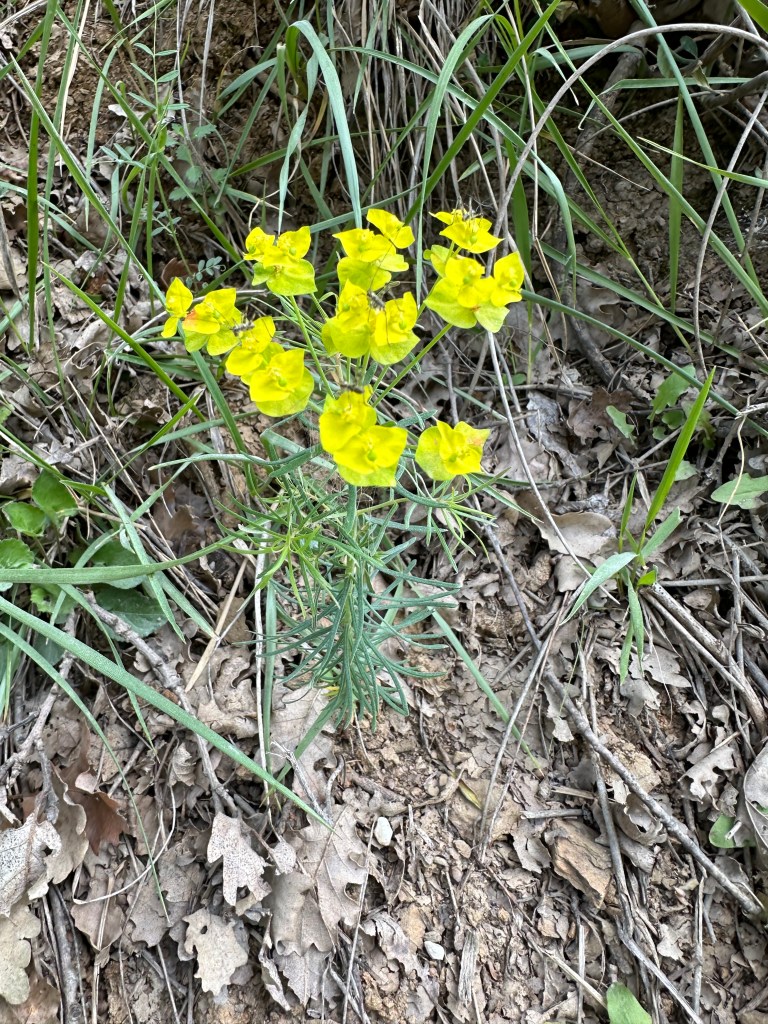
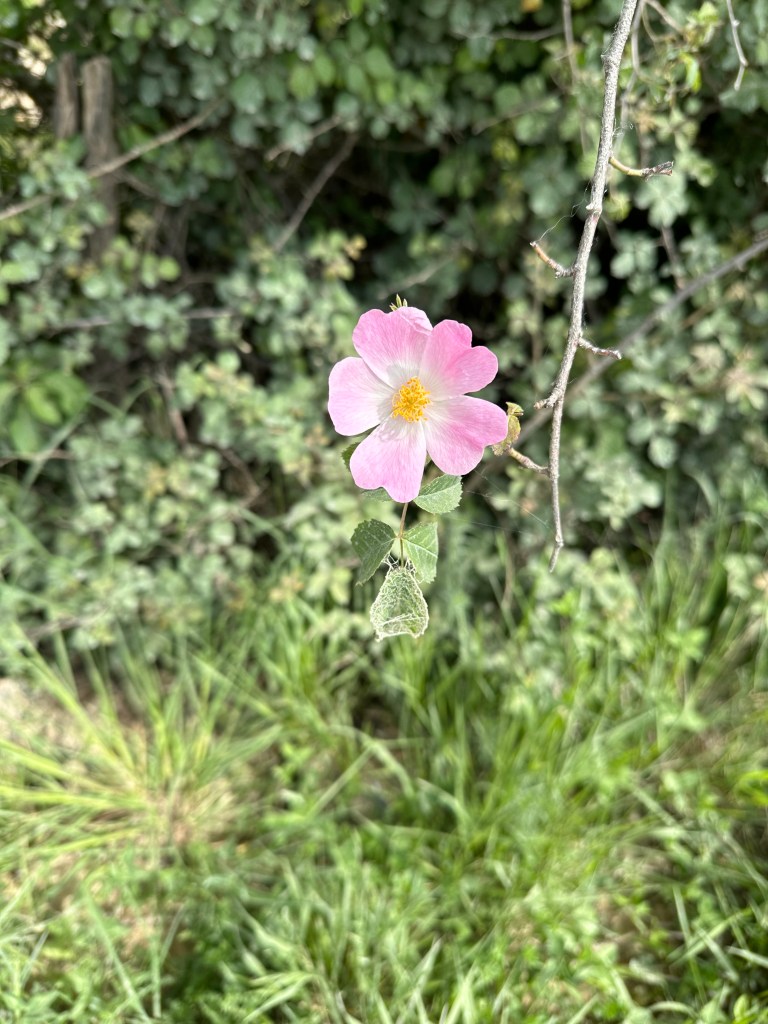
Our afternoon hike was a bit more strenuous (more hills and longer) but equally beautiful. There are bright red poppies, strikingly yellow scotch broom and buttercups, small white asters and some flowers I don’t recognize along the paths we walked. We heard cuckoos, Eurasian blackbirds, Eurasian blackcaps and Great Tits as we walked and the overlooks were breathtaking.

A

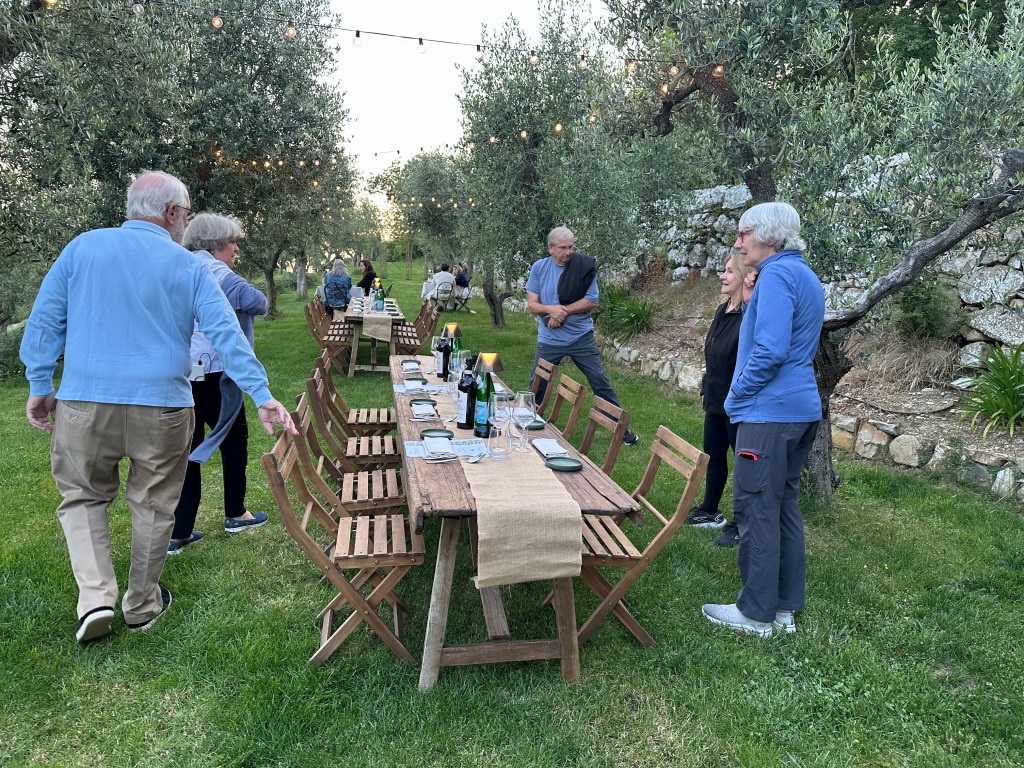
As is typical for Backroads our stay for the next two nights, Borgo Vescine, was initially a fortified bastion of the Lombard era (between 568 and 774), then over the centuries became a sprawling peasant village (borgo), and was recently restored as a luxury hotel and restaurant (relais). We had a welcome reception where we shared champagne and got to know each other a little better. Dinner was in the garden and I ate amazing ravioli for my first course and steak for the second. We shared bottles of chianti with our meal.

Joy turned in early and I stayed up much too late for me enjoyed the camaraderie of the people at our table.

Buona sera,

Nancy
Arrived in Italy!

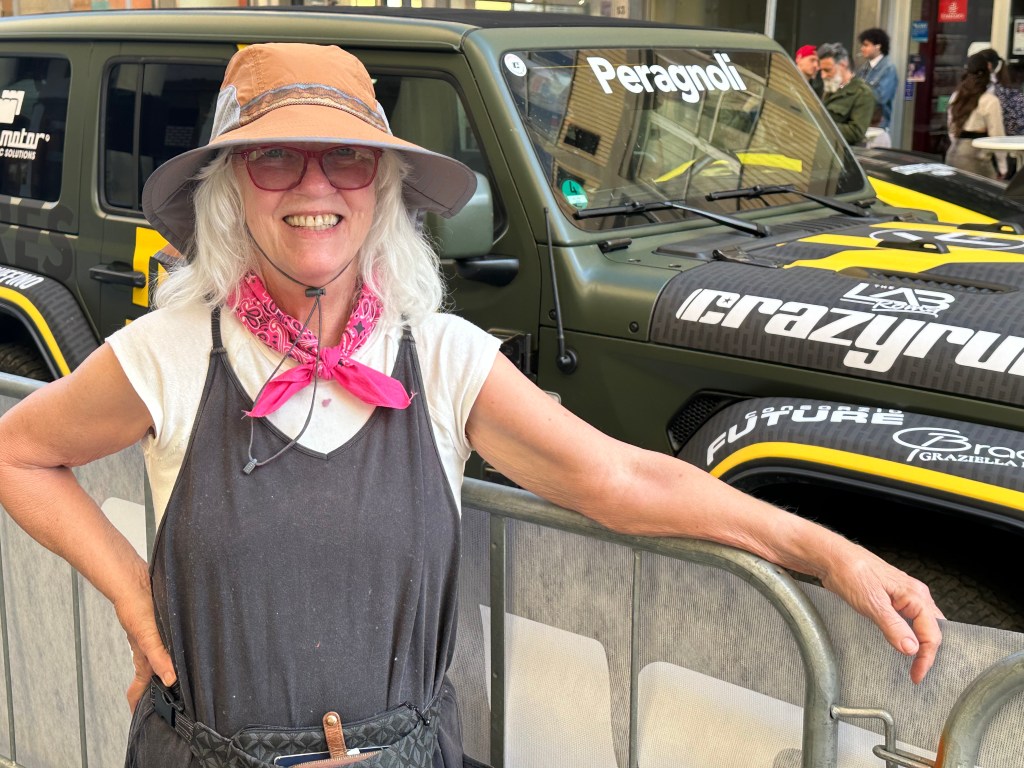
Joy and I arrived in Italy and rode with Giovanni from the Rome airport to Arezzo in Tuscany. As we checked into our hotel, Hotel Intercontinental, we were greeted with loud automobiles–Lamborghinis, Ferraris, etc.–all marked with racing logos.
We wandered for awhile, watched people and listened to loud music then moved on to pizza and gelato for our first Italian meal. The hotel has a 6th floor rooftop patio and we ventured up there for a view of the city.

We were exhausted and at 7 or so, we headed for our respective rooms and said Buona Sera to Arezzo.