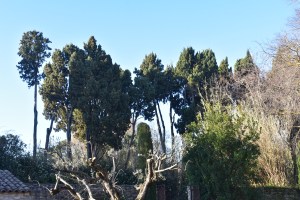
 I woke to the mistral roaring again this morning and walked down from the third floor (elevator is still broken) to see our pine trees dancing in the wind. A still photo can’t capture the movement but the winds blow in long and short gusts and cause these big trees to sway and bend like tall, graceful ballerinas.
Our ultimate goal today was to visit Le Clos du Caillou Winery. In case you are wondering a “clos” is a walled enclosure and this winery is surrounded by a 3 foot stone wall. To keep from arriving while the proprietors were at lunch, we decided to detour to 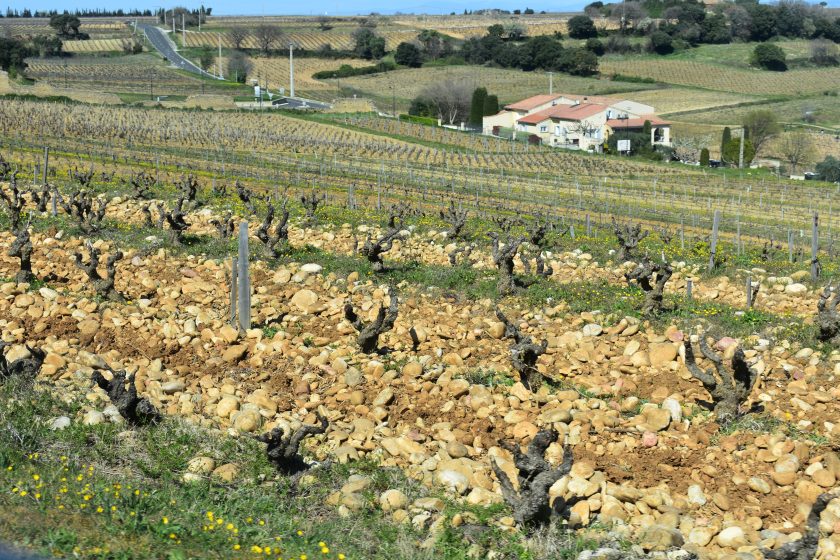 the small town of Châteauneuf-du-Pape–somewhere near the center of the wine region with the same name. This region has some of the highest quality and most expensive wines in Provence, largely due to the favorable terroir. For those of you unfamiliar with this term, terroir encompasses important natural conditions including: the soil, altitude, elevation, exposure to the sun, temperature range, access to water, trees, types of rock on top of the soil as well as in the soil and microclimate for each vineyard. One of the rules of the AOC (see below) is that modification of the natural terroir is very tightly controlled since the quality and appeal of wine is based on the vineyard’s terroir. Rocky soil as a terroir component yields some of the best grapes because the vines roots have to grow strong and deep to survive, the rocky soil provides needed drainage and the rocks on the surface hold the strong sunlight to warm the vines at night.
The Appellation d’Origine Controlee (AOC) system regulates food (including cheese), wine and other agricultural products (like olives), manages strict, specific appellation characteristics that help to guide the consumer, promotes minimum levels of quality and energizes growers into producing better wines. In accordance with the AOC, a vineyard in the Châteauneuf-du-Pape region can only grow 18 different grapes. Most Châteauneuf-du-Pape wines are red blends dominated by Grenache.
Sorry to carry on about terroir and AOC but these are two French concepts that are very important to the quality of their agricultural products. Anyway, we were hungry and it was about lunchtime so we went to Le Verger des Papes, a restaurant Clay knew with a view of the Rhone valley–we could actually see the castle at Avignon. As in all good French restaurants a three course meal is perfectly proportioned. I had the special which was a pate of zucchini, sliced duck breast with potatoes and a dessert with strawberries covered in mascarpone whipped cream and topped with strawberry sorbet. And, of course we shared a bottle of wine.


The views from this restaurant were spectacular. Counterclockwise from the left are Allan and the Alpilles Mountains, the Rhone River and Avignon, the Rhone River Valley and me in the restaurant courtyard below the remains of the castle at Châteauneuf-du-Pape. The castle was destroyed during the war by the Allies because the Germans were storing ammunition there.


After lunch, Clay drove us along small back roads, through rolling vineyards, and cherry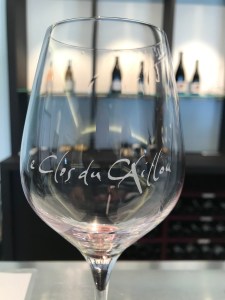 orchards in bloom to his favorite winery in Provence, Le Clos du Calliou. Franciose, who
speaks only French, was behind the counter and guided us through the tasting of wines from the region. Clay chose two of our favorites and we bought some to enjoy for happy hour at the villa.
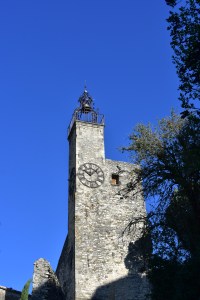 We loaded the wine into the car and because it was relatively early, took off for Vaison-La-Romaine. The medieval city, high on a cliff on the banks of the river Ouvèz, has been inhabited since the Bronze Age in the fourth century BCE. At that time a Celtic tribe, the Vocontii or Voconces called the village home. The city, of course, has been pillaged and plundered by many over time and now is maintained for tourists interested in Roman civilizations. After crossing a bridge from the 1st century AD, we didn’t get too far in our visit since the climb was so steep. The clock tower sits on the old city wall and is a good landmark to identify Vaison. We returned across the bridge to our car and after adjusting the GPS system, Clay drove us home. Dinner was “eat what is here” and we all had different light meals, visited for an hour or so and called it a night. BTW, the mistral blew itself out of St. Remy about 9:00 PM.
 Latest Travels