Last weekend was the study abroad program sponsored trip to Berlin. At 9:00 Friday morning 26 sleepy students and 5 leery adults climbed onto a 60-seat bus. It took us 6+ hours to get to Berlin, with a 15 minute stop at a populated rest stop along the autobahn and a 30 minute stop at an unpopulated rest stop (go figure). During the first third of the trip, we again enjoyed small green and straw-colored well-manicured fields surrounding villages; we moved to more mountainous terrain covered in coniferous forest with a rare village in a valley; and the last third was the outskirts to Berlin–factories, big sprawling warehouses and eventually modern hi-rise buildings. During the middle third of the trip, we went through tunnels through the mountains. It seemed that the road was always a straightaway. Perhaps that is to facilitate traffic speeding along very fast. We talked about the large solar and wind farms all along the way, discussing the opportunities for optimization research the new technology provides to academic institutions.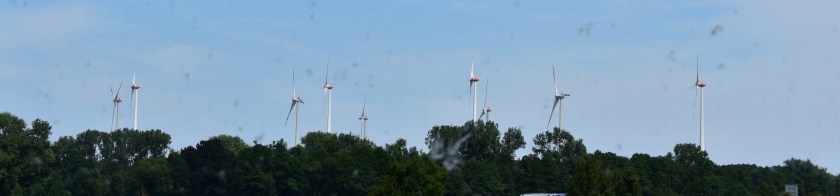
At 4:15 we entered the parliament building. We had pre-planned our visit and had a strict appointment time. All of us sent our belongings through an X-ray machine, passed through a metal detector, and had our names checked off of a list. We took group photos in the courtyard and enjoyed our first on the ground glimpse of Berlin. We climbed the entry steps to find a glass enclosure that only allowed 30 people to enter at a time. Then we moved on to the elevator, again only allowing 30 people at a time. We surmised these were anti terror tactics. Parliament meets on the first floor and to actually see their workings, one must “know” someone. We didn’t know anyone… Our trip on the elevator took us 4-8 floors above the meeting space to a dome on the roof. 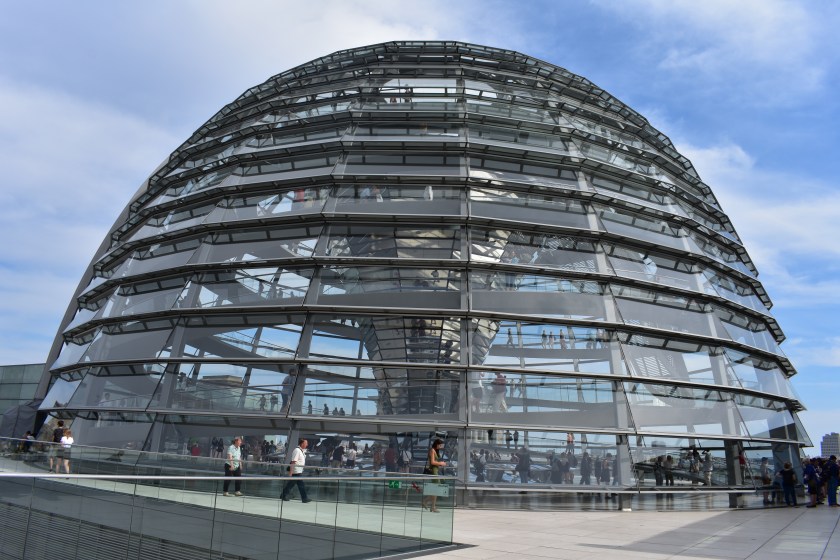 From that vantage point, we could see Berlin laid out all around us. We followed a ramp in the dome that wound its way up several stories. We each had a headset that must have had a builtin GPS. It accurately asked us to stop as we approached the important sites, described their roles in history and told us additional history as we continued walking. It was almost as good a tour of Berlin as the Segway tours we’ve had in other European cities.
We left Parliament and walked to our hotel past the Brandenburg Gate (complete with a large screen and stage for watching Germany in FIFA 2018) , the United States embassy and an interesting and moving Holocaust memorial. The memorial is an art installation with many interpretations discussed by critics. As with most such installations you need to experience it for yourself to appreciate the effect.
Throughout the city, the wall’s previous location is marked by a trail of double bricks in the roads and sidewalks and at several points along our walk were installations of pieces of the wall marked by descriptions or stories. Our hotel was a few blocks from Checkpoint Charlie, the best-known Berlin Wall crosspoint point between East and West Berlin during the Cold War (1947-1991). I think this is the crossing point where our bus was allowed entry to East Berlin when I was here on a tour in 1972.
The train, subway, bus and tram system in Germany is like in all of Europe. Using public transportation makes even the biggest cities easy to navigate. On our first tour Saturday we took subways and a trams to get to the STASI prison. It was established in 1951 and in the 1950s, upwards of 11,000 people who were thought to be opposed to the communist dictatorship were incarcerated here. This facility is a depressing reminder of the atrocities man has imposed on man throughout history and specifically in the time of the Soviet rule of Germany. We saw the dark and sparse prisoners’ cells, the outdoor cages where prisoners were allowed to spend 20-30 minutes each day, and interrogation rooms where the Soviets worked hard to get confessions from the prisoners. We spent about 2 hours there and were all ready to get back to a more lively center of the city.
Alexanderplatz is one such lively center. Originally, a cattle market, today the plaza is a culture, transportation and restaurant hub. We spent the better part of the remainder of the day here, eating (and drinking) lunch at a Tapas bar called YoSoy and walking. Next to the restaurant are two alleyways that once were Jewish ghetto housing and now house shops, coffee houses and art galleries. On the sidewalk outside there are memorial markers for the people who lived there and were killed in the Holocaust. Today’s German people are ashamed of that part of their history and they seem to bend over backwards to remember and mourn for their countrymen who were treated so inhumanely.
Museum Island is between two forks of the Zwei River and houses several large museums. We crossed the bridge in front of the Berlin Cathedral at or near closing time so we strolled through the gardens and enjoyed people watching.

Bridge to Museum Island
Sunday, I walked to the Berlin Art Gallery and enjoyed the peace and quiet inside the large space with only a few visitors. I was not familiar with the artists and the exhibits were quite somber.
I walked to the Jewish Museum from there, but found that I didn’t have time left to tour. The courtyard and garden were beautiful outside of the building so I sat and ate a sandwich before strolling through the garden.
And finally we all climbed back on the bus and retraced our ride back to Schweinfurt.


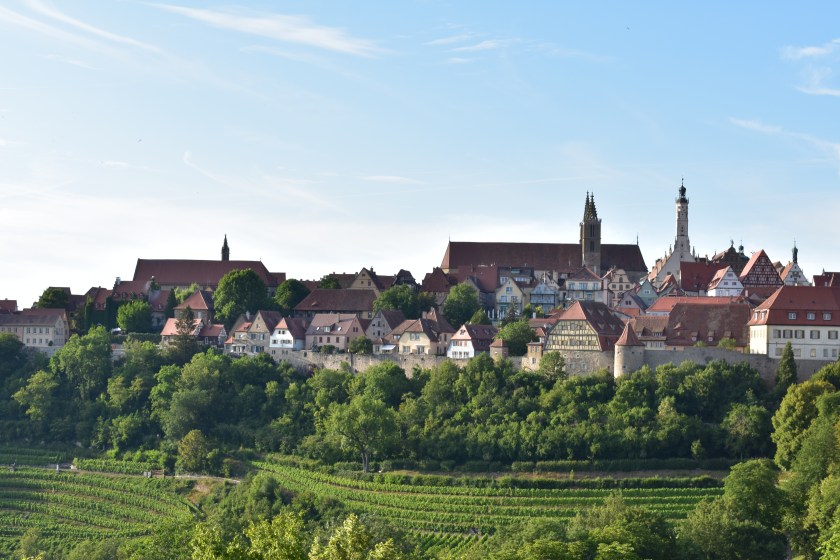
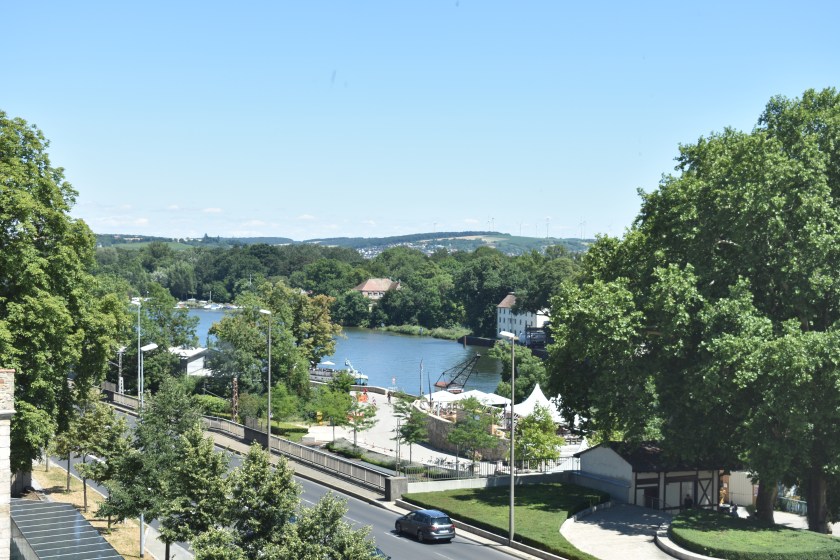


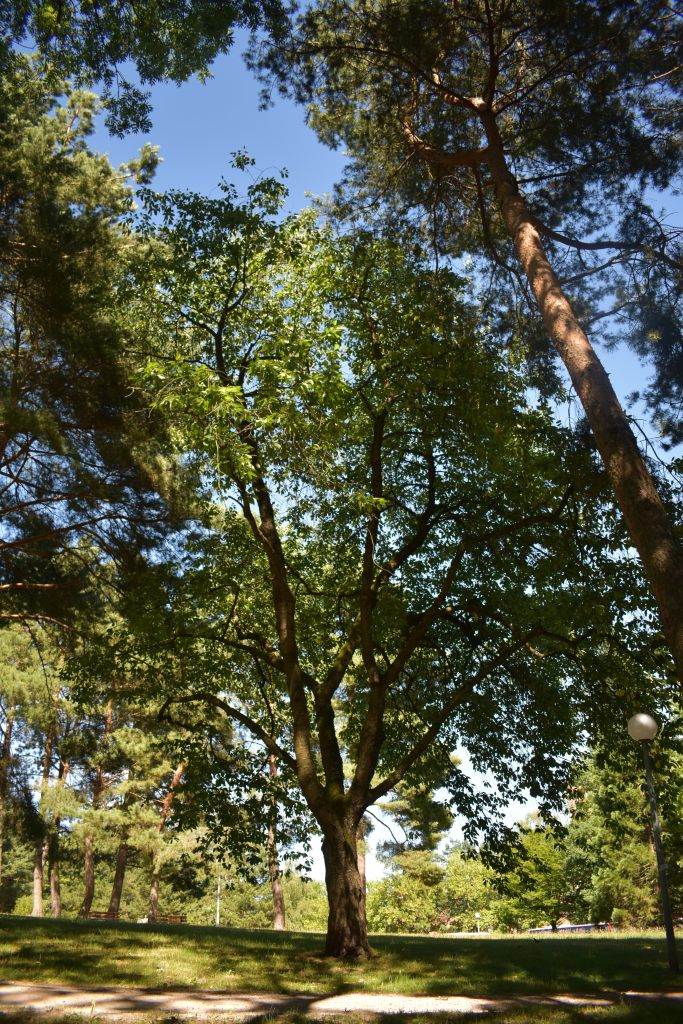 I wish I had brought my big heavy lens. I was in the perfect spot to learn the German birds–woodpeckers, jays, thrushes, warblers, a nuthatch and many others. After several hours in the cool breezy park, I returned to the train station and eventually back to Schweinfurt.
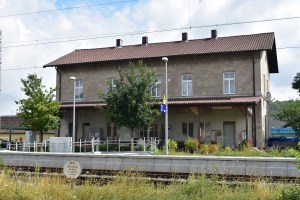 The train stopped in Winterhausen at what used to be the station and is now a residence. I stepped out of the train onto a platform to find that I had no cell service…so picture this…I’m by myself in my lavender hat with a back pack; a camera, binoculars and my cell phone around my neck; no physical map; and I cannot communicate in German. I began walking toward the church bells that ring every quarter hour until I saw a sign pointing across a highway bridge toward Sommerhausen. I followed the highway across the river and the first street on the other side of the bridge led me to Sommerhausen. Phew!
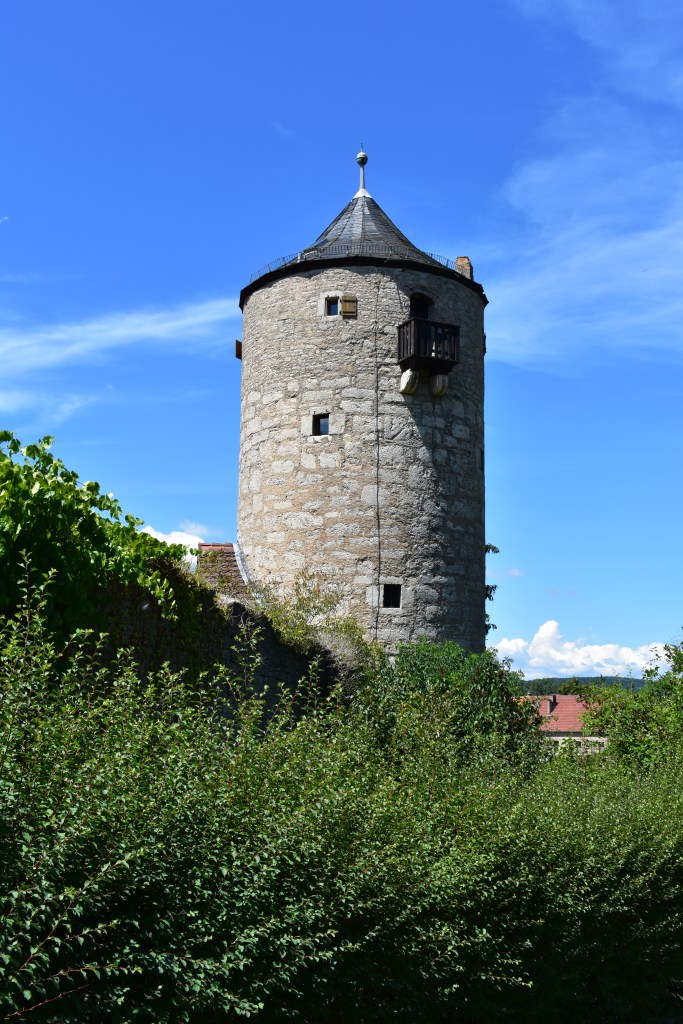


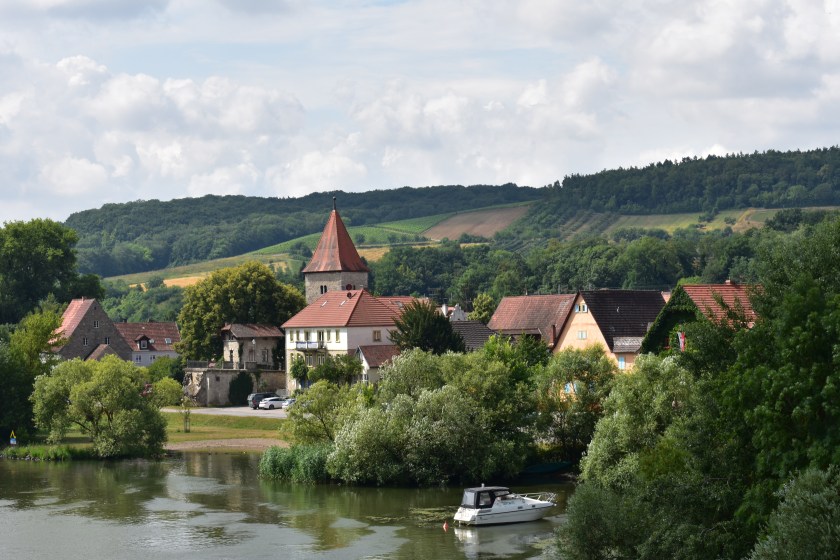 I heard many birds, but could only identify by sight Egyptian geese, magpies and a delicate coal tit (much like our chickadee). As I walked along the path, I thought about birding by ear and realized it is just as difficult to understand the German birds as to understand the German people–takes practice! For most of my walk out from Winterhausen I could not see the river except for where there was a well-worn path which I took down to the water’s edge.
 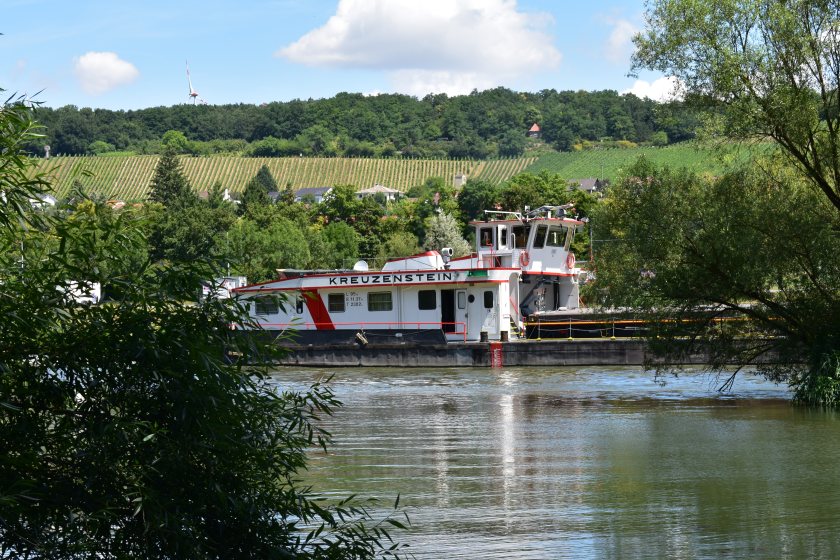 As I walked I enjoyed the sound of the wind rustling the leaves in the old-growth trees along the river. I was at peace. When the path reached the highway, I turned around and followed a different path to Winterhasen, between fields and an old apple orchard with a few young plum trees. I saw a field of Swiss chard, a field of clearly non-GMO wheat (only a foot high), and another field of a different grain that I couldn’t identify.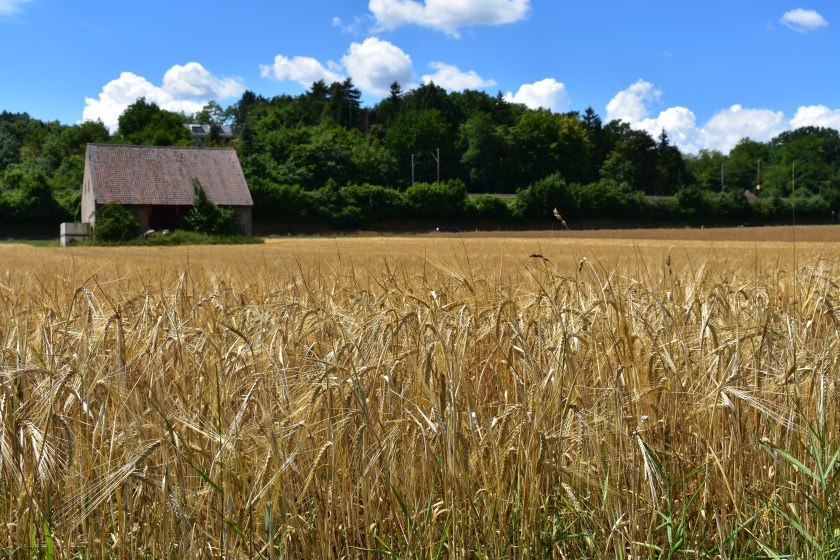
 I had no map to the area so I just started walking from the train station. I saw a field in front of me and a sign that said rose garden so I followed a path, with beautiful rose bushes on either side, that led me to a slow moving stream whose name I don’t know. I walked on a well-worn path along the stream in a large park with old growth trees (each was labeled by its name and description in German) watching birds and butterflies and crossing bridges from one side to the other. There were benches along the way to rest. Eventually I crossed a bridge into a small shopping area–beautiful jewelry stores, small boutiques, and cafes. I shopped for awhile and admired the beautiful buildings in the area before returning to the train station through the rose garden.


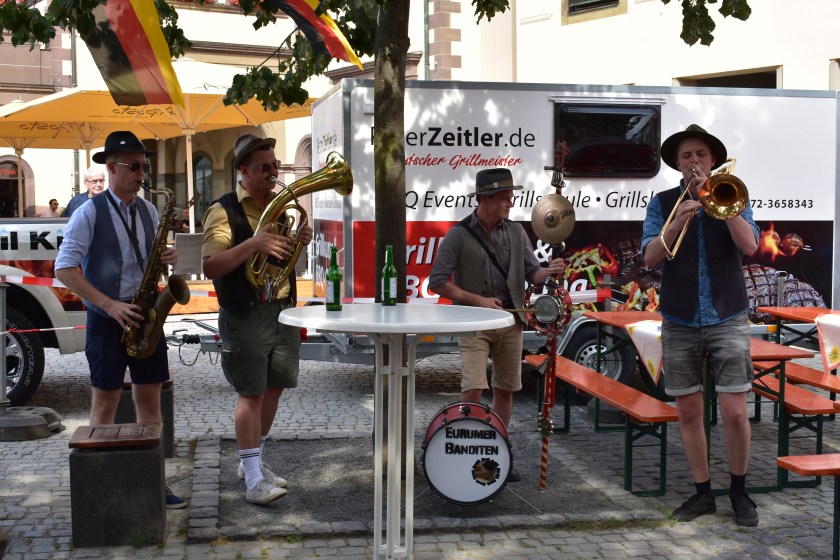 We were treated to Roth bier–they have a microbrewery in town; wine from Wurzburg, the wine capital of Germany; soft drinks and mineral water.




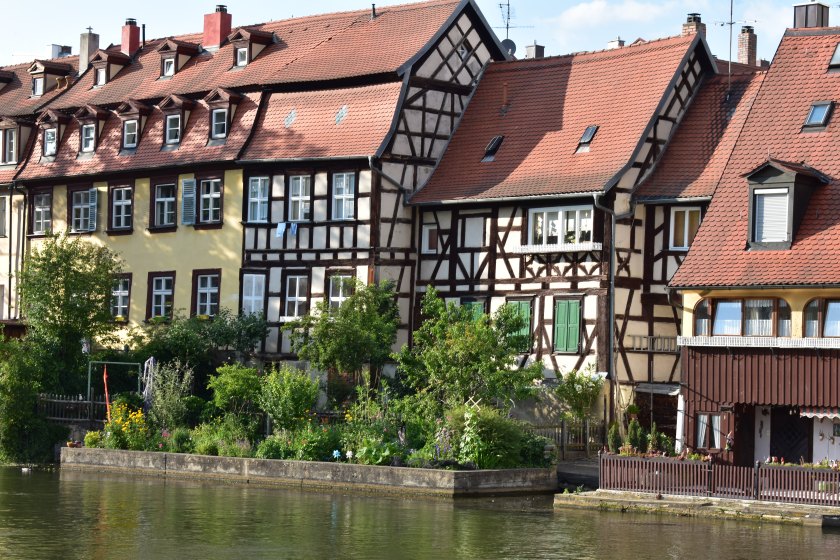
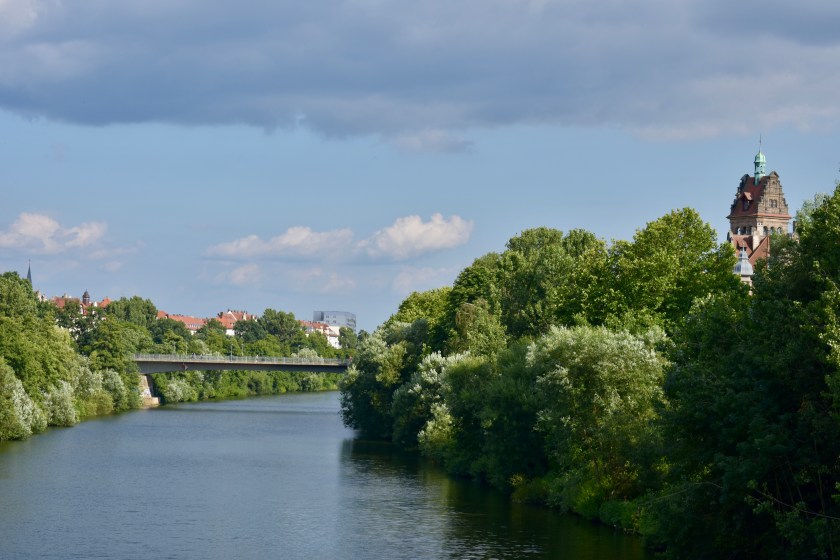 LuAnn, her husband Joe and I aimlessly walked around the town for 3 hours. We saw church steeples in the distance and using sight as our directions finally arrived under the ringing church bells of the romanesque Bamberg Cathedral. At each half hour, the bells ring for about twenty minutes. On this particular hill we came across many more than one hill’s share of churches!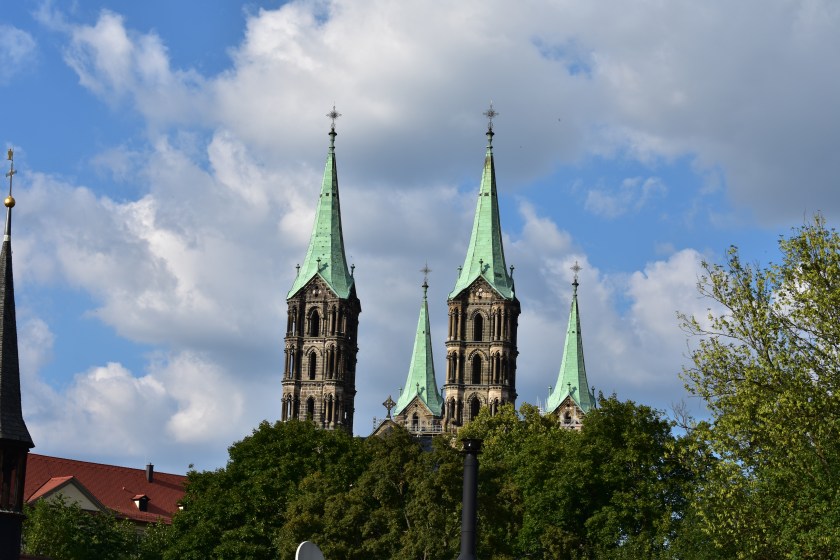


 Latest Travels