 The new year brings the opportunity for my bird of the year–the first bird I see on New Year’s Day. And this year’s bird will be the tiuque (Spanish) or Chimango Caracara more commonly or Milvado Chimango scientifically. They are ubiquitous here at El Saltamontes and according to my book serve the same ecological purpose as the common crow in North America with many of the same obvious characteristics–a determined stride, raucous flocks, scavenging everywhere, etc.
We started the new year with a tasty breakfast of pancakes (we would call them crepes since they are so thin) served with majncar–tastes like dulce de leche but is made differently, granola, fruit and eggs (sort of ) rancheros. And, again we split up. The men went fly fishing with David and Cody while we women headed with Diego toward Argentina in search of rheas and condors. On the drive we visited several small villages associated with large estancias (estates). The large land owners, some as large of 230,000 acres built the small villages so that they and those who work on the ranches would have schools, community centers, markets and other conveniences that are not 45-50 miles away in towns like Coyhaique.
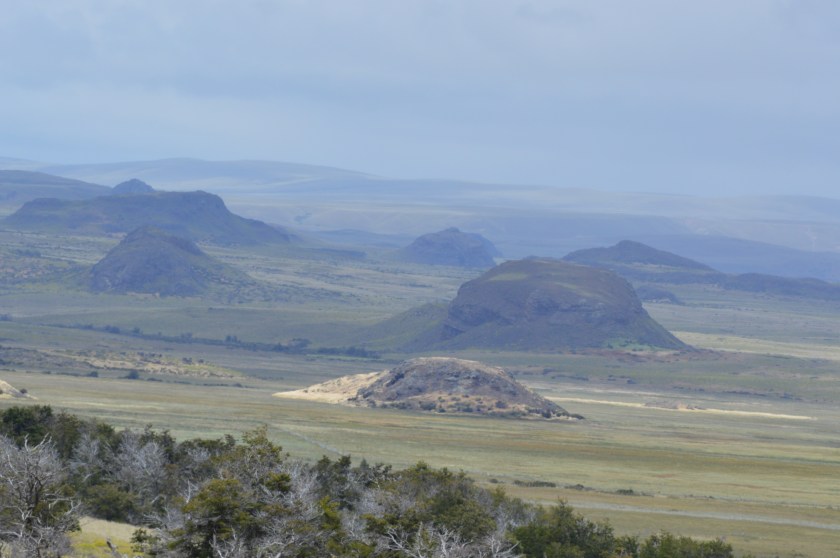
As we drove on THE road, we noticed that the further we went from the mountains in the west, the drier the landscape became. Our destination was the Valley of the Moon, so named because it looks just like the moon is imagined–rugged small hills jutting from the ground and scattered. We women were quite successful, finding a flock of 6 rheas, one of whom left us a beautiful feather. With the rhea we saw Magellan oystercatchers–I could not tell them from our American oystercatcher but I’m sure others can, Magellan geese and ashy headed geese. In fact after we left the rhea we rode along a very large man-made lake that was lined with the geese. Diego’s spotting skills are extraordinary. He is local so he has grown up with the flora and fauna of the area but it has been a pleasure bird-watching with him. Further on our drive, we came across three condors soaring–a majestic bird–and because of the strong winds today their soaring looked like a fun sky ride. We wondered whether it was fun or simply purposeful…


The men may not have been so successful in meeting their missions–not too many fish caught. But, they too enjoyed the beautiful scenery and fought the strong winds.
We drove back to El Saltamontes and saw that the alpacas had been moved to pastures closer to us and were met by Natalia (Jose’s grown daughter) with a baby alpaca in front of her on her horse. We took the baby so that the others could find the mother. Brooke held her in back of the truck and carried her inside the quincho to wait. Instead of a quiet afternoon resting, we sat with one of the cutest baby animals I’ve seen. When they rounded up the alpacas to move them the baby had just been born and was left behind. We were ecstatic when the baby was introduced and accepted into the herd, but ultimately disappointed when the herd moved and the baby was again left behind. Alpacas are not known for their mothering so Natalia picked up the little girl and Jose and family are going to do their best to raise her.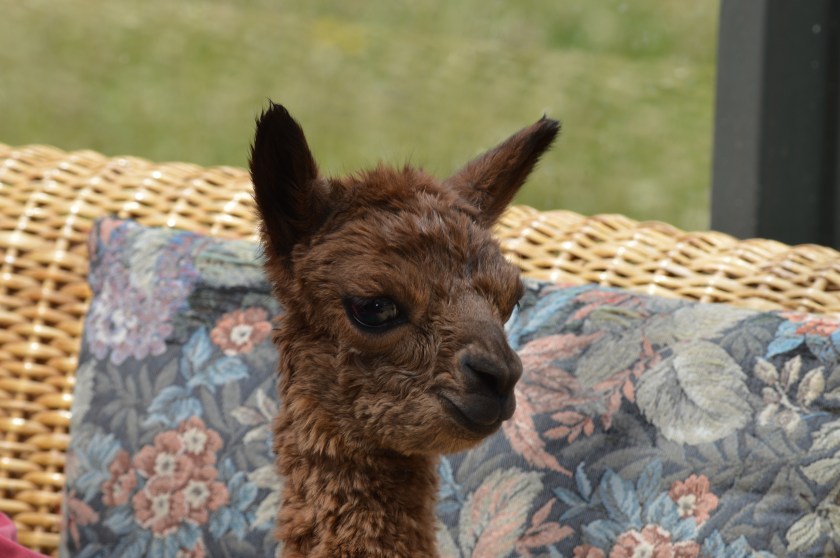
The remainder of the day was comparatively quiet and relaxing.
 Latest Travels