Today we spent the day in the Camargue, the delta region between the Grand Rhone and the Petite Rhone. It reminded me a lot of south Louisiana. When we drove a few minutes south of Arles we all noticed the different environment immediately–flat land without mountains, grasses, only a few tiny vineyards, no olive trees, lots of water. The area is known for white horses, black bulls, several varieties of rice (red, black among them), flamingos and other migratory birds.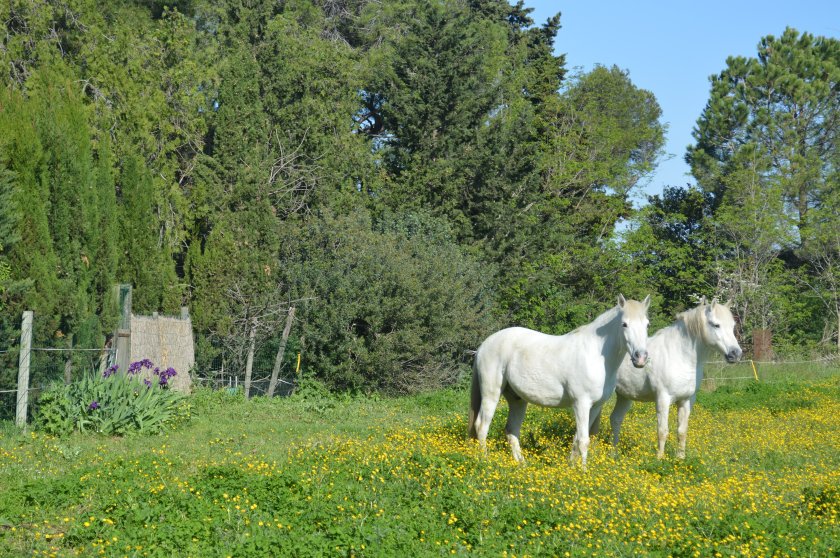
Our first stop was at the Camargue Museum, once a large farm, now with views of the land and a walking tour of some of the wilder areas (which we did not take). The origin of the Camargue horse is not well known, but it is believed to be one of the oldest breeds in the world. These horses are seen running wild in the marshes and are used by the local cowboys to manage herds of black bulls. The bulls are small, agile and intelligent and are used in the French-style bullfight, where the bulls are not killed (more about this later in the week when we attend a huge festival of the bulls in Arles).
We took a small ferry barge across the Petite Rhone, saw more flat, marshy land and the unimpressive, but peaceful beach before arriving at the main attraction for me, the Parc Ornithologique du Pont de Gau. This is a private park, maintained by the sons of the original developer and managed to attract the wildlife that lives and migrates through the Camargue. A rookery (nesting colony) of herons and egrets was our first view of the park with the loud raucous cries of the various birds and their beautiful spring breeding plumage.


The next and most impressive site was ponds full of flamingos and other mudflat loving birds. I have some stunning photos of a Eurasian spoonbill, avocet elegante, black-winged stilt, grey heron, great egret, cattle egret, various ducks, some turtles, an otter and a nutria…too many to post here. So, I’ll stick with the flamingos. Clay was fascinated by the flamingo anatomy. What looks like their knee is actually their ankle! And, he wanted to know more about the tendon and ligament structure.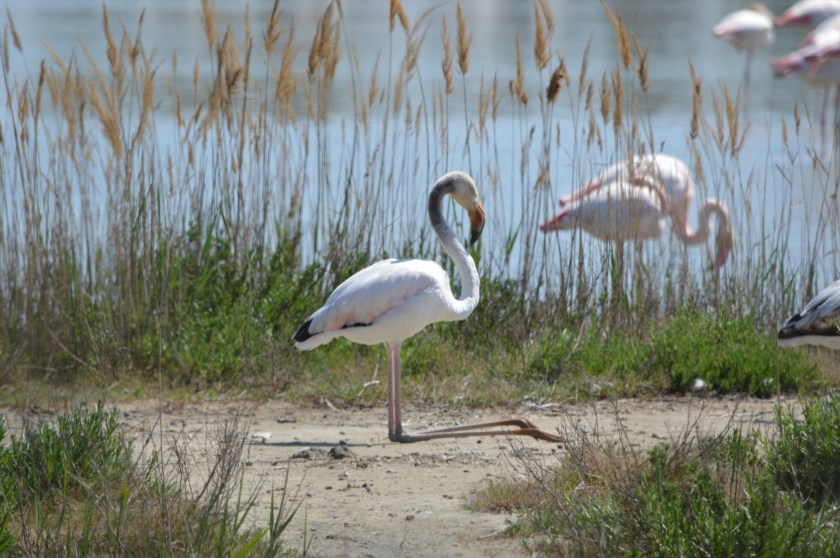
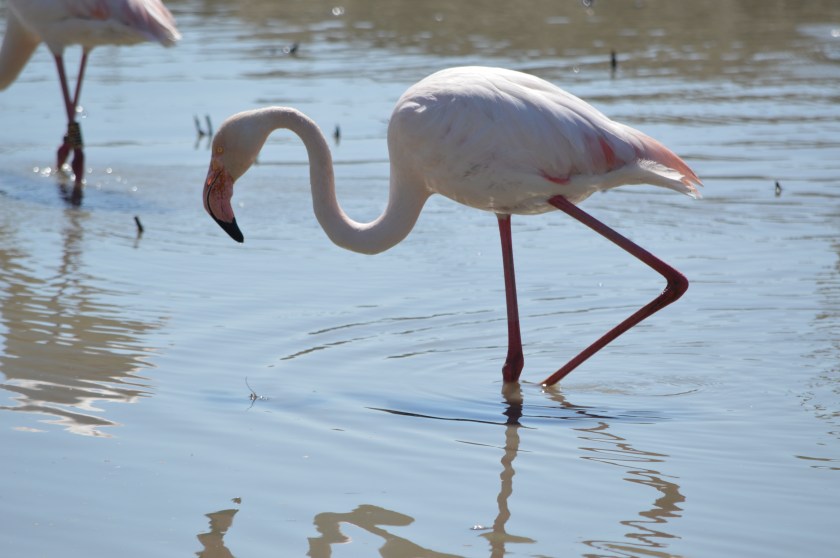
There are six different varieties possibly here, but I believe most of these are the Flamant Rose or possible Nani. When they feed they shuffle their feet to disturb the small creatures in the sand and they ruffle their feathers and fuss at each other for getting too close.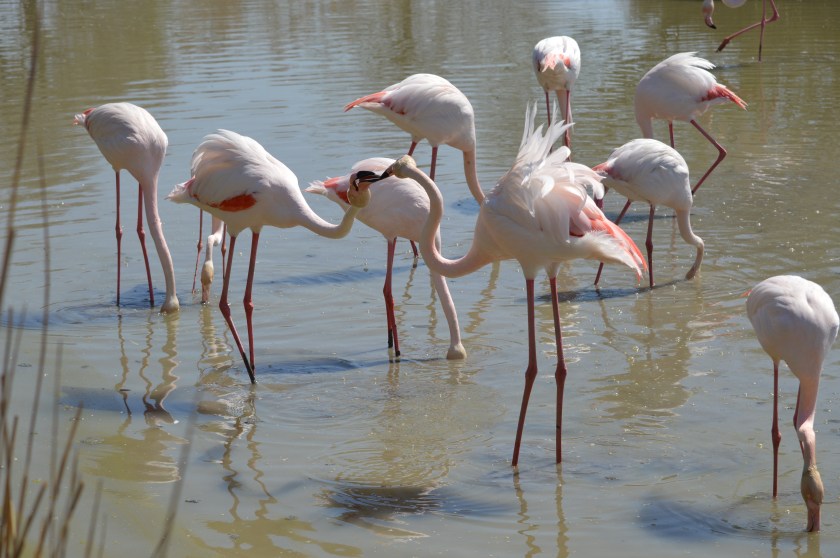
The prettiest site of all was the way they ran across the water and took off in flight.
After leaving the park, we continued down to the coastal town of Saintes Maries de la Mer–typical coastal town of small hotels and restaurants–where most of the buildings are Spanish style and very light colored, right on the beach. From here we traveled to Salin de Giraud where we saw and learned about gathering the salt from the sea using the salt flats (tables) and a process of moving the salt water from flat to flat, sometimes by pumping, and over time, reducing the water and leaving the salt. The salt is stored in a camelle (stockpile). The water in the flats looks pink because of the high concentration of microscopic algae high in beta carotene, Dunaliella Salina.


We headed north to our villa from here after a full day of driving (for Clay) and the natural world of the Camargue. I’ll leave you with a lovely moment of nature…
 Latest Travels