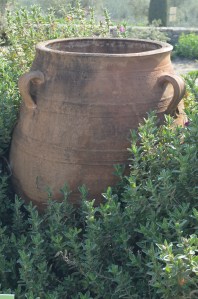
 The first stop on our full day tour with Marlene was at the Moulin du Calanquet. A calanquet is a small protective hill like the huge ones we saw in Cassis. Behind the olive mill is a small outcropping that protects the olive trees from strong winds. There has been farming here for 5 generations and before planting olive trees they grew petunias, silk worms and cauliflower. Following our very informative talk from Helen about the process of growing, pressing and bottling olive oil we had a tasting of the five varieties of olives they grow here, the oil they produce, jams, and other products. Yummy way to start the day! This mill uses every part of the olive; the pit is pressed with the fruit since it contains the antioxidants and helps to preserve the oil. Nothing is wasted—-ground pits are ultimately burned for fuel; hulls, twigs and skins are composted to fertilize olive trees; twigs from trimming are used to make baskets; and bigger limbs and trunks are made into bowls. Clay and Connie sent home a box of oils.
 In Nimes the best preserved Roman era buildings in France are found as you can see by the perfectly preserved ornate columns and cornices of the white limestone Maison Carree. We learned that denim (du Nimes) came from Nimes and that it was a big textile center. The amphitheater here was built by Augustus in the first century A.D.
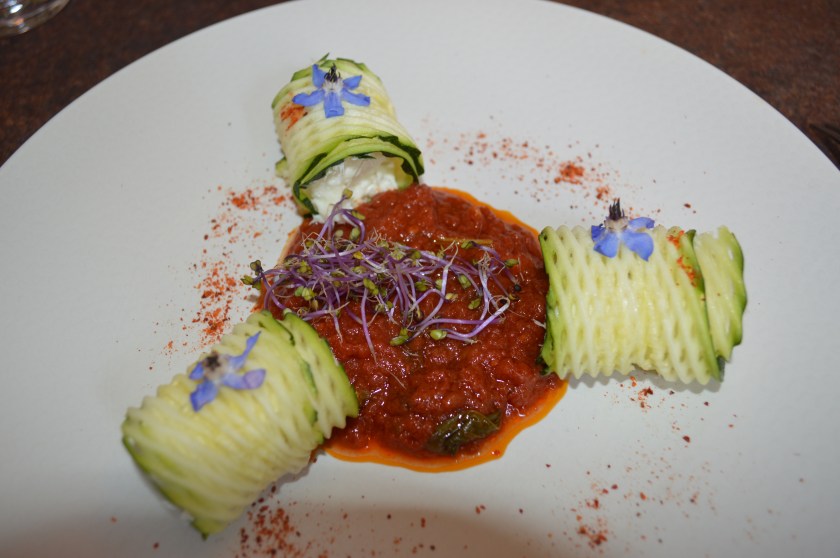 We had a Provence favorite and the house specialty, brandade de morue–an emulsion of salted cod and olive oil for an appetizer at lunch at L’Ancien Teatre. This version was so well prepared it made want more. I’m wondering where we might find salted cod in New Orleans…
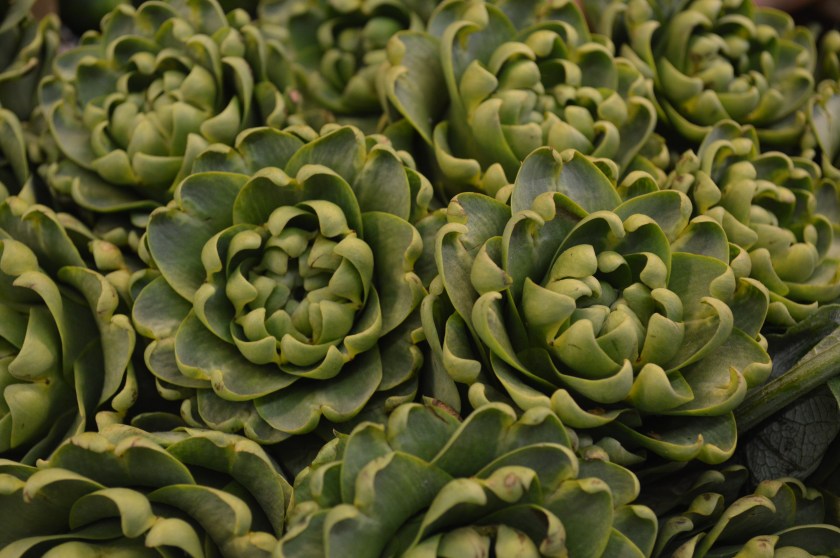 The indoor market reminded me somewhat of the market along the Ramblas in Barcelona. Allan thought it more like a supermarket with each counter managed by a different vendor. I had never seen artichokes that were so pretty–I think they would make an excellent centerpiece!
Following our visit to Nimes, we stopped at a winery that discovered Roman pottery in their vineyard. So, they decided to learn all they could about Roman winemaking and in fact, have created a life size replica of a Roman press. Every year they dress in Roman dress, tread the grapes by foot–which by the way is very tiring, add spices and other condiments (honey, cooked quince), and bottle it. We tasted both their regularly processed wind and their Roman wine. The Roman wine is not something you would imagine. They say the Mulsum bottle (fermented juice mixed with honey, thyme, red pepper, ginger and cinnamon) is excellent with chocolate cake. The Turriculae bottle (fermented juice mixed with fenugreek and sea water) tastes like curry and is good with oysters and fish as well as desserts with almonds. The Carenum bottle (fermented juice mixed with grape juice cooked with quince.
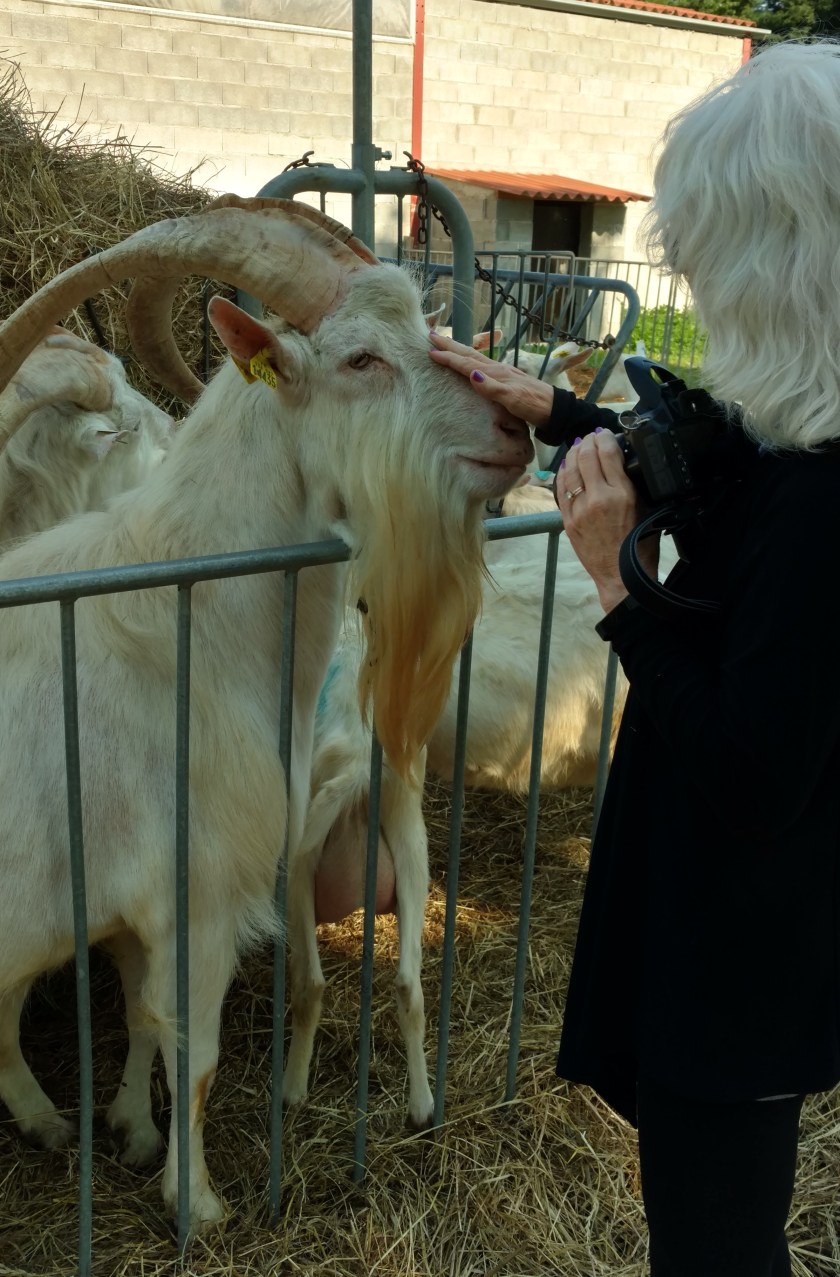 Our final stop was back near St. Remy where we visited a fromagerie complete with goats, a horse and a beautiful rooster. I really enjoyed petting all of the goats–there were a few big sweet billy goats, lots of females for milking and many kids, some only 4 days old. We tasted several cheeses and brought some home with us which Connie sliced and lightly fried to serve on top of salad.
We learned a lot today–all about olives and their processing, how to make Brandade de Morue, how to make Roman wine, how to care for goats and make cheese. It was a very good day.
Nancy
 Latest Travels
Wow, those artichokes and artistic!
LikeLike
My Goodness!!! Every day is great but this is my favorite so far. That food sounds and looks great. Love all you learned today and the artichoke pic makes my mouth really water. They are beautiful. Loved hearing about the Roman wine and the goats are awesome. My kind of day. Thanks so much for a wonderful lesson in each post. Continue having a grand time on your journey.
LikeLike